
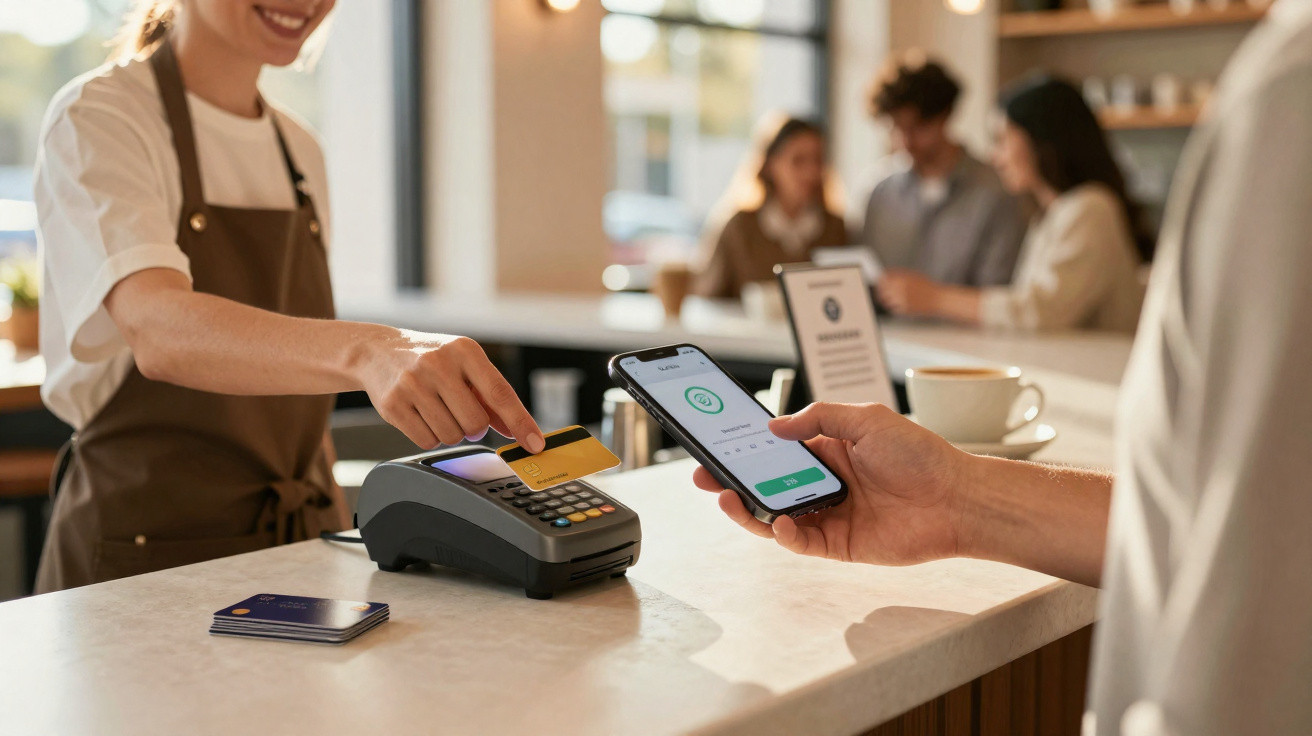
From Thursday, a new requirement from the UK financial regulator will take effect, giving banks and payment providers considerably greater discretion over contactless payments. The immediate impact on customers will be limited, but the move could bring noticeable changes at the checkout over the coming years – potentially leading to almost unlimited contactless transactions.
What changes from Thursday
Until now, the framework for contactless card payments has been relatively rigid: the Financial Conduct Authority (FCA) set maximum limits, currently £100 per transaction. Going forward, firms that can demonstrate robust fraud and security controls will be able to set their own limits.
The FCA is lifting the cap: banks with effective fraud prevention will be able to decide their own limit for contactless card payments.
Key elements of the new rules include:
- The fixed £100 ceiling will no longer be the regulator’s central requirement.
- Banks and payment providers will set their own limit for each transaction.
- They must maintain a high level of security and effective fraud prevention.
- Firms are expected to tell customers clearly and well in advance about any changes.
- Consumers should, wherever possible, be able to set their own personal limits – or switch off contactless functionality altogether.
For now, the major UK banks are taking a cautious approach. They are retaining the existing £100 limit and say they are monitoring developments. Some already allow customers to choose an individual, usually lower, limit in their banking app.
Why the contactless payment cap is being questioned
In under a decade, contactless payments in the UK have moved from a niche feature to the norm. Barclays data shows that around 94.6 per cent of all eligible in-store card payments in 2024 were contactless. Compared with 2015, the monthly number of contactless transactions has risen by roughly a factor of ten.
The industry argues that customers increasingly prioritise speed and convenience. Having to enter a PIN can feel out of place in an ever-faster payment process. Inflation and higher prices also play a role: amounts that once sat comfortably below the limit are now more likely to approach it.
According to UK Finance, the average contactless transaction is currently just under £18. Despite these relatively modest sums, contactless payments already account for the largest share of card use:
- Around 67% of credit card payments are made contactlessly.
- For debit cards, the proportion is even higher at about 76%.
Through these new freedoms, the FCA aims to help firms respond more flexibly to change, whether driven by inflation, new technology or shifting consumer behaviour.
Banks’ contactless payment plans and the remaining questions
More significant than the first day of the rules may be how banks use their new options over the medium term. On paper, they will be able not only to raise limits, but also to remove them entirely or redesign the system behind the scenes.
Examples: How major providers currently handle the issue
A look at several well-known UK names suggests that the strategy remains defensive for now, with many firms relying on customers to manage their settings through an app.
| Provider | Current limit | Can the customer adjust the limit? |
|---|---|---|
| NatWest | £100 | Yes, it can be reduced or switched off |
| Santander UK | £100 | Yes, it can be reduced in £5 steps or disabled |
| Lloyds / Halifax / Bank of Scotland | £100 | Yes, in £5 steps up to £100 |
| Barclays | £100 | Yes, a personal limit up to £100 can be set in the app |
| HSBC UK / First Direct | £100 | No, fixed standard setting only |
| Nationwide / Virgin Money | £100 | Yes, a limit below £100 is possible |
| TSB | £100 | Yes, the limit can be lowered or contactless can be switched off |
| Starling Bank | under review | Yes, a scale from £100 to £0 |
| Monzo | £100 | Yes, freely adjustable or can be disabled |
| Revolut | £100 | No lower contactless limit, but a monthly total spending cap |
Many providers stress that they have no immediate plans to increase their limits, although the new rules are “under review”. Behind the scenes, they are likely already calculating the best balance between convenience, fee income and fraud risk.
More freedom, more responsibility: what the FCA hopes to achieve
The UK regulator has linked the additional flexibility to a clear incentive: firms seeking to offer higher limits must visibly strengthen their fraud prevention measures. The FCA expects competition to provide convenient, fast payment methods to push banks to improve security and monitoring.
The fewer rigid rules imposed externally, the more banks must build their own safeguards – that is the regulator’s calculation.
Consumer legal protection will also remain in place. If a card is stolen or lost, banks must continue to refund unauthorised contactless payments. Every additional pound lost to fraud therefore becomes a direct cost for the provider.
At the same time, a second technology is becoming increasingly important: mobile wallets on smartphones and smartwatches. These often permit substantially higher contactless amounts because the payer’s identity is verified through Face ID, a fingerprint or the device lock. The regulator sees this as offering greater security than a physical card used without PIN entry.
What customers should do now
Although little is likely to change at the till initially, frequent contactless users can take a few simple steps to prepare for the years ahead.
- Check in the banking app whether a personal limit has been set.
- Set a lower limit for cards that may be at greater risk, such as those regularly used in bars or nightlife venues.
- Disable contactless functionality on cards that are rarely used.
- Review transactions regularly and report suspicious payments immediately.
- For higher-value purchases, use a smartphone or smartwatch with biometric security rather than the physical card alone.
Anyone using a very high limit should remember that a lost or stolen card could cause substantial losses in a short period, even if the bank is ultimately liable. Until the refund is made, the inconvenience still falls on the cardholder.
Background: what is a cumulative contactless limit?
Many bank customers will recognise the situation: after several smaller contactless purchases, the terminal suddenly asks for the PIN again, even though the individual amount is well below the maximum limit. This is caused by a so-called cumulative limit.
Put simply, the system adds up either:
- a specified number of contactless transactions; or
- a total amount across several transactions.
Once this background threshold is reached, the system requires PIN entry to check that the card remains in the right hands. The new rules will allow banks to adjust this mechanism too, for example by moving the threshold or connecting it to their own risk algorithms.
What this means for German-speaking countries
The UK development offers a glimpse of the future for other markets, including Germany, Austria and Switzerland. Contactless payments are already standard there too, and the share of debit and credit card payments using NFC technology has been rising sharply for years.
Many savings banks, co-operative banks and direct banks in German-speaking countries already let users set limits in their app or deactivate contactless payments when needed. The UK rule change is likely to give additional momentum to the debate over flexible maximum limits, stronger personalisation and greater responsibility for banks in fraud prevention.
With inflation, rising average supermarket baskets and the trend towards cashless low-value payments in mind, the UK example illustrates the direction in which card payments are moving: fewer fixed limits, more app-based control, stronger background risk monitoring – and a far smoother transition from everyday small transactions to larger sums without traditional PIN entry.





Comments
No comments yet. Be the first to comment!
Leave a Comment