
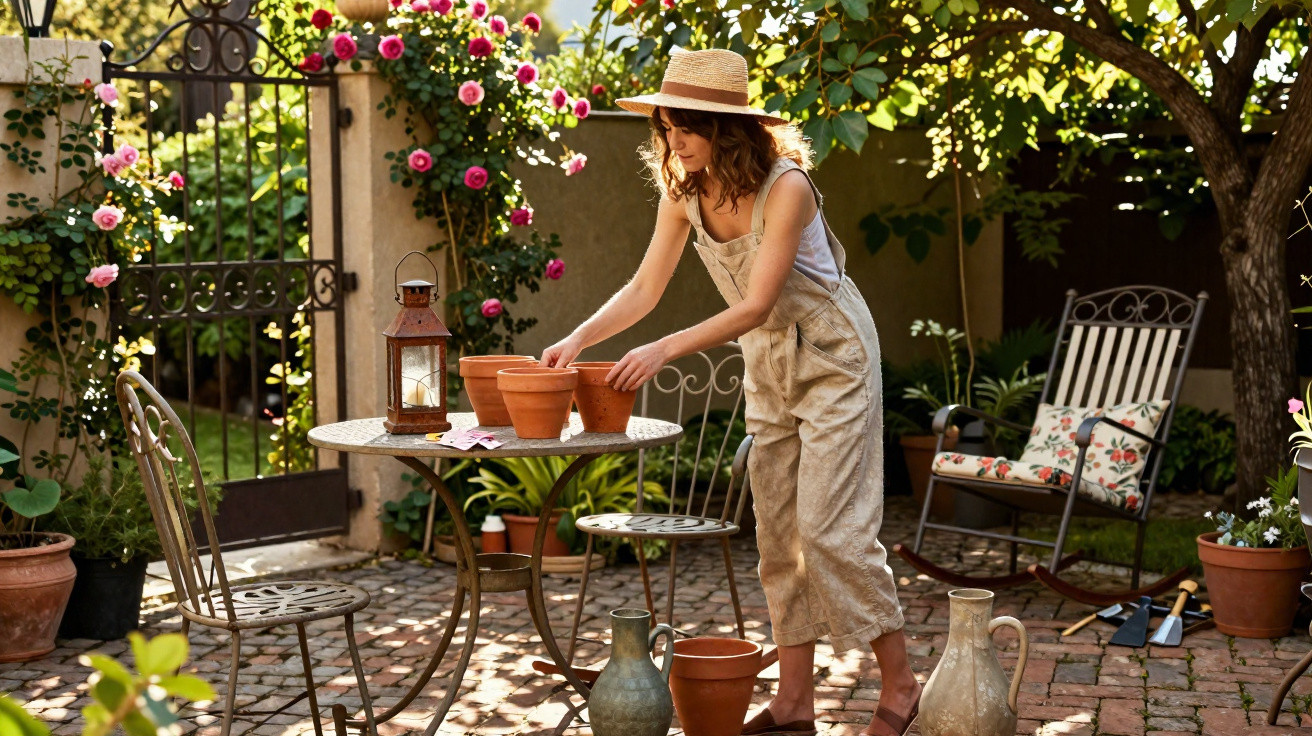
If you’re picturing flimsy plastic chairs, think again. More and more garden owners are deliberately bringing furniture and accessories with a past onto the terrace, balcony and into the back yard. Rather than sterile DIY-store sets, pre-loved one-off pieces from Brocante, flea markets and online classifieds are setting the tone. Five types of objects, in particular, keep cropping up - and they can completely transform how an outdoor space feels.
Second-hand garden lamps: patina instead of off-the-shelf fairy lights
Without lighting, even the most beautiful seating area can feel bleak once evening comes. The usual fixes are LED fairy lights, plastic solar lamps and perhaps a few lanterns. Anyone who wants more personality outdoors is increasingly turning to older light fittings.
Popular options include:
- Brass lanterns from the 1960s or 1970s
- rugged outdoor lamps made from enamel or steel
- globe lights with frosted, slightly milky glass
- wall lights with visible signs of age
You’ll find pieces like these in any decent Brocante corner, at house clearances, or listed on classified ad sites. The key is to avoid searching for “garden lamp” and instead try terms like “workshop lamp”, “industrial light” or “yard lighting”. Many of these fittings once hung in factory halls or above stable doors - and now they look genuinely at home on a façade or above a garden table.
“An old outdoor lamp visually suggests this spot has been used for a long time - even if the terrace has only just been built.”
If you pick up old lamps, it’s wise to have an electrician check them over. In most cases, a new cable and a modern lampholder are enough to make the fitting safe for outdoor use. The exterior stays satisfyingly rough; the electrics are brought up to date.
Terracotta, jugs, urns: containers with history instead of plastic pots
The second major trend revolves around plant containers. Standard plastic pots or smooth concrete planters can quickly feel generic. By contrast, aged terracotta pots, heavy stone urns or tall ceramic tubs instantly add presence to a bed, driveway or balcony.
Professional garden designers swear by them because these vessels do several jobs at once:
- They visually frame entrances and steps.
- They introduce height and depth to planting.
- They give statement plants such as olive trees or hydrangeas a “stage”.
- They still look decorative when empty, for example in winter.
In particular, people seek out pots with mossy patches, cracks, efflorescence or chipped glaze. Those imperfections create the sense of a garden that has evolved over years - not something assembled yesterday from a garden centre.
There’s a practical upside too: hefty pots often cope with frost better than thin bargain alternatives. If you want to be extra cautious, stand them on small wooden battens or bricks during winter so water can drain away. And it usually pays to choose fewer, larger containers - one imposing pot often looks stronger than five small ones.
Wrought iron in the garden: from gate to focal point
Wrought-iron pieces show up surprisingly often at flea markets: old garden gates, climbing arches, short sections of fencing, even pergola components. For a long time they were dismissed as “old-fashioned”; now designers use them deliberately to offset the clean lines of modern new-builds.
These finds come with several advantages:
- They’re often beautifully made and exceptionally durable.
- They feature ornamentation that’s rare in today’s mass-produced ranges.
- They’re ideal supports for climbing plants.
A rusty gate panel can become a standout feature with only a little effort: go over it with a wire brush, remove anything loose, then apply a rust-inhibiting glaze or a clear coat - done. If you like the rusted look, protect it lightly rather than painting it solid.
“A simple iron structure with a climbing rose or vine can ‘break up’ a garden that feels too smooth and act as a visual anchor.”
Practical ideas:
- Position old pergola sections along the side of a terrace and train a grapevine over them.
- Use a piece of fencing as a screen to hide the wheelie bins.
- Mount a wrought-iron headboard from an old bed as wall décor above an outdoor sofa.
Iron furniture: vintage sets for outdoor dining
When it comes to garden furniture, many people are moving away from the flimsy fold-out chair from the DIY superstore. Complete iron dining sets are especially sought after - ideally with curved lines, ornamentation or lattice patterns.
These sets often date from the 1950s to the 1970s. They were built to last for decades, and many still get through each season without complaint. If you spot a supposedly “rusted” set in a Brocante stall, take a closer look: very often, an afternoon with a wire brush and a paint roller is all it needs.
A quick way to revive a find:
- Brush off loose paint and rust thoroughly
- Apply a metal primer designed for outdoor use
- Paint with matt or satin metal paint
- Add new seat cushions in bold colours
Whether it’s a small round bistro table or a larger dining table, the combination of slim metalwork and fabric cushions feels lighter than chunky wooden furniture. In small courtyards or on balconies, that helps the space feel less “filled in”.
Vintage seating: from rocking chair to favourite spot
Perhaps the most sentimental category is older seating: rocking chairs, rattan armchairs, wooden loungers with striped fabric. They turn purely practical areas into places you genuinely want to spend time.
Typical Brocante finds include:
- wooden rocking chairs, sometimes with cane panels
- rattan armchairs with generous backs
- wooden loungers with textile slings, often striped
- foldable camping chairs made from metal and fabric
“A slightly faded fabric or a worn armrest doesn’t look like rubbish - it looks like ‘people have read, talked and slept here for years’.”
For outdoor use, a quick check is worthwhile: is the wood still sound, and is the cane not completely broken through? On many loungers, fabric slings can be replaced - sometimes even sewn at home. Rattan doesn’t like constant rain, but it works brilliantly on sheltered balconies, under canopies or in conservatories.
How to hunt for garden treasures at flea markets
Finding pieces like these is less about luck than having a plan. A few tried-and-tested approaches:
- Arrive early: the best items disappear in the morning.
- Look in the “ugly” corners: bulky pots and iron arches often end up there.
- Don’t dismiss cracks and rust immediately; focus on structural strength.
- Note down measurements for your balcony or terrace before you go.
If you’re unsure, take a quick photo and call home: is the table height right? Will the bench fit through the front door? That way you avoid impulse buys that end up forgotten in the cellar.
What to check before buying older pieces
As appealing as patina can be, a few things deserve extra attention:
- Always have the electrics checked on old lamps.
- Inspect load-bearing metal parts for serious rust-through.
- Don’t leave containers outside full of soil in winter if they show hairline cracks.
- Oil or stain wood regularly, especially on terraces exposed to the weather.
If you’re willing to put in a little care, you’ll get an outdoor area that doesn’t look like it came straight from a catalogue. Many readers say guests ask first about the “old treasures” - not the expensive designer barbecue.
The Brocante-in-the-garden trend also fits with the idea of sustainability: existing materials are reused instead of consuming new resources. A second-hand iron chair with a fresh coat of paint beats a brand-new purchase on CO₂ footprint - and often on feel, too. You simply sit differently when you know that piece of furniture has already lived through plenty of summers.
Comments
No comments yet. Be the first to comment!
Leave a Comment