
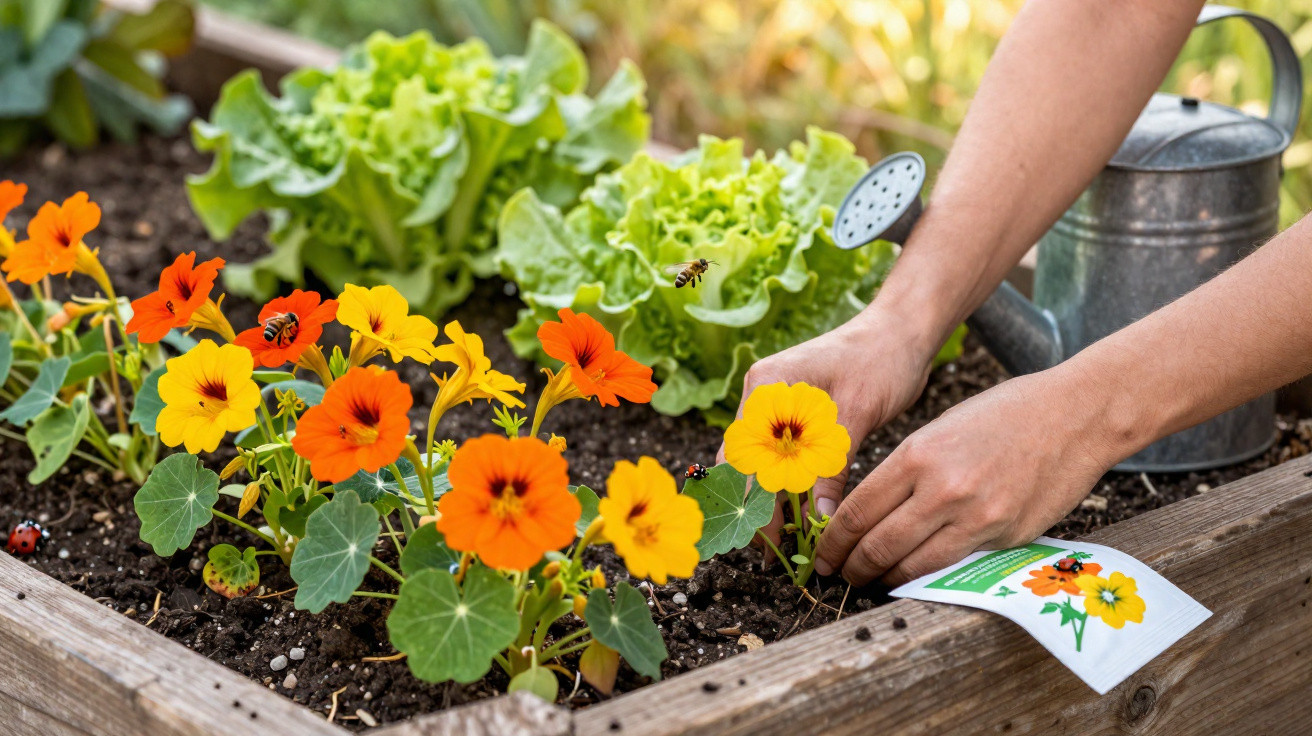
Many keen gardeners kick off their first sowings in March full of anticipation - only to feel the frustration a few weeks later: aphids on beans, spindly tomatoes, bare courgette leaves. Yet one modest flower is often enough to tip the balance in your beds - towards bigger yields, fewer pests, and noticeably more life in the garden.
Why a simple flower in March can decide your harvest
As the days lengthen and the soil slowly starts to warm, the vegetable garden enters its make-or-break period. If you focus only on tomatoes, lettuce and courgettes at this point, you’re leaving real potential unused. A resilient, stable garden is built early - and that starts with choosing the right companion plants.
This is where a classic comes in that many people still treat purely as an ornamental: nasturtium. It grows fast, seed packets are inexpensive, and it adds bright colour to your beds. More importantly, it acts like a natural shield - and a performance boost - for your vegetables.
"Nasturtium is far more than decoration in the bed - it is a living safety zone for young vegetable plants."
The ideal timing: why starting from March matters so much
As soon as the soil is no longer ice-cold and the first sunny days arrive, sowing is worth considering. If you factor nasturtium in from March, it develops alongside your young vegetable crops. That timing matters: the leaves and flowers need to be there when aphids, beetles and other pests become active.
In garden centres and DIY stores, you’ll find packets of nasturtium seed for just a few pounds. They usually contain enough seed for several beds - or even a full border strip. Buying early also gives you the widest choice of varieties, from compact forms to climbing types.
Nasturtium as a shield: how it lures aphids away from vegetables
A living decoy instead of reaching for a spray
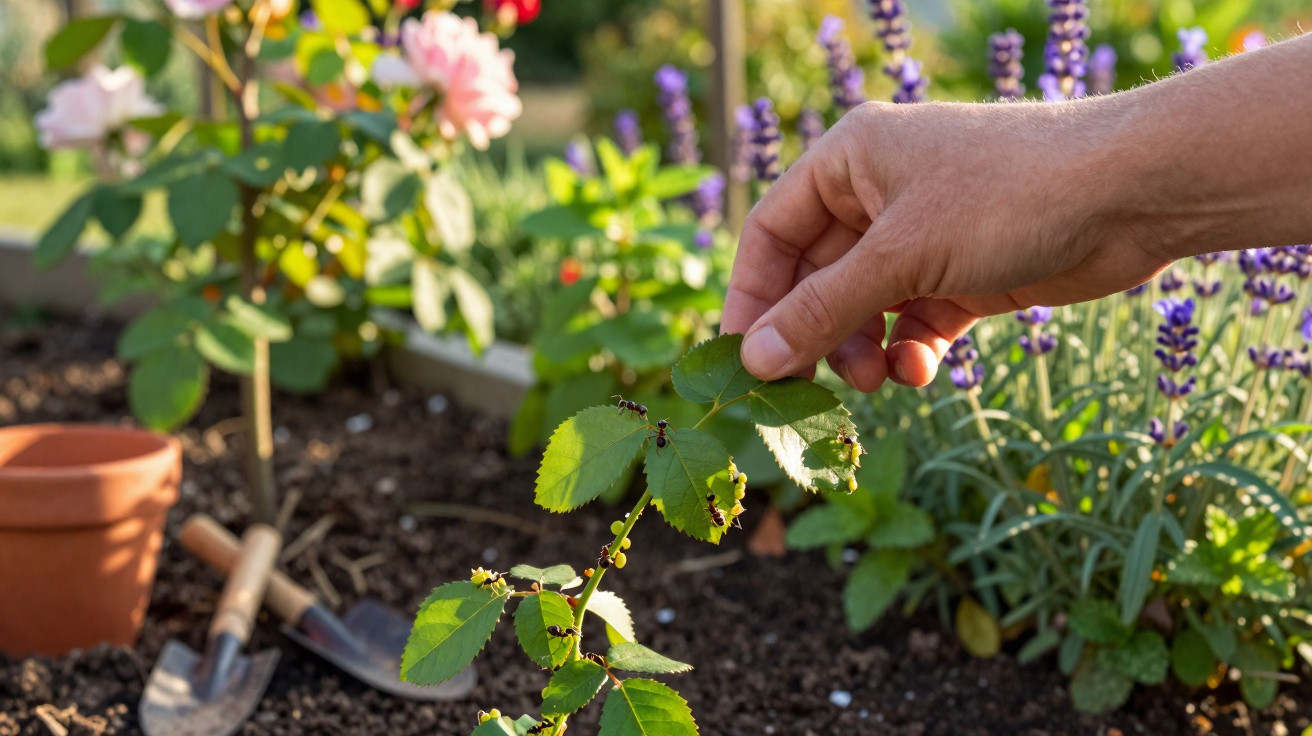
Aphids adore nasturtium - and that is exactly what makes it so useful. The pests tend to pile onto its juicy foliage first, while beans, tomatoes or courgettes are far less likely to be targeted. In gardening terms, this is a classic “trap crop”.
The idea is straightforward:
- Aphids look for the tastiest host plant nearby.
- Nasturtium offers soft, nutrient-rich leaves.
- The pests gather there - and mostly leave your actual vegetables alone.
Rather than painstakingly checking individual bean shoots or tomato stems, the problem is concentrated on a few nasturtium plants. You can then deal with them deliberately - hose them off, cut them back, or in extreme cases remove and replace the plants.
How the flower takes pressure off your beds
Young vegetable plants are especially sensitive to sap-sucking damage. If they lose too much sap, growth can stall, leaves may drop, and fruiting can be poor. Nasturtium reduces that stress by forming the “first line of attack”.
Whether you’re growing on a balcony in a raised bed or in a large country garden, the same principle works at every scale. Nasturtium can form a green carpet that also helps prevent the soil from drying out, while its shade keeps moisture in the ground for longer.
A magnet for bees: why nasturtium can increase yields indirectly
An early-season boost for pollinators in the veg patch
Nasturtium doesn’t only provide protection - it also provides food for your allies: bees, bumblebees and other pollinators. Its vivid flowers are easy to spot, and the nectar is readily accessible, making it a valuable energy source in spring.
When these insects “log” your garden early on as a reliable feeding spot, they’re more likely to return again and again. That benefits every crop that depends on pollination: tomatoes, pumpkin, courgette, berry bushes and fruit trees.
"Where nasturtium blooms, the chance increases that every courgette flower & Co. really does turn into a harvestable fruit set."
More pollinators, more fruit
The more often bees and bumblebees move through your beds, the closer you get to a truly abundant harvest. A modest pumpkin flower can become a huge cooking pumpkin, and a cluster of apple blossoms can turn into a whole bucket of fruit.
Here, nasturtium works in two ways: it attracts beneficial insects, and its dense growth helps the soil retain moisture. Strong, well-supplied vegetable plants produce more flowers - and with good pollination, they deliver noticeably higher yields.
The best positioning: where nasturtium does the most in a bed
A flowering защит barrier along the edge
Where you place it determines how effectively it can do its job. One popular approach is to sow it as a flowering barrier around the edge of your bed or garden - a loose strip of nasturtium surrounding the main vegetable area.
This delivers several benefits at once:
- Pests encounter the nasturtium first.
- Visually, you get a colourful, welcoming look.
- The garden feels clearly framed and well organised.
If you have children, there’s an extra plus: the bright flowers are edible, with a gently peppery flavour that makes salads more interesting. It’s also an easy, hands-on way for children to learn what’s growing in the bed.
Between the rows: protection right where it matters
It can be even more effective if you sow nasturtium directly among your vegetables. A handful of seeds between tomato canes, along bean rows, or around courgette plants is often enough to create a dense protective mesh.
Those large, round leaves shade the soil, which is particularly helpful in hot summers. The ground dries out more slowly, vegetable roots stay cooler, and you won’t need to water as often. At the same time, you get a lively mix of edible and flowering plants - ideal for a stable mini-ecosystem.
| Location | Benefit |
|---|---|
| Bed edge | Early interception line for aphids, visual framing |
| Between vegetable rows | Direct crop protection, shade, improved soil moisture |
| Under fruit trees | More pollinators in the tree, colourful ground cover instead of bare soil |
How to sow nasturtium correctly
Step by step to a living protective network
Nasturtium is one of the most forgiving plants you can grow in a home garden. The seeds are large, easy to handle, and it tolerates small mistakes.
One workable method:
- Choose a spot: sunny to partially shaded, avoiding heavy, waterlogged soils.
- Loosen the soil lightly and remove coarse stones.
- Place the seeds about 2–3 centimetres deep.
- Leave roughly 20–30 centimetres between seeds.
- Water in and keep the area slightly moist for the first few days.
Seeds typically germinate after just over a week. After that, growth is quick, and the plants soon show their distinctive round leaves. Nasturtium needs very little care; only in extreme drought is a thorough watering worthwhile.
More than a practical plant: extra everyday benefits
Edible, decorative, versatile
Many people overlook that nasturtium can be a real delicacy. Both leaves and flowers are edible and add a gentle heat to food - similar to cress, but more aromatic. In salads, on sandwiches, or as a garnish on soups, they’re a surprising lift in both flavour and appearance.
If you like, you can harvest the seeds before they fully ripen and pickle them as a kind of “false capers”. That way, the plant provides not only protection, but also a small stash of seasoning for the kitchen.
Gardening naturally without overthinking it
Using nasturtium fits the principle of companion planting: different plants supporting each other. You don’t need to study a textbook to try it. A handful of seeds in March is enough to test the effects for yourself.
If you’ve already had good results with other companion plants such as pot marigolds or marigolds (Tagetes), you can simply add nasturtium into the mix. Combining several of these helpers makes beds tougher, more colourful and more interesting - and it quietly reduces the need to reach for chemical products.
With each season, you learn which combinations work best in your own garden. Nasturtium is an easy entry point: fast, visibly effective, and simple to repeat. That’s how one small March habit becomes a reliable building block for a consistently strong harvest.
Comments
No comments yet. Be the first to comment!
Leave a Comment