
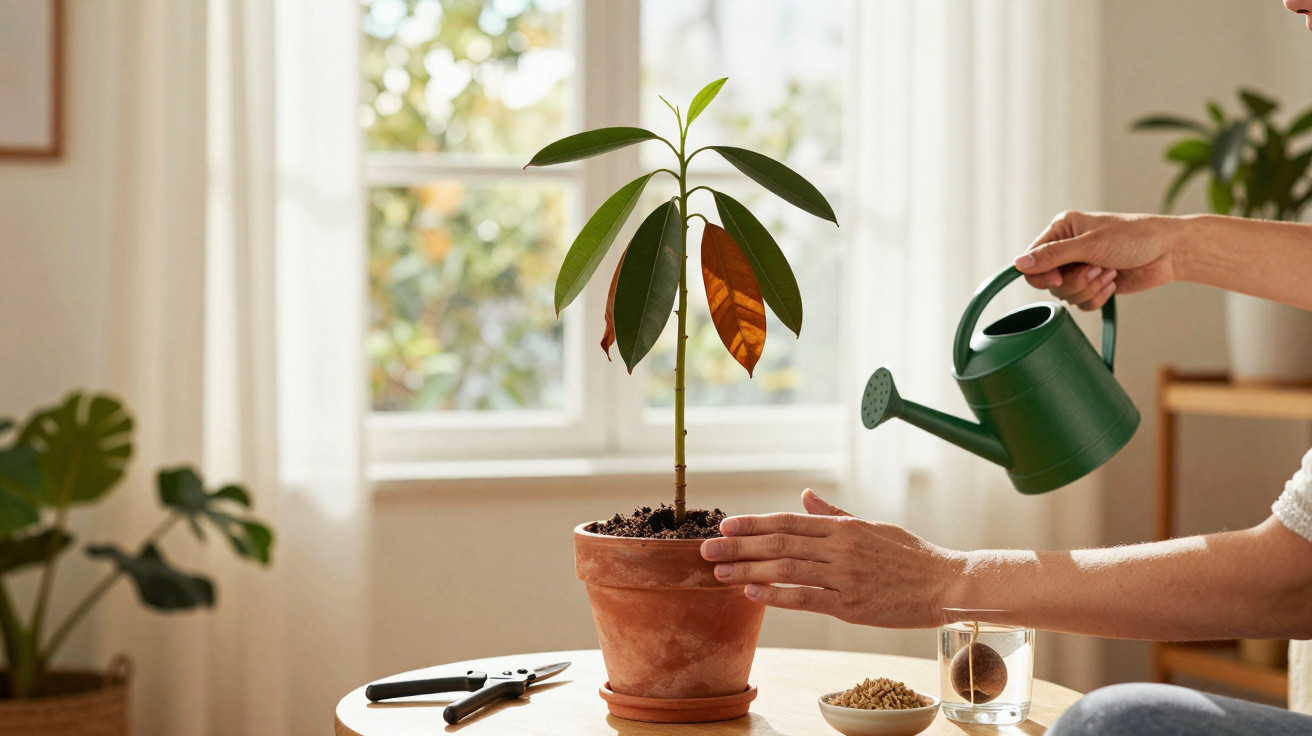
A young avocado tree on the windowsill can feel like a small exotic victory at first. For weeks you watch every root and each fresh leaf appear. Then the mood can change: foliage turns yellow, new growth droops, and in winter the leaves sometimes drop altogether. The cause is rarely a lack of “green fingers” and far more often a handful of common care mistakes indoors.
From stone to houseplant: how to start your avocado tree properly
The make-or-break point arrives much earlier than most people realise: with the stone itself. It should come from a ripe fruit and be plump, with no rotten patches. That simple choice gives the plant a much better chance later on.
Three ways to get the stone to sprout
At the beginning, the stone mainly needs warmth and patience. In a typical home, 20 to 25 °C is sufficient. Three approaches work reliably:
- In a glass of water: Stabilise the stone with toothpicks so the bottom sits in the water. Change the water regularly.
- Straight into a pot: Place the stone in loose compost with the tip showing. Keep the compost lightly moist, not wet.
- In damp cotton wool or kitchen roll: Wrap the stone, put it in a container, and keep it slightly damp.
After around three to eight weeks, the stone splits open: a sturdy root forms underneath and a stem emerges above. At the latest by this point, the young tree needs a proper home.
The first pot choice shapes the months ahead
Many avocado trees struggle because they begin life in the wrong pot. A diameter of roughly 20 to 25 centimetres is perfectly adequate at first. More important than size is drainage: the pot must have a hole in the base so excess water can escape.
Start with a layer of expanded clay pellets or coarse stones at the bottom. Add a loose, nutrient-rich growing medium, such as good-quality potting compost or a compost intended for container plants. Set the stone only halfway into the compost and gently spread the roots.
An avocado tree rarely fails in a living room because of the “wrong climate” - it almost always comes down to poor water drainage in the pot.
After about four to five months, the small tree usually has enough vigour to move into a slightly larger pot. If you create a proper drainage layer again, you prevent waterlogging from the outset.
Indoor position: plenty of light, but no heat shock
The avocado tree comes from tropical regions. It thrives on brightness, warmth and a bit of humidity - a combination that can be hard to achieve in winter in many homes.
The best windowsill for an avocado tree
This plant prefers a bright spot, but not harsh midday sun blazing through glass. Good options include:
- East- or south-east-facing windows with plenty of morning light
- West-facing windows, provided the afternoon sun is lightly filtered (for example, with a curtain)
- Bright conservatories without intense midday sun
Room temperature can vary between 18 and 25 °C. Cold draughts from permanently tilted windows, or hot air rising directly above a radiator, can both put the plant under strain.
Because dry, heated air is often underestimated, a simple trick can help: place the pot on a saucer filled with damp expanded clay pellets. This increases humidity around the plant continuously, without leaving the roots sitting in water.
Watering and feeding correctly: where most avocado trees fail
Too much water or too little - that is the classic mistake. An avocado tree likes the compost to be slightly moist, but never soaking wet.
The finger test before every watering
Instead of watering by the calendar, use a straightforward check: push a finger about 2 centimetres into the compost. If it feels dry, water is fine. If it still feels clearly damp, wait.
After watering, remove any excess water from the saucer immediately. If water remains there, the roots gradually rot, the leaves turn yellow, and they drop.
If your tap water is very hard, you may run into “chlorosis”: the leaves look pale yellow while the veins remain green. Softer water from a water butt, filtered water, or tap water left to stand can help. In stubborn cases, an iron fertiliser may be useful.
Yellow leaves do not automatically mean a nutrient deficiency - often the real issue is waterlogging or very limescale-heavy water.
How to read your avocado tree’s warning signs
- Soft leaves, bone-dry compost: clear lack of water. Water thoroughly until a little runs out of the bottom, then discard the drainage.
- Yellow leaves, heavy, wet compost: too much water. Reduce watering, loosen the compost, or even repot if necessary.
- Brown, curled leaf edges: the air is too dry or too warm, often when the plant is close to a radiator.
During the growing season from March to October, the avocado tree benefits from a liquid feed every two weeks. A fertiliser for leafy houseplants or citrus plants works well. In winter, feeding is minimal because the tree grows far less.
Shape and care: so the avocado tree doesn’t stay a thin stick
Without pruning, the tree often shoots upward with only a few leaves at the top. The result looks more forlorn than tropical.
Pruning for a bushier tree
Once the young avocado tree reaches about 15 to 20 centimetres, you can pinch out the tip above the second or third pair of leaves. It may feel harsh, but it encourages side branches. New shoots can then develop from each of those points.
Repeat this later on any fresh shoots that become too long. Over time, this builds a much fuller crown instead of a tall, bare stem.
When a bigger pot makes sense
Every two to three years, it is worth moving the plant into a slightly larger pot. At the latest when roots start growing out of the bottom, or the compost dries out extremely quickly, it is time. When repotting, add a drainage layer again and use fresh compost.
In the warmer months, the tree can spend periods on a balcony or patio - but only once there is no risk of night frosts. A sheltered position with lots of light and no cold wind often produces a noticeable growth boost.
Typical problems: pests, leaf drop and unrealistic fruit dreams
Spider mites and scale insects thrive in dry, heated air. They often sit on the undersides of leaves or along the stems, feeding on plant sap.
If you check the leaves regularly, you will spot an infestation early: fine webs, sticky patches, or tiny specks are all warning signs. A lukewarm shower over the whole plant removes a lot. After that, treatment with diluted soft soap or specialist houseplant products can help.
Another issue is expectations about harvesting. An avocado tree grown from a stone almost never produces fruit indoors. Specialist sources cite timeframes of five to ten years even under ideal conditions - outdoors or in a greenhouse, often using grafted plants. In ordinary living spaces, the tree remains primarily a decorative, tropical green houseplant.
What many people miss: humidity, moving it around, and patience
Constantly changing the plant’s position puts an avocado tree under stress. It often responds by shedding leaves when light, temperature and humidity shift abruptly. It is better to choose a good spot and keep it there.
Particularly in winter, a simple routine helps: mist the leaves lightly in the morning or evening with softened (de-limescaled) water. This reduces brown tips and helps prevent spider mites. In households with very dry air, a small humidifier near the plant can be worthwhile.
Grouping the plant with other houseplants creates a small “microclimate”. More leaves in one area naturally increase humidity. That benefits the avocado tree - and other sensitive plants as well.
In the end, it is not one single hack but the combination that matters: a healthy stone, a well-chosen pot, plenty of light without heat stress, careful watering, and a little pruning. If you stick to these five points, you are far less likely to let your avocado tree die “by accident” in the living room - and can enjoy watching it grow for years.
Comments
No comments yet. Be the first to comment!
Leave a Comment