
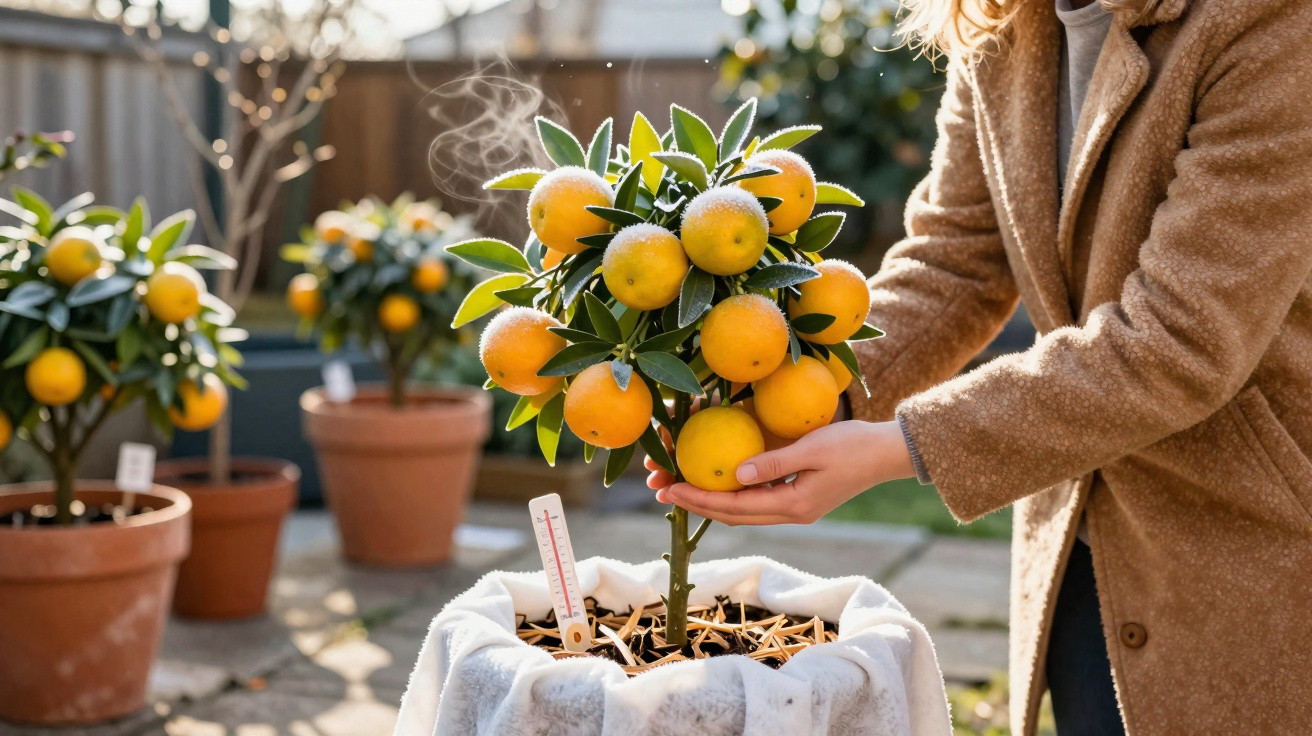
A single icy night can be enough to turn a lovingly tended lemon tree black and lifeless - and anyone who has seen that knows the disappointment. In that moment, the dream of a little “Mediterranean feel” in a typical back garden can seem to vanish. This is where it gets interesting, though: some citrus plants cope with far more cold than their reputation suggests - and they can genuinely rival the classic lemon tree.
How much frost citrus can really tolerate - and what those labels actually mean
Garden centre labels often promise things like “frost-hardy to –12 °C”. It sounds reassuring, but it is frequently misunderstood. Most of the time, those figures assume:
- a fully mature tree,
- with deep, established roots,
- planted in well-draining soil,
- and only short cold snaps rather than weeks of freezing weather.
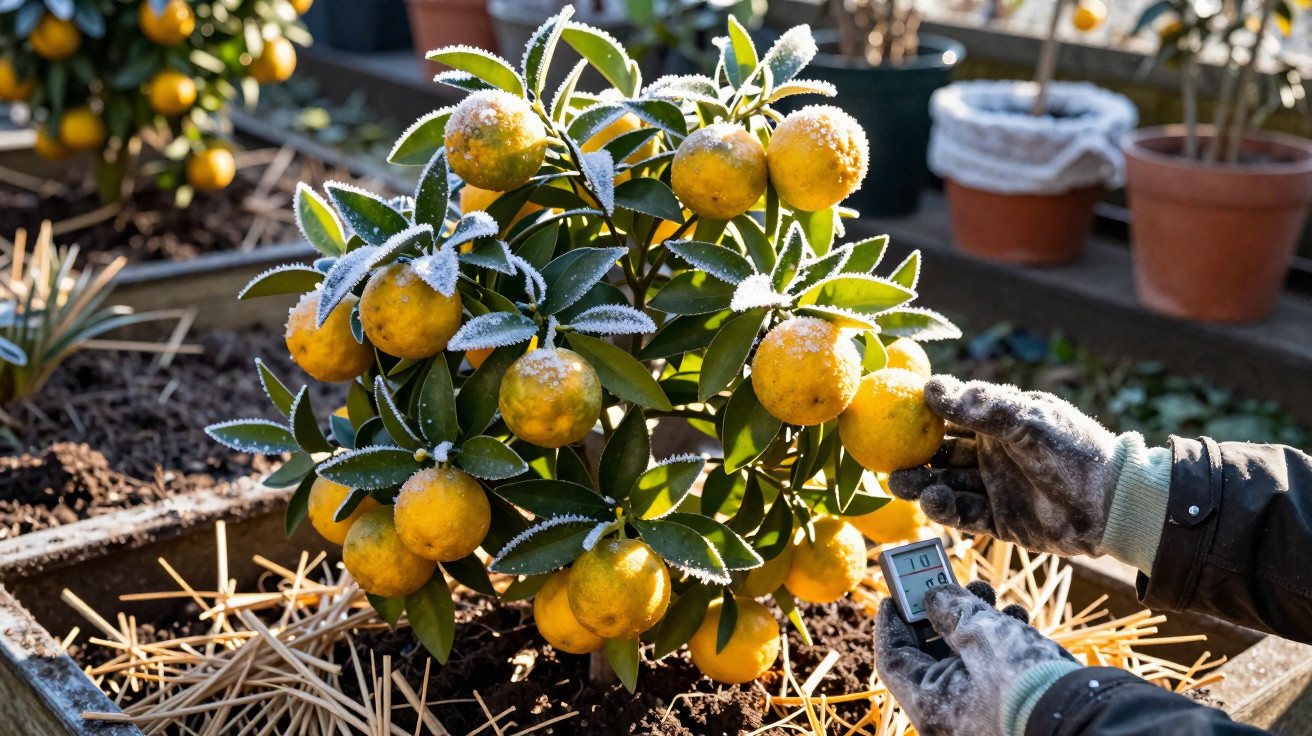
There is another catch: wood, leaves and fruit do not react to cold in the same way. A Yuzu tree may survive temperatures around –12 °C, while its fruit can be damaged much sooner. With kumquat, the plant can remain sound even when the small fruits already turn soft and glassy from about –5 °C.
“What matters is not only the temperature, but also how long the frost lasts, how wet the soil is, and whether the tree is already well rooted.”
Broadly speaking, citrus can be grouped into three categories:
- Very robust species: for example Poncirus trifoliata, which can tolerate down to around –20 °C in well-drained soil.
- Moderately robust species: these generally manage around –10 to –12 °C.
- Sensitive classics: such as the common lemon tree, sweet orange and grapefruit, which can suffer at around –3 to –5 °C.
The hidden frost champion: the three-leaved bitter orange relative
At the very top of the cold-tolerance league is a plant many people know mainly as a nursery rootstock: Poncirus trifoliata, often described as a heavily thorned “lemon tree”. Several common names are used, but botanically this is the correct one.
| Botanical name | Poncirus trifoliata |
| Growth | 3–5 m tall, 2–4 m wide |
| Position | Sun, sheltered spot, well-drained soil |
| Frost hardiness | down to about –20 °C in free-draining soil |
| Leaves | deciduous, very thorny |
Its fruits are small, yellow and intensely bitter - more of a curiosity for the kitchen, but visually striking in late autumn. Many nurseries also treat it as a practical benchmark: if a well-established specimen dies back completely, then no other citrus is likely to thrive outdoors at that location long term.
“Where Poncirus trifoliata grows without problems for decades, adventurous gardeners can also experiment with edible citrus species.”
Edible citrus species that shrug off cold surprisingly well
If you want more than ornamental value and would actually like to harvest fruit, there are several tough candidates. They are not quite as unbreakable as the thorny frost champion, but they come through winter far better than a traditional lemon tree.
Yuzu: a fashionable fruit with unexpected resilience
Yuzu (Citrus junos) originates from East Asia and has long been a favourite among top chefs. In the garden it shows impressive cold tolerance of about –12 °C.
- it grows into a densely branched shrub,
- it carries yellow, highly aromatic fruit into winter,
- it is excellent for sauces, marmalades and drinks.
Visually, Yuzu adds a subtle exotic note to the garden - without automatically demanding elaborate winter protection.
Ichang lemon: substantial fruit for exposed areas
The so-called Ichang lemon traces back to crosses involving Poncirus. That heritage combines good frost hardiness with relatively large, juicy fruit.
In sheltered spots - such as protected valleys - it can often be planted out permanently. The key point remains the same: avoid waterlogging, otherwise roots can rot in winter.
Satsuma mandarins: seedless and tougher than you’d expect
The Satsuma mandarin (Citrus unshiu) can handle temperatures around –11 °C and produces fruit that ripens very early, often from autumn onwards. The mandarins are nearly always seedless, which makes them especially family-friendly.
Compared with many common mandarin types, Satsuma tolerates cold much better - provided the soil stays open-textured and free-draining.
Kumquat ‘Meiwa’: small fruit with an edible peel
‘Meiwa’ is among the sturdier kumquats. Once properly established, plants can tolerate frost down to roughly –8 or –9 °C.
A classic kumquat trait is that the fruit is eaten with the peel. The flesh is more on the sharp side, while the skin tastes mild and almost sweet. If you grow it in a pot, you can harvest for years without having to accommodate a huge tree in a conservatory.
Hybrids involving finger lime: choose carefully
Some crosses with the so-called finger lime can cope with temperatures around –10 °C. However, quality varies widely between cultivars. If you are buying one, check the label’s frost rating very carefully and favour varieties with proven track records in gardens.
Mandarin, clementine and lemon: where the limits are
Many people are tempted by neat, compact little trees loaded with fruit at the garden centre. The issue is that appearance sells - cold tolerance usually does not. The popular classics are often far more delicate than expected.
- Common mandarins usually manage only down to about –8 °C.
- Clementines tend to be closer to –7 °C.
- Common lemon tree, sweet orange, grapefruit can show obvious damage from about –5 °C.
In particularly mild coastal areas, these species can sometimes grow outdoors year-round. Further inland - especially in frost pockets or exposed sites - large containers are often the more realistic option.
“Anything that suffers even just below 0 °C belongs, in much of the UK, in movable containers - not planted straight into the ground.”
How to protect sensitive citrus plants in winter
If you do not live in a Mediterranean climate, a bit of help is needed. Fortunately, winter protection improves markedly if you stick to a few straightforward rules:
- Choose the right spot: as close to a house wall as possible, sheltered from wind, in full sun.
- Soil: always free-draining; mix in sand or grit to prevent waterlogging.
- Root zone: apply a thick mulch or leaf layer around the base to buffer temperature swings.
- Crown protection: when severe cold is forecast, wrap the canopy with horticultural fleece or a light winter cover.
- Water: water very sparingly in winter; wet soil increases frost damage.
- Feeding: from late summer onwards, avoid nitrogen-heavy feeds so the wood can ripen in time.
With especially tricky species such as the classic lemon tree or sweet orange, a cool, bright place for dormancy is recommended: a frost-free conservatory, a light stairwell, or an unheated (but not freezing) garage with a window.
Why drainage matters more than the final degree on the label
Many hobby gardeners fixate on the supposed minimum temperature a variety “can take”. In real-world conditions, another factor often decides far more: the moisture balance around the roots.
If a citrus tree sits for weeks in cold, wet soil, even moderately chilly nights can be enough to kill roots. In contrast, in a loose, sandy-humus soil with good run-off, roots can remain viable even when temperatures dip lower.
On heavy clay in particular, it can pay to create raised beds or small mounds and incorporate plenty of grit. Cold still reaches the roots - but the far more damaging standing water is greatly reduced.
Practical examples for different regions
In mild wine-growing areas or sheltered river valleys, Yuzu, Satsuma and some Ichang types can be planted out for the long term. On the few icy days, a simple fleece wrap is usually enough.
In typical suburban settings where double-digit sub-zero temperatures occur from time to time, a mixed approach is often best: keep an extremely tough Poncirus in the bed as a permanent structural plant, and grow one or two more sensitive varieties in large containers that can be moved if necessary.
In higher ground or places with snowy winters, even the hardier citrus types need very protected positions - for example right against south-facing walls, where stored daytime warmth can slightly soften the nights.
Risks, opportunities and smart combinations
Of course, there is always some risk with any plant that did not evolve in your climate zone. Late spring frosts can destroy blossom, and cold easterly winds can desiccate frozen leaves. But if you go in with open eyes and deliberately choose robust varieties, you can still be rewarded over time with genuine citrus scent in your own garden.
Combinations are also worth considering. Some gardeners plant Poncirus as a hedge: not only is it securely thorny, it also acts as an effective windbreak for more delicate container plants. Others use it as rootstock and graft hardier varieties such as Yuzu or Satsuma onto it to gain extra frost tolerance in the root area.
If you prefer a gradual approach, start with one hardy choice planted in the ground and a second specimen kept in a container. That way you can see, in real time, how much difference location, soil and protection make - and how far you can push your own garden towards a “mini Mediterranean” without the first cold spell undoing everything.

Comments
No comments yet. Be the first to comment!
Leave a Comment