
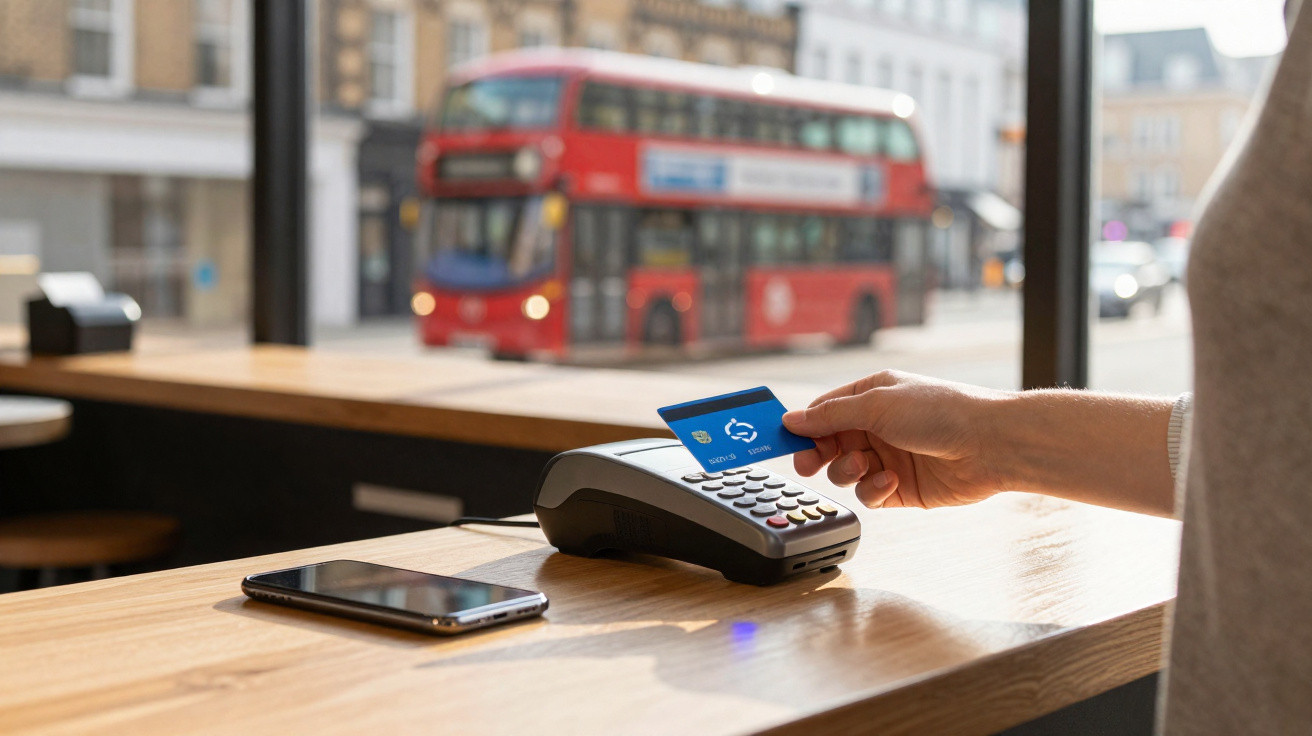
Contactless payments have long been standard across the UK. The Financial Conduct Authority (FCA) is now changing the rules behind the scenes: banks and payment providers will be able to set their own ceilings for contactless card payments, potentially raising the existing £100 limit over time or even removing it entirely.
What changes in practice from Thursday
Until now, the FCA had set a clear upper limit for contactless card payments. Following its most recent increase, this stood at £100 for each individual card transaction.
From the effective date, banks with effective fraud controls may set their own limits for contactless card payments.
The key points of the new rules are:
- The FCA will no longer impose a fixed limit.
- Firms with robust security measures may choose their own maximum limits.
- Major banks will initially retain the £100 limit, while considering possible future changes.
- Customers should receive clearer information about changes and the settings available to them.
This transfers part of the responsibility from the regulator to banks, with the aim of allowing them to respond more quickly to market trends, inflation and new technology.
Why the FCA is allowing greater flexibility
The FCA says the reform is justified by the enormous success of contactless payments. In many UK town and city centres, cards and smartphones have long taken precedence, while cash has become the exception.
Barclays data shows that 94.6 per cent of all eligible in-store card payments were contactless in 2024. Compared with 2015, the monthly number of contactless transactions has risen by more than tenfold.
UK Finance also reports record figures: by the end of 2025, contactless transactions accounted for 67 per cent of all credit card payments and 76 per cent of all debit card payments. The average contactless payment was just under £18.
The regulator expects more flexible rules to encourage firms to invest even more heavily in fraud prevention, as they will receive greater discretion over limits in return.
Will the £100 limit remain? Major banks' plans
A dramatic increase is not expected for now. Almost all major UK banks indicate that the current £100 ceiling will remain in place initially, although scenario analysis is continuing behind the scenes.
| Bank / provider | Planned limit | Can customers adjust the limit? |
|---|---|---|
| NatWest | £100, with no short-term change | Yes, lower the limit or disable contactless through the app |
| Santander UK | £100 | Yes, in £5 increments |
| Lloyds / Halifax / Bank of Scotland | Up to £100 | Yes, in £5 increments through the app |
| Barclays | £100 | Yes, freely selectable up to £100 |
| HSBC UK / First Direct | £100 | No, no individual limits in the app |
| Nationwide / Virgin Money | £100, with the situation under review | Yes, below £100 |
| TSB | £100 | Yes, lower the limit or switch off contactless |
| Starling Bank | Still under review | Yes, adjustable from £100 down to £0 |
| Monzo | No immediate changes | Yes, the limit can be adjusted or contactless disabled |
| Revolut | £100 | No lower contactless limit, but a monthly budget for total spending |
Many firms stress that they will “keep the situation under review” and intend to notify customers early of any changes. The new FCA rules therefore create something like an option: no provider has to raise its limit, but all of them could.
What about hidden security limits?
Alongside the visible cap for each transaction, many banks operate so-called cumulative limits. After a set number of contactless payments or a combined amount, the terminal requires the PIN to be entered to check that the legitimate cardholder is making the payment.
The FCA's new requirements also allow banks to redefine these background thresholds. A firm could, for example, ask for PIN entry less often - or more frequently if its own risk team considers that appropriate.
The rule change affects not only the visible £100 limit, but also the internal thresholds at which security checks are triggered.
Contactless card payments versus smartphones: what is the difference?
Alongside the traditional plastic card, mobile wallets such as Apple Pay and Google Pay are booming. The new FCA limits have only a limited effect here. Transaction values are often higher because the phone or watch provides an additional confirmation of the user's identity, for example through facial recognition or a fingerprint.
Banks assess this extra level of security differently from simply holding a card near a reader. As a result, substantially higher amounts are possible in many cases without a fixed contactless limit applying.
How well are customers protected against fraud?
Despite the additional flexibility on limits, the fundamental consumer-protection rules remain unchanged. For unauthorised card payments, such as those following loss or theft, banks must still reimburse their customers provided there has been no gross negligence.
As firms themselves bear significant costs from card fraud, they have a strong interest in rigorous fraud prevention. Industry experts expect any possible increase in limits to be directly linked to stricter security procedures.
Peter Harmston, a payments expert at KPMG UK, regards the development as a logical step: contactless payments have become standard in the UK in less than ten years. People primarily want speed and convenience, and a fixed limit increasingly no longer fits that picture.
What this FCA change means for consumers
For UK bank customers, little will visibly change on Thursday at first. Card terminals will continue to accept contactless payments up to £100. The real shift is taking place in banks' terms and conditions and internal policies.
Over the medium term, different models could emerge:
- Some providers may increase limits moderately, for example to £150 or £200.
- Others may keep the £100 ceiling but offer more detailed app controls.
- Digital banks could remove limits completely and instead rely on real-time risk analysis.
- More cautious firms may remain strict, citing fraud risks.
For customers, this brings into focus how effectively their banking app offers security features: setting personal limits, freezing a card with one tap, receiving push notifications for every payment, geoblocking, or temporarily disabling the contactless function.
Context for German-speaking countries
Contactless payments are also firmly established in Germany, Austria and Switzerland, where debates around limits and security resemble those in the UK. The British development partly acts as a testing ground: what are the effects of greater freedom over limits? How do fraudsters respond, and how do customers react?
Depending on the experience gained by banks and regulators in London, regulators on the continent are likely to examine closely whether a similar approach could be considered: fewer detailed requirements, more responsibility for institutions, and greater influence for customers setting their own limits.
For consumers, one factor is likely to matter most in the long term: transparency. Anyone who can always see in their app which limits apply, which security checks are active and how quickly a card can be frozen can make higher-value contactless payments without feeling that they are losing control.





Comments
No comments yet. Be the first to comment!
Leave a Comment