
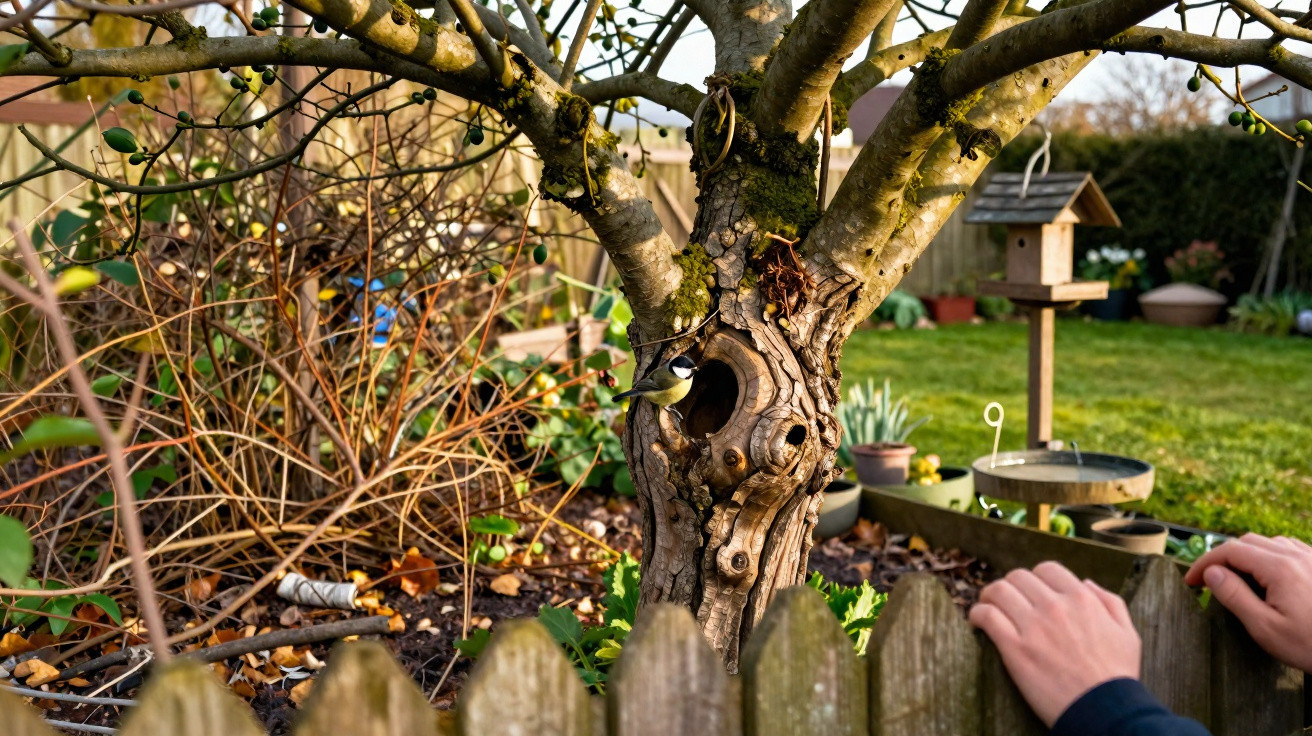
The marsh tit, a small and unobtrusive resident of woodland and orchards, can nevertheless find a place in your garden. To attract it without relying on a nest box, an old hollow tree could transform the future of your plot.
This species does not look for a perfectly tidy setting or a lawn cleared of every dead leaf. Instead, it favours living, occasionally slightly wild spaces, where insects, cavities and dense shrubs provide food and cover. Your garden can become this reassuring haven, even if it seems quiet today.
Identifying the marsh tit before waiting for it
The marsh tit is around 12 centimetres long and often weighs roughly 12 grams. Its appearance may seem understated beside the bright colours of the blue tit, yet its behaviour soon catches the eye. It moves briskly through branches, investigates bark and can vanish behind the foliage within seconds.
You can identify it by its black cap, pale cheeks and greyish-brown plumage. Its small dark bill and rounded outline give it a gentle, almost delicate look. Even so, this bird can defend its territory and locate the best shelters with remarkable accuracy.
It can easily be mistaken for the willow tit, particularly when both are constantly moving through the trees. In that case, look at the bib beneath the bill, which is often smaller on the marsh tit, as well as its paler nape. Its rather distinctive song and calls can also help you tell them apart over repeated visits.
The old tree that can transform your garden
Above all, the marsh tit values mature trees with cracks, holes or natural cavities. An old apple tree, ageing pear tree, pollarded willow or partly hollow trunk may offer it a valuable opportunity. Where some people see a tired or worrying tree, it may see a future nursery for its brood.
Old fruit trees are an especially worthwhile option. Their timber hollows as they age, their branches attract insects, and their fruit feeds many animals. By retaining an old apple tree, you are doing more than preserving a garden memory: you are safeguarding habitat that has become scarce.
Do not automatically remove dead branches where they pose no danger to people or buildings. Deadwood supports larvae, beetles and insects sought by birds in spring. A natural cavity may take years to develop, whereas removing a tree creates an immediate gap in the web of life.
Why overly tidy gardens can drive it away
A plot that is completely mown, cleared of every twig and excessively pruned may look immaculate, but it provides few resources for the marsh tit. It needs hiding places from predators, quiet areas and varied food. Thick hedges, managed bramble patches and small untouched corners make your garden far more reassuring.
Pesticides are a major issue, particularly while adults are feeding their young. Caterpillars, spiders and small insects are an essential source of protein. If this prey disappears, the parents must forage further afield, face greater exposure and risk breeding failure.
You can take action without turning your outdoor space into impenetrable woodland. Leave some leaves beneath hedges, favour native plants and keep part of the garden less managed. This slight sense of disorder may conceal a happy surprise: one morning, a quiet little song beside the old trunk.
Creating a refuge without catching or disturbing it
The best way to welcome a marsh tit is to let it choose. Do not try to get close, touch a nest or put food near an occupied cavity. Your role is straightforward: offer suitable habitat, then watch from a distance without disturbing its peace.
If your garden has no hollow trees, a nest box can help, provided it does not replace efforts to restore the surrounding natural environment. Choose an entrance hole of about 28 millimetres and position it somewhere quiet, sheltered from intense sun and heavy rain. A clean, sturdy and well-sited nest box can provide a temporary answer where cavities are genuinely lacking.
Also consider bird safety. Keep feeders away from places where cats can hide, avoid chemical treatments and retain vulnerable trees whenever they remain safe. Your patience matters more than expensive landscaping: the marsh tit will choose the place it considers least dangerous.
A few practical steps can make your garden more welcoming throughout the year:
- Keep an old apple tree, a pollarded willow or any hollow tree that presents no risk.
- Plant a dense hedge made up of native species to provide natural shelter.
- Leave an area of leaves, twigs and deadwood to encourage insects.
- Avoid pesticides, especially in spring and early summer.
- Fit a 28-millimetre nest box only where natural cavities are absent.
Seeing this small tit return to a garden is more than a pleasing reward. Its presence shows that insects, plants and trees are gradually recovering their roles there. As silence spreads across some green spaces, preserving an old tree can therefore offer a simple, practical and hopeful response.



Comments
No comments yet. Be the first to comment!
Leave a Comment