
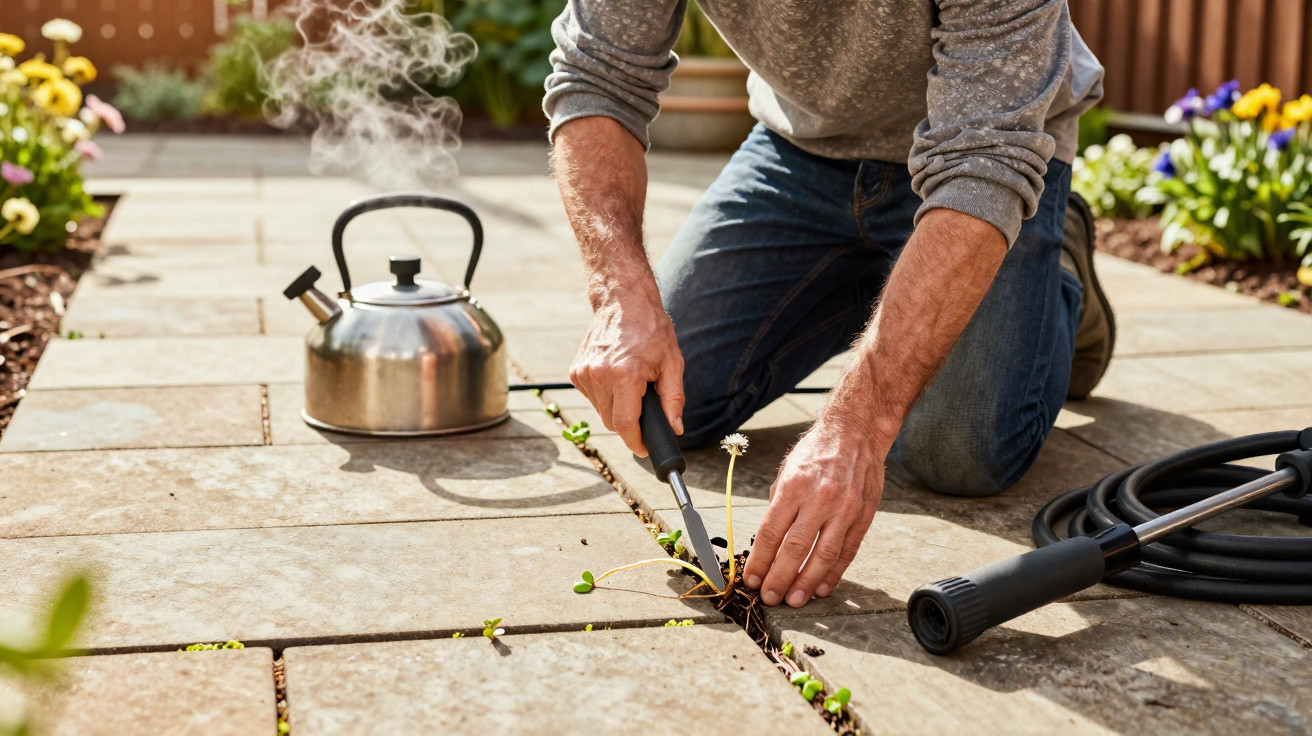
Small shoots emerging between paving slabs can quickly make outdoor spaces look neglected, particularly after several spells of rain.
Patios, garden paths, courtyards and balconies all provide gaps where unwanted plants readily take hold. They benefit from settled dust, moisture and seeds carried by the wind. Before reaching for a drastic product, it is worth understanding which options are genuinely suitable, effective and kind to both surfaces and the environment.
Why paving joints fill with plants so quickly
At first glance, a slab or block does not seem like a favourable place for plants to grow. However, the joints between them create small shelters. Over time, they collect soil, dead leaves, sand and organic debris. This material provides enough growing medium for seeds to germinate.
Less frequently used areas are usually affected first. Along a wall, beneath an outdoor table or close to a gutter, dampness tends to linger for longer. Some species grow rapidly and develop roots that can establish themselves deep inside cracks.
Acting as soon as the first shoots appear reduces the effort required: young roots are far easier to pull out than well-established plants.
Hand weeding remains the most long-lasting solution
The most straightforward approach is to pull out plants by hand, preferably after rain or light watering. Damp soil breaks apart more easily, meaning the root is more likely to come away with the stem. This makes a considerable difference: if the root remains in place, another shoot may emerge a few weeks later.
For narrow joints, a paving-joint scraper, a narrow hoe or a garden knife allows precise work. A small wire brush can also help remove moss and very shallow-rooted growth. However, it is not always suitable for deep-rooted plants such as dandelions or plantains.
How to pull plants out without damaging the surface
- Work when the joints are slightly damp, rather than waterlogged.
- Slide the tool alongside the root before pulling the plant.
- Collect removed stems to prevent any seeds from spreading.
- Sweep the patio after using the scraper.
- Inspect cracks and refill joints that have become too deep where needed.
This task may feel repetitive, but it becomes quick when carried out regularly. Ten minutes every fortnight in spring can often prevent a lengthy cleaning session in summer.
Very hot water: a practical option for small areas
Very hot water is another commonly used method for plants growing between paving slabs. Poured carefully at the base of the stems, it causes thermal shock that destroys the visible parts of the plant. After a few hours or days, the wilted growth is easier to remove using a stiff broom or scraper.
This technique is suited to limited areas, such as a few rows of blocks or the edges of a patio. Extra care is needed near plants you want to keep. The water may also reach neighbouring roots or weaken plants positioned beside a flower bed.
Hot water works quickly on leaves, but it does not always eliminate the deepest roots. A second treatment may be needed.
Caution is also necessary with sensitive surfaces. Some materials, especially fragile slabs, cracked paving or surfaces already damaged by frost, do not tolerate sudden temperature changes well. Testing the method in an inconspicuous spot is advisable.
Pressure washing: effective, but use it carefully
A powerful pressure washer can dislodge young shoots, moss and deposits trapped between paving blocks. It gives an immediate visual result and can restore a cleaner appearance to a heavily soiled path. However, it also has drawbacks.
An overly powerful jet can erode joints, blast out stabilising sand or weaken edging. On an older patio, it may even encourage plants to return quickly: the newly formed hollows become fresh collection points for soil and seeds.
How to minimise damage
- Start at a moderate pressure.
- Keep the nozzle a sensible distance from the surface.
- Aim the jet along the joints instead of directing it beneath the slabs.
- Allow the surface to dry completely.
- Add suitable sand to joints that have been hollowed out.
Replacing sand after cleaning is often overlooked. Yet properly filled joints leave less room for seeds and slow down the establishment of unwanted plants.
Targeted heat can help, under certain conditions
Garden thermal weeders dry out the visible parts of plants using a heat source. Their benefit lies in their targeted action, especially on mineral paths and areas that are difficult to weed by hand.
Care is essential. Dry leaves, mulch, wooden furniture, hedges and flammable materials must be kept well away. This technique is not recommended in dry or windy weather, when the risk of fire increases. It does not always prevent regrowth, as roots may survive beneath the surface.
On resin-bound paving, composite slabs or certain reconstituted stone surfaces, heat may affect the colour or structure of the covering. Reading the manufacturer’s guidance helps avoid unpleasant surprises.
Why salt and vinegar are misleading quick fixes
Salt and vinegar are often suggested in household gardening advice. Their reputation as easy solutions conceals several issues. Salt can seep into the ground, disrupt microbial life and cause lasting harm to nearby planting. Highly concentrated vinegar may scorch vegetation, while also reaching soil and surface-water runoff.
In the United Kingdom, the use of plant protection products is tightly regulated, particularly on impermeable surfaces such as courtyards, patios and paths. Rainwater can run quickly from these areas into drainage systems. Local rules may also impose specific restrictions. Before using any product, check that it is authorised and that its intended use is stated on the label.
A clean surface does not justify risking pollution of soil, drains or neighbouring plants.
Preventing shoots from returning on the patio
Weeding is more effective when combined with preventative maintenance. Regular sweeping removes leaves, soil and seeds before they become established. Damaged joints should be repaired, as dips hold more moisture and organic matter.
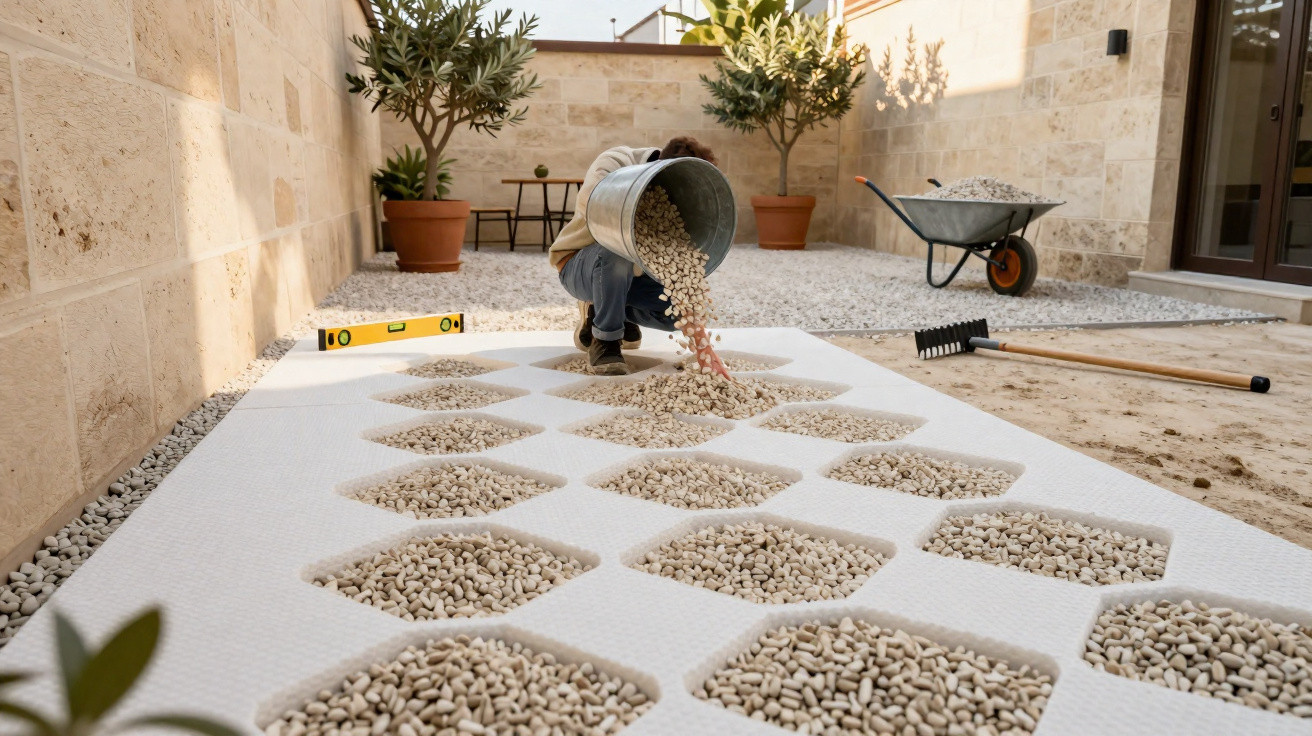
In highly exposed areas, adding an appropriate jointing sand can improve the stability of paving blocks. Some formulations harden slightly on contact with water, making germination more difficult. They do not replace maintenance, but they significantly reduce how often intervention is needed.
A quick check after rain, an inspection at the start of spring and regular sweeping are often enough to keep a path looking tidy. This routine avoids overly aggressive methods and also extends the lifespan of slabs, paving blocks and edging.



Comments
No comments yet. Be the first to comment!
Leave a Comment