
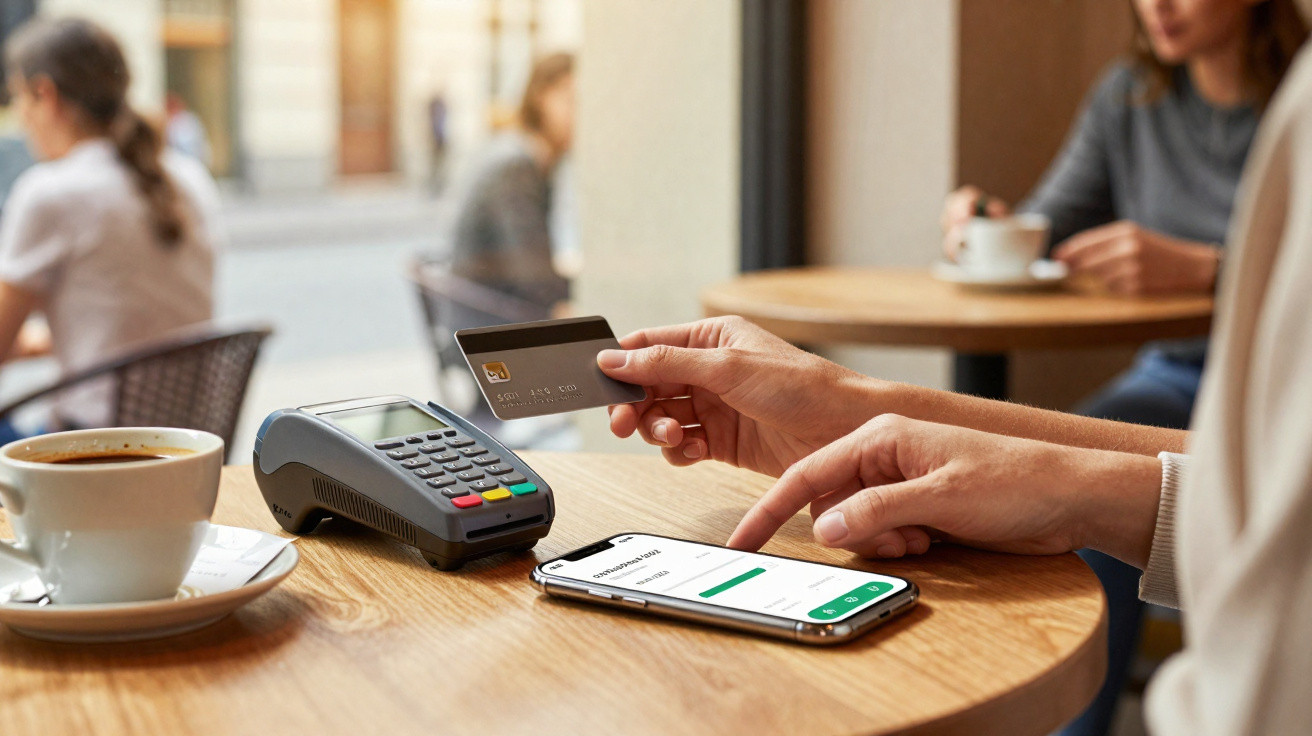
From this Thursday, an important change takes effect for cardholders: the Financial Conduct Authority (FCA) and banks are setting the framework for future contactless card payment limits in Great Britain - and for the extent to which customers can help decide them. Although the change initially affects UK consumers, it also indicates the broader direction of card payments.
What exactly is changing in the rules
The UK’s Financial Conduct Authority will allow banks and payment providers to set their own contactless card payment limits, both higher and lower. They must, however, have robust fraud-prevention measures and security controls in place.
“From now on, firms with effective security measures can independently decide the maximum value of contactless card payments.”
Until now, the maximum value for a contactless payment without entering a PIN in Great Britain has been centrally set at £100. That limit remains in place for the time being, as major banks have said they will not make immediate changes. Above all, the regulatory reform creates greater flexibility for the future.
Importantly, firms must clearly notify customers whenever they alter limits. Changes cannot therefore be introduced without warning.
Why the FCA is widening banks’ scope
The reform follows the huge growth in contactless payments. Almost all card transactions in UK shops are now completed using “tap and go”.
- Around 94.6% of all eligible in-store card payments are made contactlessly.
- The number of contactless payments each month is roughly ten times higher than it was in 2015.
- Contactless payments account for 67% of all credit card transactions.
- For debit cards, the figure is as high as 76% of payments.
- The average contactless transaction is worth just under £18.
Through the new rules, the FCA aims to enable banks to respond more effectively to three factors:
- Changing customer behaviour and demand for faster payments
- Inflation and rising day-to-day prices
- Technological progress in cards, payment terminals and fraud detection
The regulator also anticipates a further benefit: if banks are able to set limits more freely, they have a stronger incentive to improve their fraud systems. After all, they bear most of the cost when criminal transactions are approved.
Contactless payment security and customer protection
The fundamental consumer protections remain unchanged. Anyone who becomes the victim of unauthorised card fraud must still be reimbursed by their bank, for example where a lost or stolen card has been used improperly.
There are also two existing security safeguards that will continue to apply and are not removed by the new rules:
- Background limits: After a certain number of contactless transactions or once a specified combined amount has been reached, the terminal again requires the PIN to be entered.
- Mobile wallets: Higher values can also be paid contactlessly through Apple Pay, Google Wallet and similar services because the smartphone or smartwatch actively verifies the user, for example through facial recognition or a fingerprint.
The FCA will also allow banks to make these “cumulative” security thresholds more flexible. Firms could therefore choose whether to request a PIN after a set number of transactions, once a total value is reached, or through another model.
How major banks are responding
While the new freedom begins on Thursday, there is unlikely to be an immediate rush towards higher limits. Most major providers plan to wait and see.
| Bank / provider | Current limit | Can the customer lower the limit? | Can contactless be switched off? |
|---|---|---|---|
| NatWest | £100 | Yes, to below £100 in the app | Yes |
| Santander UK | £100 | Yes, in £5 steps | Yes |
| Lloyds / Halifax / Bank of Scotland | £100 | Yes, in £5 steps | Yes |
| Barclays | £100 | Yes, up to £100 in the app | Yes |
| HSBC UK / First Direct | £100 | No | Partly restricted |
| Nationwide / Virgin Money | £100 | Yes, below £100 is possible | Yes |
| TSB | £100 | Yes, down to £0 | Yes |
| Starling Bank | £100 | Yes, from £100 down to £0 | Yes |
| Monzo | £100 | Yes | Yes |
| Revolut | £100 | Not directly, but monthly overall limits are available | Partly possible |
Nearly all providers stress that they are reviewing the current level and reserve the right to make changes. One point is clear: the route towards higher contactless payment values is open, but it is not being used yet.
More customer control: set a limit or block contactless payments
The FCA is explicitly encouraging the industry to give customers more control. Many banks are already moving in that direction: their apps allow users to reduce limits or disable the contactless function entirely.
“Anyone who feels uneasy about high contactless payment values can lower their own limit with many providers - in some cases to zero.”
Typical options in banking apps include:
- Setting the maximum value for each contactless card payment
- Disabling contactless payments completely for specific cards
- Limiting total monthly spending across all card payments
- Enabling push notifications for every card transaction
These settings are particularly useful for security-conscious users, older people, or parents giving cards to teenagers. At the same time, they preserve the convenience of quick payment at the till.
Why limits are not rising immediately
From banks’ perspective, there are several reasons not to increase limits too quickly:
- Contactless cards can appeal to thieves because smaller sums can be spent without a PIN.
- The higher the limit, the greater the potential value of each fraudulent payment.
- Banks cover reimbursement costs for unauthorised transactions and want to keep that exposure under control.
An expert at consultancy KPMG points out that contactless payments have become the standard method in just under ten years. Above all, people want speed and convenience. Even so, a complete removal of upper limits is not expected immediately; gradual changes over the coming years are more likely.
What German users can learn from the contactless payment trend
The UK changes do not apply directly to Germany, but they offer an interesting indication of future payment trends. Many consumers there already use debit and credit cards predominantly for contactless purchases, whether at the supermarket checkout or in a café.
Three points stand out clearly:
- Contactless will continue to become the norm. Cash-free, fast payments are becoming established in almost every everyday setting.
- Individual limits are becoming more important. Anyone wishing to keep their risk low should check their own banking app for available settings.
- Mobile wallets are becoming more significant. They combine higher payment values with biometric verification and are therefore considered comparatively secure.
Many German banks already allow customers to temporarily block cards through online banking or an app, disable overseas payments, or restrict certain payment methods. It is worth examining the settings closely - as in Great Britain, more options are likely to be added over time.
Key terms explained: contactless payments, cumulative limits and PIN requests
Contactless payment: The card or smartphone is briefly held against the terminal, with the chip transmitting data wirelessly via NFC. No PIN is needed up to a certain value.
Cumulative limit: Alongside the individual transaction limit, such as £100 per payment, there is a background combined limit. After several smaller purchases or once a particular total has been reached, the terminal requests a PIN again - even where the individual amount remains below the limit.
PIN request: This acts as an additional barrier against misuse. Combining an individual limit with a background limit is intended to prevent criminals from using stolen cards indefinitely for small-value purchases.
For consumers, the rule change in Great Britain means one thing above all: contactless payment remains the standard, but is moving towards greater flexibility. Banks gain more room to increase limits, while customers should ideally receive more control to reduce them. Those who manage their card deliberately, activate push notifications and set sensible limits can combine convenience with a high level of security - regardless of whether the maximum limit is £50, £100 or significantly more in future.






Comments
No comments yet. Be the first to comment!
Leave a Comment