
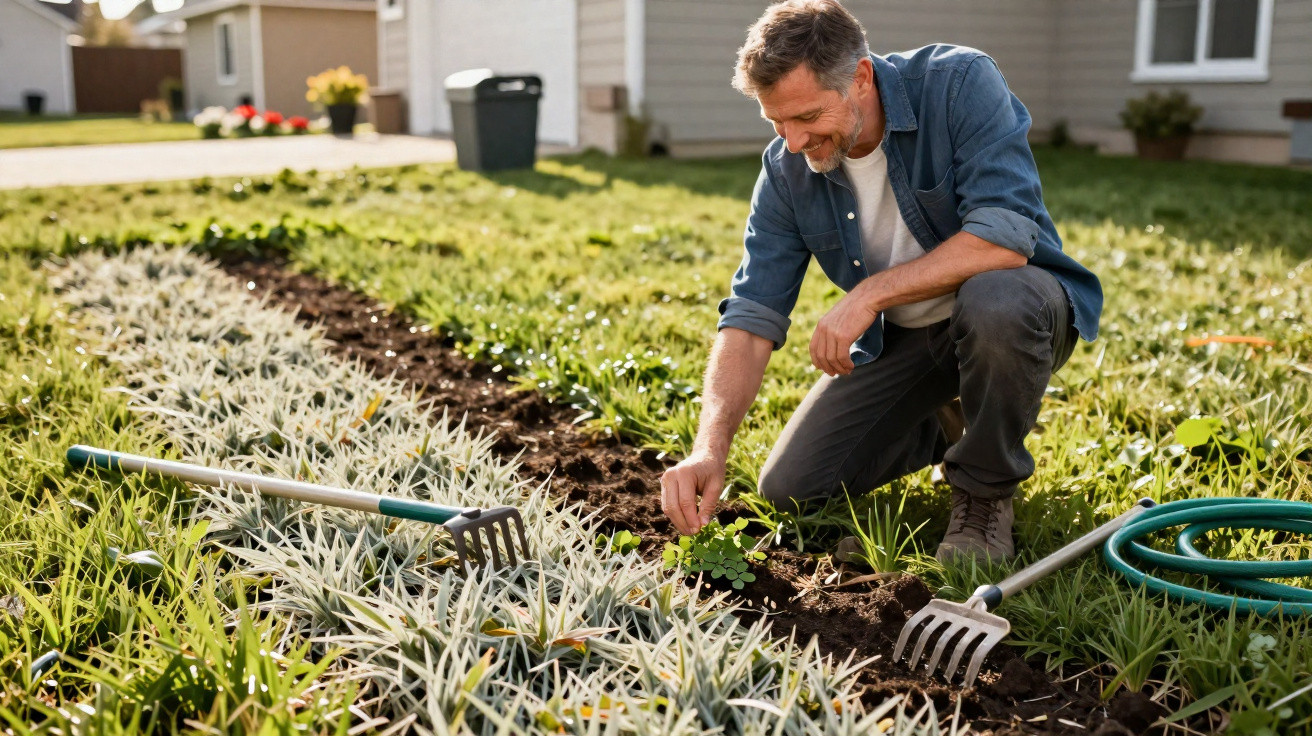
A lawn cover that looks pale after winter does not necessarily need expensive products or daily watering.
When faced with thin patches and discoloured blades, many people immediately reach for fertiliser or the hose. Yet the hardiest lawns often depend on a few straightforward actions taken at the right time. The aim is not to force growth, but to restore the soil conditions that allow roots to feed themselves sustainably.
First, remove the layer preventing the soil from breathing
A lawn may appear watered and well maintained while still lacking air. The cause is often found around the base of the grass: mowing clippings, leaves, moss and dry stems gradually build up into a dense layer known as thatch.
This accumulated material slows water penetration and deprives the roots of oxygen. Nutrients then remain near the surface instead of properly benefiting the plants. Over the weeks, weak areas spread and the ground starts to feel hard underfoot.
Light scarification is enough in most cases
Using a scarifier scratches the ground, removes moss and cuts through part of this suffocating layer. There is no need to dig deeply: overly vigorous treatment can tear out young roots and leave bare patches.
"The right approach is to comb the surface, not plough the plot. The aim is to allow air, rain and light to reach the base of the grass blades."
Early spring is a suitable time, when growth is restarting but intense heat has not yet arrived. Collect the debris removed during the process, then allow the lawn a few days to recover.
Cut back on frequent light watering that weakens roots
Dry-looking soil at the surface can easily suggest that watering is needed every day. However, this habit makes the lawn cover dependent on it. When water is supplied in small amounts very frequently, roots stay close to the surface where moisture is readily available.
At the first hot spell, they no longer have sufficient reserves to seek water deeper down. Moisture-related diseases can also develop more readily, particularly when watering takes place in the evening and the leaves remain wet overnight.
Water less often, but soak the ground more deeply
A more substantial watering once or twice a week, depending on the weather and soil type, encourages the root system to grow downwards. This approach requires some observation: clay soil holds water for a long time, whereas sandy ground dries far more quickly.
- Water early in the morning to reduce evaporation.
- Check moisture several centimetres below the surface before using the hose again.
- Avoid very short daily watering sessions.
- Reduce watering after rainfall that has genuinely soaked into the ground.
Even a basic rain gauge helps distinguish a brief shower from rain capable of moistening the soil deeply. It is a useful tool for avoiding blind watering.
Maintain a protective mowing height
Very close mowing gives an immediate impression of tidiness, but it also leaves the ground directly exposed to sunlight. When grass blades are cut too short, the soil warms up faster, loses moisture and provides more room for unwanted plants.
A mower blade set higher, by contrast, provides natural protection. The stems shade the soil and lessen the stress caused by hot periods. A height of seven to eight centimetres works well during dry weather or as summer approaches.
"A taller lawn is not a sign of poor maintenance: it acts as a shield against heat and retains moisture in the ground."
Do not remove too much growth in one go
If the grass has grown considerably, it is better to mow twice, leaving a few days between cuts. Suddenly removing a large proportion of its height puts strain on the plants. A useful rule is never to cut more than one third of the length at each pass.
Short, dry clippings can be left behind in a thin layer. They break down quickly and return a small amount of organic matter to the soil. Thick, damp clumps, however, may smother the surface and should therefore be collected.
Introduce dwarf clover into sparse areas
Small white clover can alter the appearance of a grassed area without requiring a complete transformation. This plant belongs to the legume family. It lives alongside bacteria in its roots which can capture nitrogen from the air and make it available in the soil.
Nitrogen plays a major part in leaf growth. Combining dwarf clover with grasses can reduce reliance on industrial fertilisers while making damaged areas denser. Its foliage also remains green for quite a long time during dry spells.
Steps for successful overseeding with dwarf clover
- Remove moss and debris from bare patches.
- Lightly scratch the surface with a hand cultivator or rake.
- Spread around five grams of seed per square metre.
- Firm the ground gently using a board or roller.
- Keep the area moist until seedlings emerge, usually after ten to twelve days.
This method works best when nights remain cool and the soil does not dry out too quickly. Sowing can be carried out after light scarification, as the seeds then benefit from better contact with the soil.
Adapt lawn care to the type of ground
Compacted soil may sometimes need additional aeration. This involves making small holes with a garden fork or hand aerator, especially in trampled areas near a patio, gate or play area. Water can then infiltrate more effectively instead of running off.
Pale patches may also point to a local issue: compacted earth, dense shade, animal urine, fungal attack or the presence of white grubs. Before sowing or increasing watering, inspect the affected spot. A clearly defined circle that is very dry in the middle does not require the same treatment as an area overrun with moss.
By scarifying carefully, spacing out watering, raising the mowing height and diversifying the plants, the soil becomes looser and less reliant on intervention. Results do not appear within a few days, but a dense lawn will then cope much better with unpredictable spring weather and summer heat.





Comments
No comments yet. Be the first to comment!
Leave a Comment