
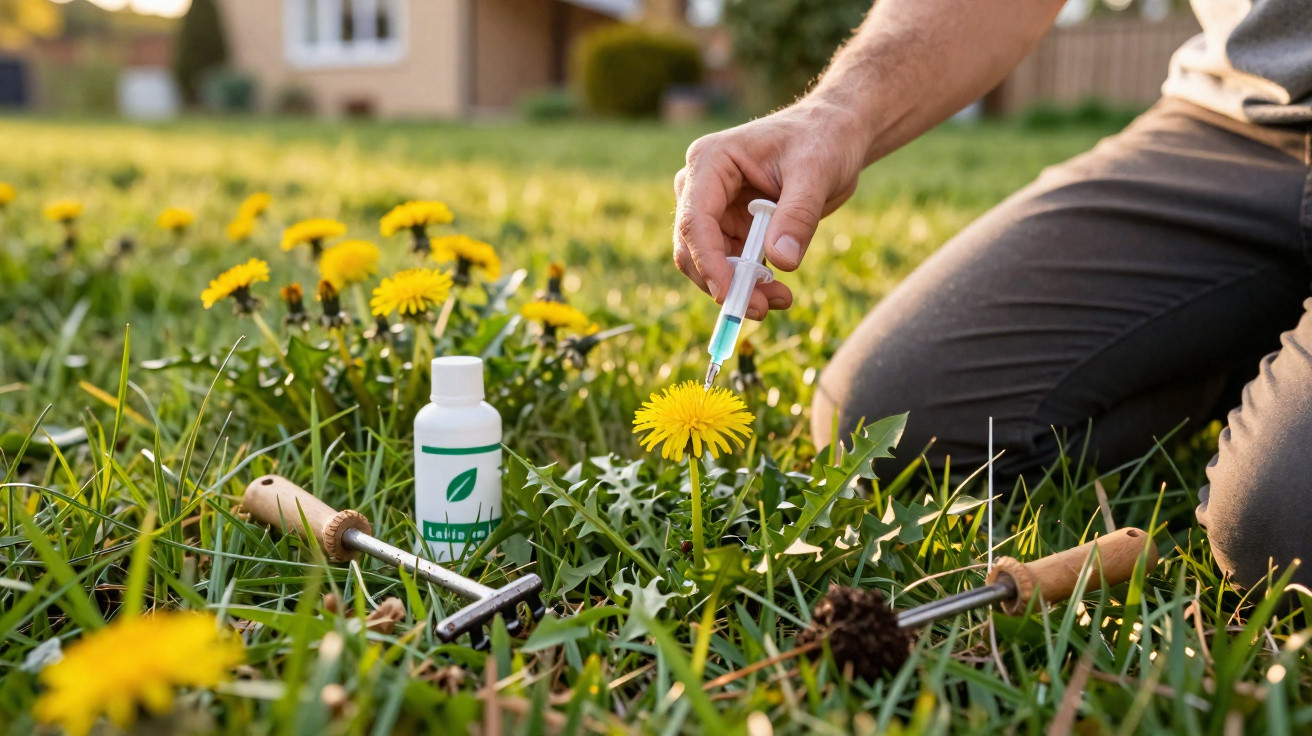
A localised treatment can prevent unsightly bare patches in the lawn.
In spring, their yellow flowers can give a garden a country feel. Yet when they spread through a well-kept lawn, dandelions soon become frustrating. They withstand hand weeding, return after incomplete removal and scatter their seeds with the slightest breeze. A highly targeted approach using a syringe is intended to weaken the plant without scorching the surrounding grass.
A deep root explains why dandelions return
Dandelions have a long, fleshy taproot. In loose soil, it can reach depths of up to 50 centimetres. This underground section stores the water and reserves the plant needs to grow again.
This is why simply pulling off the leaves is ineffective. Even with a weeding knife, the root is often broken. A small section left in the ground can then form a new rosette a few weeks later.
“A root fragment just a few centimetres long can be enough to restart a dandelion. The real challenge is therefore below the soil surface.”
The plant is also highly effective at colonising open ground. Each flower head can release nearly 200 seeds. They travel easily on the wind and may sometimes wait several years before germinating. A sparse area of lawn therefore provides ideal ground.
The principle of treating the centre of the dandelion
American landscape designer Genevieve Schmidt recommends a straightforward technique: injecting a small amount of product into the centre of the dandelion, where the leaves emerge. The aim is not to spray the entire plant, but to direct the product down towards the root.
Treating one clearly visible plant takes around 20 seconds. You need a small syringe kept solely for gardening, fitted with a needle fine enough to reach the plant’s crown. The crown is the area between the leaves and the root.
Over the following days, the foliage becomes less vigorous. The root gradually dries out. After one to two weeks, depending on the weather and the size of the plant, removing the whole dandelion becomes easier.
Why spraying often causes problems
A product sprayed onto a dandelion rarely lands only on the dandelion. Nearby blades of grass also receive droplets. As a result, a dry or brown patch may appear around the targeted plant.
This mark can take a long time to fill in, particularly during a dry spring or periods of high heat. It also leaves bare soil, encouraging unwanted new seeds to establish.
“Injection reduces contact with the blades of grass. It is particularly suitable for isolated plants growing in an area that you want to keep even.”
The technique has another practical advantage: it can be used when the foliage is wet. Spray treatments often require dry weather and adequate temperatures to work properly. A localised treatment relies less on these conditions, although waterlogged soil can make the final extraction less clean.
Which product should be used carefully?
White vinegar is frequently mentioned in gardening tips. It contains acetic acid, a substance that dries out plant tissue. However, household vinegar bought for cooking or cleaning is not approved in France as a garden weedkiller.
To remain within the regulatory framework, it is better to choose a product authorised for this purpose, including certain biocontrol weedkillers formulated with acetic acid. The label must state the plants concerned, the dosage, precautions for use and application conditions.
- Use a syringe reserved exclusively for gardening.
- Wear gloves and avoid any contact with the eyes.
- Do not treat plants immediately beside a vegetable patch, pond or water source.
- Store the product out of the reach of children and animals.
- Follow the dose shown on the packaging, without trying to make it stronger.
Vinegar, even when presented as a household solution, is not harmless. If it is too concentrated or applied in excessive amounts, it can disrupt soil life and scorch neighbouring plants. Treating plants individually and only when needed reduces this risk.
The right way to remove the weakened root
Once the foliage turns yellow and comes away more readily, it is still better to remove the root rather than allowing the plant to decompose in place. Hold the rosette as close to the ground as possible and pull gently. If it still resists, slide a weeding knife down alongside the root without turning over all the soil.
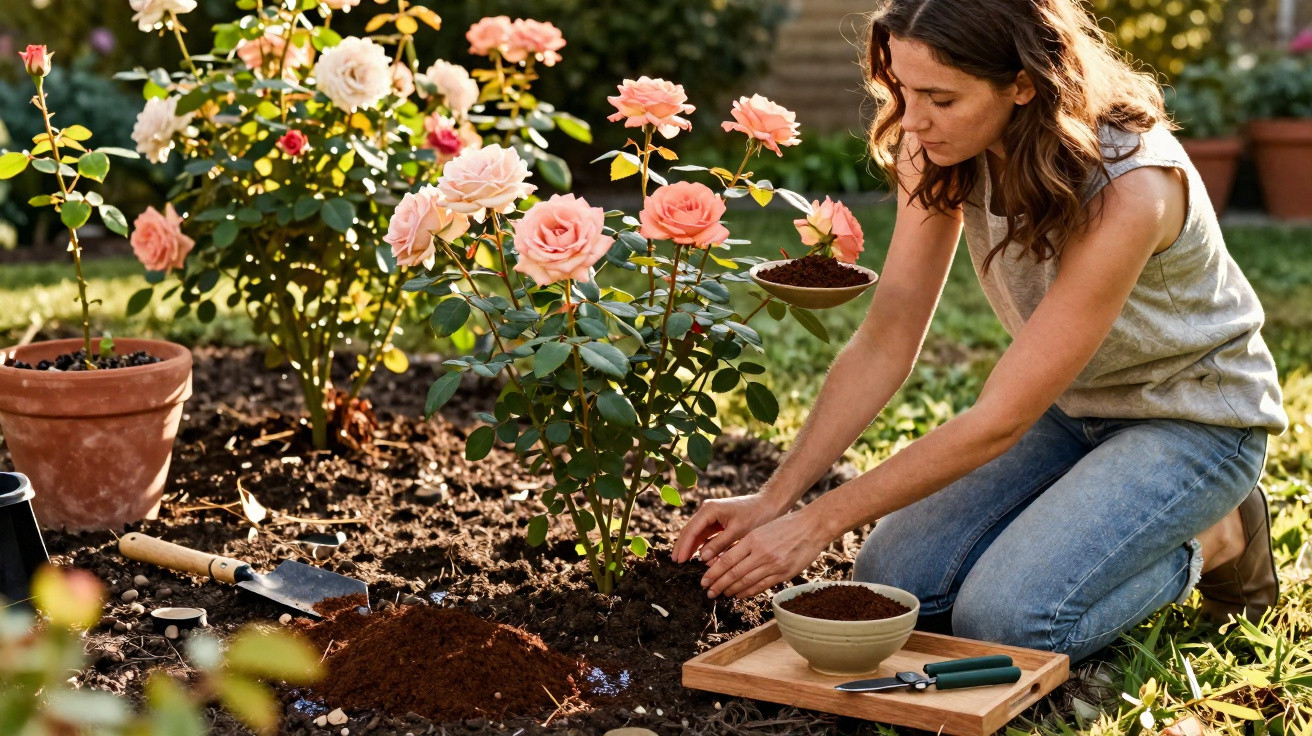
The small hole left in the lawn should not be left empty. Fill it with a light mix of fine soil and mature compost. Then add a few grass seeds suited to the site’s exposure and firm them down gently.
- Wait until the dandelion begins to die back.
- Carefully remove the rosette and root.
- Fill the hole with fine soil.
- Sow a few grass seeds.
- Water gently until the young shoots emerge.
A denser lawn naturally limits new dandelion growth
The most effective way to reduce dandelions is to leave them no space to establish. Dense grass blocks light and competes with young seedlings. Conversely, grass cut very short leaves the soil exposed and makes germination easier.
Maintaining a mowing height of between 6 and 8 centimetres helps keep the soil cooler and more shaded. This practice slows the establishment of weeds while protecting the lawn during dry spells.
Overseeding in late summer or early autumn can also transform the appearance of a tired area. The ground is still warm, rainfall often returns and young grasses establish before spring comes back.
Do all dandelions need to be removed from the garden?
Not necessarily. In a little-used corner, at the base of a hedge or in a strip left wilder, these flowers provide an early resource for bees and other pollinating insects. They can flower before many cultivated plants.
A balanced option is to reserve targeted injection for ornamental areas, paths or places where children play. Dandelions can remain in a more natural part of the plot. This division keeps the lawn looking neat without turning the whole garden into a space without self-seeded flowers.



Comments
No comments yet. Be the first to comment!
Leave a Comment