
Spring is almost here, and garden centres are stacked with brightly coloured seed packets. Yet Monty Don, Britain’s best-known television gardener, suggests a very different approach for March: rather than cramming every border with new varieties, give centre stage to a quiet workhorse - a shrub that brings structure, flowers and colour for years.
Why Monty Don focuses on shrubs in March instead of sowing seed
For Monty Don, March is not about frantic experiments; it’s about making long-term investments in the garden. While many amateur gardeners are still flicking through catalogues and ordering unusual seed, he prioritises plants that will stay put.
"A single shrub can shape your plot for decades - far beyond one season."
As the soil begins to warm, the days lengthen and the worst frosts have usually passed. He uses this window to plant woody plants before they are in full growth and spending energy on leaves and flowers. That way, roots can settle in steadily, without the stress of heat or drought.
Shrubs offer more than blossoms alone: they create screening, frame paths, cut the wind, provide shelter for birds and food for insects. If you fill beds only with annuals, you are forced to redesign and replant every year. A well-sited shrub, by contrast, can easily last a gardener’s lifetime.
What Monty Don means by “woody shrubs”
When Monty Don talks about “woody shrubs”, he means perennial ornamental shrubs whose stems become woody. This includes, for example:
- Hydrangeas - generous flower heads in shades from white to deep pink
- Shrub roses - romantic blooms, with many varieties offering fragrance
- Viburnum - early flowering, sometimes strongly scented
- Philadelphus - often called “mock orange”, with a sweet scent in early summer
- Smaller ornamental shrubs - such as spiraeas, deutzias or lavender heath
These shrubs form the garden’s framework. They give borders shape even when winter leaves very little in flower. Where there are only perennials and summer bedding plants, a plot can quickly look bare once the first cold weather arrives.
His March favourite: bare-root shrubs
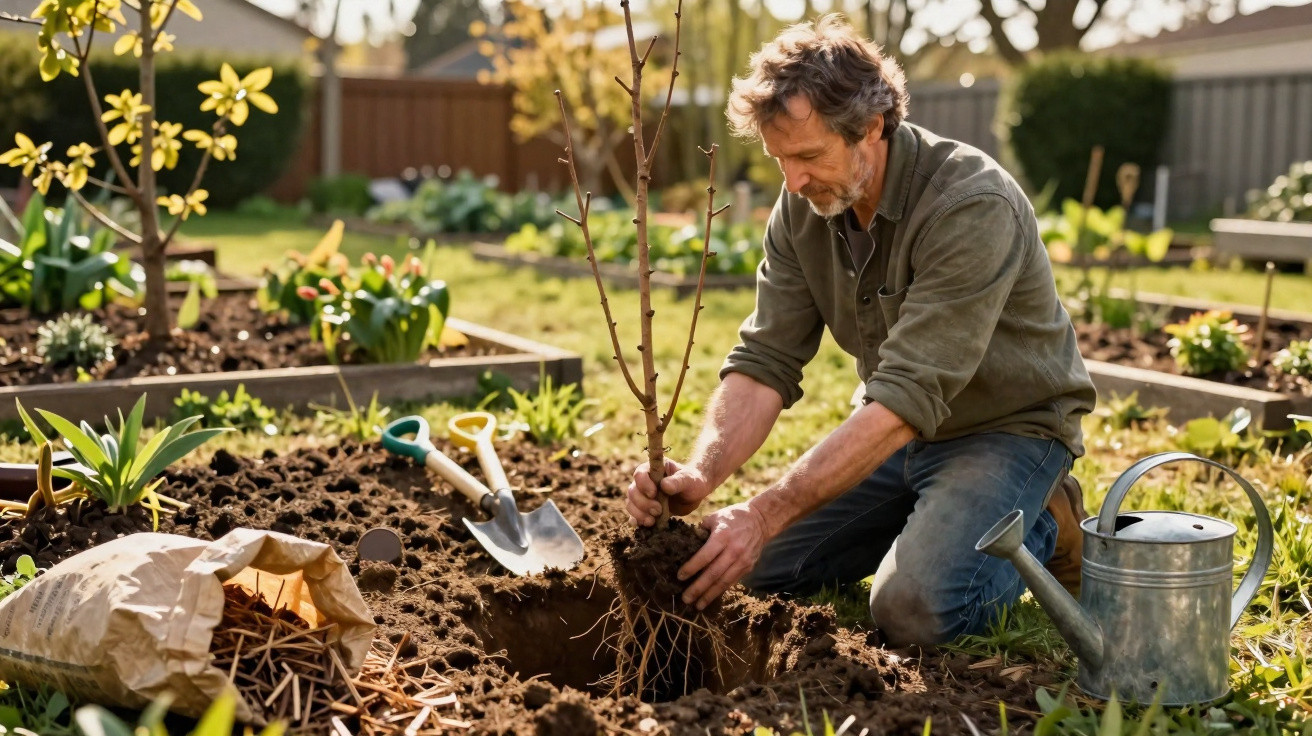
Monty Don is particularly keen on shrubs sold as bare-root plants. They come without a pot and without compost, lifted straight from the field. In many garden centres you’ll see them bundled together with labels, but with no container.
This format brings several clear advantages:
- They are often cheaper than container-grown plants.
- The roots are easier to spread out in the planting hole.
- When planted correctly, they usually establish more quickly.
March tends to be ideal for this: the soil is damp but no longer icy, and plants are only just starting into growth. This gives them time to build a dense root system before warmer spells arrive in early summer.
Step by step: how Monty Don plants shrubs in March
If a shrub is to thrive for decades, technique matters. Monty Don sets out straightforward rules that are easy to copy - whether you’re gardening in a terraced house plot or out in the countryside.
1. Remove old roots and weeds
Preparation comes before the first spadeful. He advises clearing all perennial weeds - such as ground elder or couch grass - from the planting area. If you cut corners here, you will later be fighting regrowth right in the shrub’s root zone.
2. Dig a wide, shallow hole rather than a narrow, deep one
Monty Don recommends a hole that is wide but fairly shallow: around 20–25 centimetres deep and clearly wider all round than the root system. He loosens the base lightly rather than digging deeply.
"The roots should spread sideways into the established soil - not get stuck like a spiral in a narrow shaft."
A key point in his method is to add no fresh growing medium into the hole. No compost, no peat-free specialist mix, no multipurpose compost. He wants the shrub to adapt immediately to the existing garden soil, rather than sitting in a “luxury nest” it is reluctant to leave.
3. Prepare and position the roots
If you wish, you can soak bare roots in water before planting. Monty Don also likes using mycorrhizal fungi as a powder dusted directly onto the roots. These fungi form a partnership with the plant and help it take up nutrients more effectively. It isn’t essential, but it can speed up establishment.
The shrub should sit slightly above the eventual soil level, not buried too deeply. Fan the roots out, then add soil in layers, firming as you go with your hands or gently with your foot. At the end, you should have a small mound rather than a hollow where water could collect.
4. Water well and mulch
Once planted, water thoroughly. The goal is to remove air pockets so the roots make contact with soil everywhere. After that, he suggests adding a generous layer of mulch - for instance well-rotted compost, composted bark, or leaf mould.
Mulch helps the soil retain moisture, buffers temperature swings and releases nutrients gradually. One important detail: keep mulch away from the stem so it does not encourage rot.
Which shrubs suit small and large gardens
Not everyone has space for huge rhododendrons or sprawling lilac. However, many of the woody plants Monty Don praises are available in compact forms that will even fit into smaller front gardens.
| Shrub | Suitable position | Key benefit |
|---|---|---|
| Hydrangea | Partial shade, humus-rich soil | Large flower heads, long flowering period |
| Shrub rose | Sun, free-draining soil | Fragrance, often several flushes of bloom |
| Viburnum | Sun to partial shade | Spring flowers, sometimes attractive autumn colour |
| Philadelphus | Sun to partial shade | Intense blossom scent near seating areas |
If funds are tight, you can add one shrub each March. Over time, this builds a stable backbone for the garden, rather than repeatedly filling every space each spring with short-lived planting.
What this tip means for German-speaking gardens
Although Monty Don mainly has British gardens in mind, his advice translates well to conditions in Germany, Austria and Switzerland. In many areas, March is also a strong month for planting, provided the soil is frost-free and not waterlogged.
In colder regions, the best window may shift slightly later, towards late March or early April. The principle remains the same: plant shrubs earlier in the year so they can root in before the summer weeks.
With increasing drought, deep-rooting woody plants can be especially valuable. They often cope better with extended hot spells than shallow-rooted summer flowers grown in thin soil.
Common mistakes when planting shrubs - and how to avoid them
Many weak, struggling shrubs can be traced back to a handful of familiar errors. Rather than reaching for extra fertiliser or specialist compost, it pays to check the basics first:
- Planted too deep: the root collar should remain visible. If the shrub sits too low, rot becomes a risk.
- A narrow, deep hole: roots circle rather than spreading outward, which slows establishment.
- A dry spring: in the first year, water newly planted shrubs regularly, especially in windy weather.
- No pruning: some shrubs benefit from a light formative trim after planting to encourage branching.
Keeping these points in mind - and following Monty Don’s planting method - helps you create robust, low-maintenance garden structure without having to buy an entirely new display every year.
Why a single shrub can change the whole garden
A well-placed shrub can function like an outdoor piece of furniture: framing the patio, marking the entrance, creating a focal point at the end of a path, or separating a productive area from a seating space.
Many gardeners underestimate this effect because they focus mainly on flower colours. Monty Don’s recommendation shifts the emphasis to a different question: how should the garden look in spring, summer, autumn and winter - not only at its peak in midsummer?
By using March to plant one long-lived shrub with intent, you gradually build a garden that doesn’t reset to zero each year. That is the appeal of this seemingly modest decision - it pays you back more strongly with every spring.



Comments
No comments yet. Be the first to comment!
Leave a Comment