
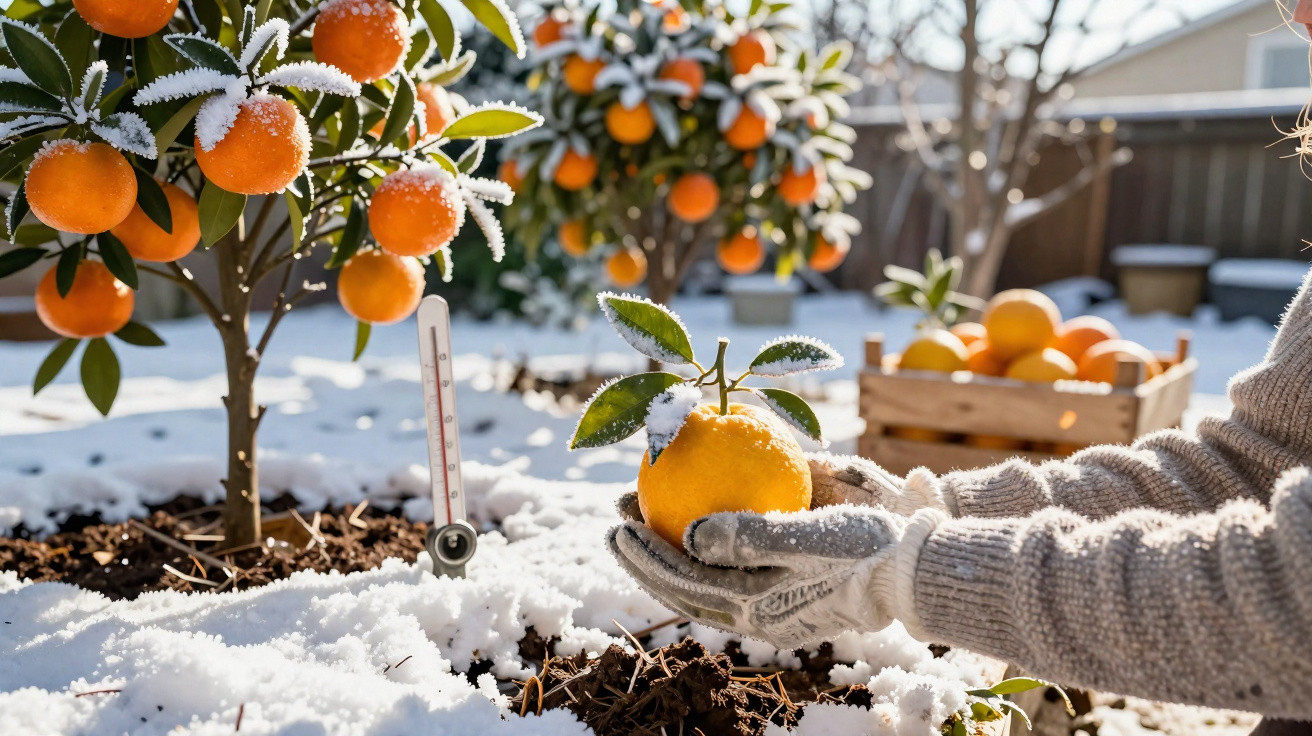
Some varieties shrug off biting cold and make ordinary lemons look fragile.
Plenty of amateur gardeners know the familiar heartbreak: you buy a lemon tree full of anticipation, care for it lovingly - and after the first frosty night you are left staring at a blackened stick. Even so, front gardens and allotments are increasingly home to exotic citrus that can cope with genuinely harsh winters. There is no trickery involved: it comes down to choosing the right varieties and using a few targeted protection measures.
What frost ratings on citrus really mean
Plant labels often promise something like “hardy down to –12 °C”. It sounds reassuring, but it can be misleading. In practice, it usually refers to:
- a well-established tree that has been in the ground for several years,
- free-draining soil that is not waterlogged,
- and a brief cold spell lasting only a few hours or a handful of nights.
What many people miss is that wood, leaves and fruit do not respond to cold in the same way. A yuzu can survive short periods well below –10 °C, while the fruit may be damaged at higher temperatures. With kumquat, the plant itself copes impressively - but the little orange “marbles” can spoil at around –5 °C.
“The hardiness rating mainly describes whether the plant survives - not whether the fruit remains unscathed.”
For garden use, citrus are often grouped into three practical categories:
- very robust candidates: down to about –15 °C, and in individual cases even –20 °C,
- moderate frost tolerance: roughly –10 to –12 °C,
- sensitive classics: start to suffer from around –3 to –5 °C.
The popular container favourites such as true lemons, oranges and grapefruits clearly fall into the last group. If your winters are properly cold and you still want to harvest citrus, you need to reach for varieties that are naturally much tougher.
The toughest contender: the trifoliate bitter orange
The undisputed frost champion in the citrus world is Poncirus trifoliata. In English it is commonly known as the trifoliate orange; you may also see it described as a very thorny “lemon” tree.
| Botanical name | Poncirus trifoliata |
|---|---|
| Common name | Trifoliate orange, trifoliate bitter orange |
| Size | about 3–5 m tall, 2–4 m wide |
| Position | full sun, sheltered from wind, well-drained soil |
| Frost tolerance | down to about –20 °C in free-draining ground |
| Leaves | deciduous, very thorny |
As a shrub or small tree, it looks almost eccentric: long greenish thorns and distinctive three-part leaves. In autumn, yellow fruits glow among the branches - attractive to look at, but extremely bitter and nowhere near a dessert fruit.
“Poncirus trifoliata is considered the frost barrier: if this tree freezes in your garden, no other citrus has a chance outdoors there.”
Commercial growers have long used it as a rootstock for grafted varieties. In private gardens it is used either as an impressive (and extremely thorny) hedge or as a kind of “weather indicator”: if it comes through unscathed, then slightly more sensitive citrus may be worth trying in a well-protected spot.
Edible citrus fruits that cope surprisingly well with cold
If you want more than an ornamental plant - and would like real fragrance in the kitchen and flavour on the plate - there are several hardier varieties. In milder areas of Germany, Austria and Switzerland they are already being grown successfully in the ground, and they can also work in similarly sheltered microclimates.
Yuzu: restaurant-level aroma from your own garden
Yuzu (Citrus junos) is prized in fine dining. The shrub grows densely and bushily, with thorns as well as strongly scented blossoms. It will tolerate around –12 °C, and can handle a touch more frost for short spells as long as the soil stays loose and well-draining.
The yellow fruits look fairly plain, but the fragrance is intense - somewhere between mandarin, grapefruit and lime. It is ideal for marinades, desserts, tea or homemade lemonade.
Ichang lemon: the hardy juice provider
The so-called Ichang lemon is a cross involving Poncirus. It brings together toughness and genuinely useful juice. Once established, it can endure severe winters and produces large yellow fruits with plenty of juice that is perfectly usable. For colder, windier gardens and higher ground, it is one of the most interesting options.
Satsuma mandarin: seedless and tougher than you would expect
The satsuma mandarin (Citrus unshiu) can manage temperatures down to almost –11 °C if the site is right. From autumn it bears sweet fruit that is usually seedless, with a thin peel. In sheltered courtyards or protected spots in warm wine-growing climates, satsumas can be planted out long-term with some winter protection.
Kumquat ‘Meiwa’: small fruit you eat peel and all
‘Meiwa’ is among the more robust kumquats. Well-established plants withstand about –8 to –9 °C. The appeal is the way you eat them whole: the peel tastes sweetish, while the flesh is more tart. It suits a balcony or patio, or as an exotic feature close to a warm house wall.
Hybrids with finger lime: exciting, but read the small print
Hybrids involving the popular “finger lime” offer unusual pulp made up of tiny acidic pearls. Some of these crosses cope with temperatures around –10 °C, while others are far more frost-sensitive. If you treat yourself to one of these rarities, check the hardiness information on the label very carefully.
Mandarins, clementines, lemons: how far can you push it outdoors?
In a garden centre, a small mandarin tree in a pot is hard to resist. Many people buy on impulse - and only think about winter when the forecast starts talking about persistent frost. The everyday classics are not as tolerant as the specialist varieties above.
- standard mandarin varieties cope with about –8 °C,
- clementine trees are around –7 °C,
- lemons, oranges, grapefruits can suffer serious damage from –5 °C.
In especially mild coastal areas, mandarins and clementines can be planted in the ground if they are sheltered from wind. Further inland, permanent planting is risky. In those situations, large containers are clearly the safer route, because they can be moved to a protected place when frost threatens.
How sensitive citrus varieties get through winter
If you want to grow the classic Mediterranean types, you need a winter plan. The following approaches are well proven:
- bright, cool overwintering spaces at 3–10 °C, such as conservatories, stairwells or frost-free garages with a window,
- fleece covers or dedicated winter-protection tents for short cold snaps outdoors,
- a thick mulch layer of leaves or bark around the root zone to slow the ground freezing.
“In winter, citrus trees need less water, no fertiliser and, above all: protection from waterlogging and icy wind.”
Overwintering too warm often leads to long, thin shoots and leaf drop. Cool and bright is better than living-room warmth with dry central heating. You can extend watering intervals considerably, letting the compost dry slightly between waterings.
Position, soil, care: helping cold-tolerant citrus reach their potential
Even the hardiest citrus will fail on a waterlogged north-facing slope. The basic recipe for success is:
- full sun for fragrance, flowering and flavour,
- a sheltered position, for example beside a south- or west-facing wall,
- well-drained soil, improved if necessary with sand, grit or gravel.
In hard winters, temporary protection is worthwhile even for robust varieties - for instance, breathable fleece around the crown and a deep mulch layer. If you want maximum reassurance, build a simple wooden frame around the plant and pack the gap with leaves or straw.
Why some citrus types drop their leaves
Poncirus and some hybrids shed their leaves in autumn. It can look disappointing at first glance, but it gives the plant a real advantage: without foliage, transpiration is reduced and freezing winds do less harm. Evergreen citrus may look better through winter, but they are much more sensitive to dry, cold conditions.
There is also a practical point for children and pets: the extremely thorny trifoliate orange is a very poor choice as a climbable tree. As a living barrier against unwanted visitors, however, it works extremely well.
Why exotic citrus fruits are worth it in the kitchen
Anyone who puts in the effort to plant hardier citrus is rewarded with flavours that are rarely found in supermarkets. Yuzu lifts sauces, dressings and fish dishes. Satsumas can be picked and eaten straight from the tree, while kumquats - peel and all - are excellent in marmalades or chutneys. Even the more bitter fruits of Poncirus or Ichang lemon can still be used for syrup, bitter lemon-style drinks, or as a punchy botanical in gin.
Gardeners who enjoy experimenting often pair citrus in the border with other heat-loving plants such as figs, rosemary or bay. Against a sheltered house wall, this can create a small “southern” bed that becomes more resilient over the years, as the plants help to block wind and shade the soil.


Comments
No comments yet. Be the first to comment!
Leave a Comment