
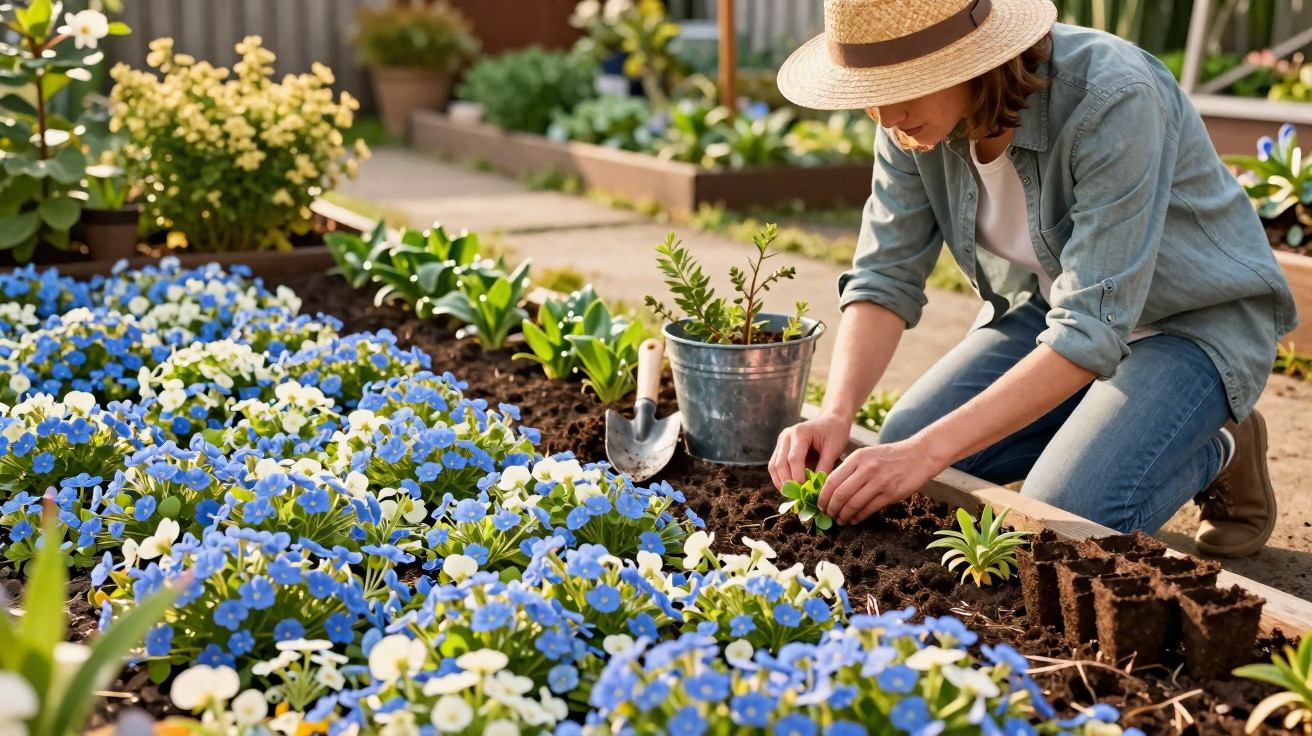
Anyone who ends up on hands and knees in the border every March with a bucket and a kneeling pad knows the same dispiriting routine: you finish weeding, then after the next shower a fresh crop of green tufts appears. There is, however, a surprisingly straightforward way out. Perennial ground cover plants that cloak the soil like a living carpet leave little room for opportunistic weeds. Plant them in March and you’re setting yourself up for colourful beds instead of endless weeding.
Why weeds keep returning despite all your effort
Beneath every flower border sits an unseen “seed bank”. The soil holds countless seeds, some of them lying dormant for years, simply waiting for light and moisture. As soon as the surface is exposed or the ground is loosened deeply, those seeds are triggered into life-and the bed can seem to erupt with new growth.
Many home gardeners then do what feels sensible but often backfires: they pull everything out as thoroughly and as deep as possible. That action brings yet more seeds up from lower layers to the surface. The result is a second wave of seedlings a few weeks later.
"If you keep the soil bare all the time, you’re permanently inviting weeds in. If you cover it deliberately, you take away what they need."
Annual weeds vs persistent perennials: the difference matters
Not every weed behaves in the same way. Specialists mainly distinguish between annual species and long-lived troublemakers with powerful root systems.
- Annual weeds such as chickweed or purslane spread by seed and complete their life cycle in a single season. If you slice them off early, just above the soil, the problem is often over quickly.
- Perennial species such as dandelion or cleavers develop strong roots. If any root fragments remain in the ground, they repeatedly re-sprout.
With annuals, a sharp hoe used so it skims along the surface is usually enough. There’s no need to drive the blade deeper-doing so only drags more buried seeds up into the light.
Perennials, by contrast, generally require one proper, hands-on session on a day when the soil is damp and workable. Use a dandelion fork or a digging fork and go down as far as necessary to remove the entire root. Leave even a small piece behind and the plant will stage its comeback from that point.
Living mulch: ground cover as a natural brake on weeds
Rather than leaving soil exposed and repeatedly hoeing it over, many experienced gardeners now rely on living mulch. In practice, this means long-lasting, perennial plants that spread to cover the ground completely, forming a green-or flowering-carpet layer.
These ground covers bring several advantages at once:
- They deny weeds light – under dense foliage, many seeds don’t germinate at all.
- They conserve moisture – particularly helpful in dry summers.
- They protect soil structure – less drying out, reduced crusting, and lower erosion.
- They replace bare earth with flowers – an immediate visual improvement.
"A continuous carpet of ground cover works like a living soil cover-permanent, attractive and far less maintenance than exposed soil."
Brunnera macrophylla: the spring standout among carpet-forming plants
One perennial in particular is widely valued by garden professionals: Brunnera macrophylla, often known in English as Siberian bugloss. It produces masses of delicate, sky-blue flowers and is happiest in partial shade to full shade.
Typical characteristics of this perennial include:
- flowers from around mid-March through to May
- forms dense clumps that broaden year after year
- prefers loose, humus-rich soil with reliable moisture
- performs well beneath shrubs, along the edge of woody planting, or in a north-facing bed
Depending on the cultivar, the heart-shaped leaves may be plain green or marked with silvery patterns. Silver-leaved Brunnera varieties can look remarkably luminous in darker parts of the garden.
Plant in March: how to establish a flowering carpet properly
The best window for creating this living mulch is early spring, once the ground has dried a little but still feels fresh and moist. In many areas, March is ideal-the plants then have a full growing season to settle in and start claiming space.
Step by step to a low-maintenance border
- One final thorough weeding
Start by removing all existing weeds as carefully as you can. For perennial weeds, make sure you lift out the whole root system. - Loosen only the top layer
Use a rake or cultivator just a few centimetres deep. The aim is a crumbly surface without hauling deeper seed layers up to the top. - Work in a little compost
A thin layer of well-rotted compost improves structure and nutrient availability. Lightly rake it in-don’t dig the bed over. - Plant more closely than you think
Set the perennials slightly nearer together than labels often suggest. Ideally, the foliage should touch by the first or second year. - Water in and let them get on with it
Water thoroughly after planting. During dry spells in the first few weeks, water again as needed.
In the first year, a small amount of hand work is still normal: any weeds that slip through can simply be pulled out. Once the perennials knit together into an unbroken cover, the need for weeding drops dramatically.
Suitable ground cover for different parts of the garden
Not every plant suits every site. If you match your ground cover to the conditions in the bed, you’ll save work in the long run.
| Location | Suitable ground cover | Special feature |
|---|---|---|
| Partial shade / shade | Brunnera macrophylla, barrenwort (Epimedium), sweet woodruff | Early flowering, likes humus-rich soil |
| Sun, on the dry side | Cushion phlox, Sedum species, thyme | Forms low, flowering mats for rock gardens or edging |
| Sun, evenly moist | Hardy geranium, catmint, lady’s mantle | Tough gap-fillers between perennials |
By mixing different species, you not only create a more dynamic look, you also spread the risk: if one variety struggles in an extreme summer, others can close the gaps.
Less work, more life in the border
Switching from bare soil to permanently planted areas also changes the garden’s microclimate. Soil organisms are better supported, earthworms help keep the ground open, and microorganisms convert organic material into humus. Plants benefit from that, and you’ll often find you need to fertilise or water less frequently.
A dense plant carpet also makes the question of herbicides less relevant. Avoiding chemical products helps protect insects, soil life and groundwater. More flowers also mean more food for bees, bumblebees and butterflies-an advantage that matters increasingly in built-up areas.
Practical pointers from real garden experience
- Keep perennials clearly marked in the first year so young shoots aren’t accidentally pulled as “weeds”.
- Watch for woody suckers and self-sown tree seedlings: remove them early while they still lift out easily.
- In very hot summers, water deeply once or twice rather than sprinkling little and often.
- Every few years, divide old clumps to rejuvenate them and to plant new areas affordably.
Gardeners who follow this approach usually notice the change after two seasons: instead of spending every weekend digging and picking through borders, a quick check now and then is enough. What often shifts most is how you view the garden-less battling, more designing.

Comments
No comments yet. Be the first to comment!
Leave a Comment