
What’s really behind it?
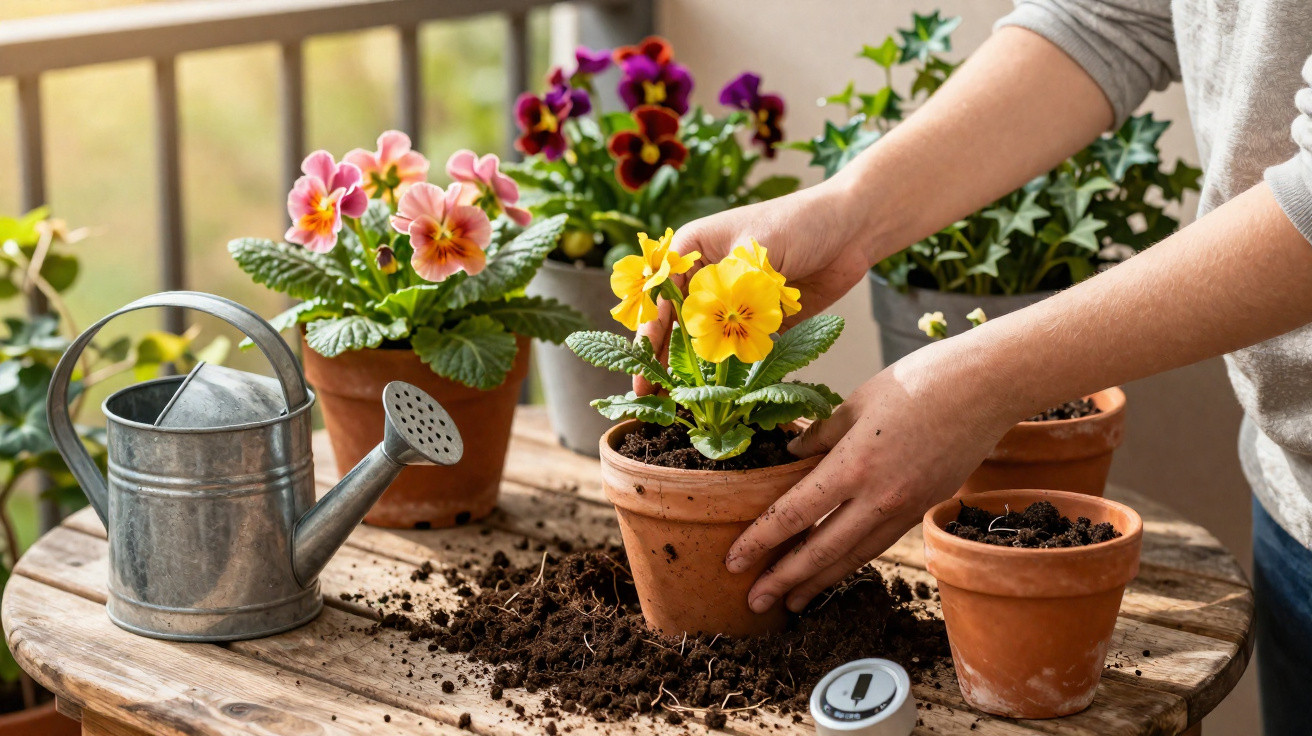
Primroses are often seen as easy-going signs of spring, yet in plenty of homes and on balconies they seem to give up far too soon. In most cases it’s not down to a lack of a green thumb, but a handful of common care misunderstandings. Once you know what they are, you can turn this so‑called disposable plant into a surprisingly long-lived perennial.
Primroses: popular spring stars with a short lifespan?
In late winter you’ll see them everywhere: supermarkets, garden centres, market stalls - tables piled high with primroses. Bright flowers, low price, straight into the basket. Many people treat them like a bunch of tulips: enjoy them briefly, then throw them away. That’s a shame, because a large proportion of the primroses on sale are perennial and can return every spring for years.
Primroses usually don’t die because they’re “difficult” - they die because they’re put in the wrong place, watered the wrong way, and thrown out far too quickly.
If you follow a few basic rules, you can extend their life noticeably. The same three mistakes come up again and again.
Mistake 1: Primroses are kept far too warm
The classic scenario: the primrose is placed right in the middle of the living room - above a radiator - or on a sunny windowsill in a well-heated room. It feels cosy for us, but for the plant it’s the first step towards heat stress. Primroses generally originate from cooler, damp regions, and naturally flower in late winter and early spring.
When they sit in dry, heated air, they respond with:
- flowers that wilt quickly
- soft, yellowish leaves
- an overall shorter flowering period
That’s why many horticultural professionals say primroses behave in warm rooms more like a “living bouquet”: lovely to look at, but not built to last.
The right spot for strong blooms
To keep these small spring flowers going, they need brightness - not heat. Single‑digit to low double‑digit temperatures are ideal.
Suitable places include, for example:
- a cool, bright hallway away from direct heat
- windowsills in unheated rooms
- a covered, frost-sheltered outdoor area near the front door
- the balcony, provided prolonged severe frosts aren’t forecast
What matters most is: bright, airy, not draughty, and clearly cooler than a typical living room. The closer the conditions are to their natural habitat, the longer the flowers will last.
Mistake 2: Watering incorrectly - between drought stress and waterlogging
The second major stumbling block is watering. Some hobby gardeners try to do everything right and pour plenty of water into the decorative pot every day. Others only water occasionally - until the primrose is drooping sadly in the corner.
Both extremes cause trouble:
- Too dry: the root ball shrinks, leaves droop, buds drop, or fail to open at all.
- Too wet: water sits in the pot, roots rot, the plant first looks “tired” and then collapses altogether.
How to water primroses properly
Primroses like evenly moist compost, but never soaking wet. A simple rule of thumb helps day to day:
| Situation | What to do? |
|---|---|
| Surface is dry, pot feels light | Water until it runs out of the bottom, then pour away any water in the saucer after 10–15 minutes |
| Compost still slightly moist | Just check - don’t add more water |
| Pot feels heavy, compost is very wet | Pause watering, remove leftover water, let the pot drain thoroughly |
One more tip: rather than watering over the leaves, apply water close to the root area or from below - for example by placing the pot briefly in a saucer filled with water. Afterwards, discard any excess. This keeps foliage and flowers dry, helping to prevent fungal problems and rot.
Mistake 3: Primroses go in the bin after flowering
Possibly the saddest mistake: once the display is over, the primrose ends up in general waste or the food-and-garden caddy. Yet many varieties have what it takes to live a long time as a garden perennial.
A lot of commonly sold primroses are hardy, or at least robust enough to cope in a border for several years. If you don’t discard them after flowering but plant them out instead, you’ll often be rewarded with blooms again the following spring.
How to move potted primroses into the garden
The best time to plant out is in spring, when the ground is no longer frozen and sharp cold snaps are no longer likely. Proceed like this:
- Carefully remove spent flower stems and withered leaves.
- Choose a garden spot that resembles a light woodland edge: humus-rich soil that stays moist but not waterlogged.
- Depending on the variety, pick sun to partial shade; it’s best to avoid harsh midday sun.
- Plant with the root ball intact, water in well, and don’t let it dry out in the first few weeks.
Many primroses repay the move into a border by returning year after year - turning a throwaway decoration into a permanent garden resident.
Location, soil, variety: points that are often underestimated
In shops the label usually just says “primrose”. In reality, there are different species and varieties, and they don’t all want exactly the same thing. Some cope with more sun; others prefer shadier corners. Many do best in slightly moist, nutrient-rich soils that don’t tend to become waterlogged.
If you want to plant several primroses in the garden, it helps to place them according to the site:
- Varieties with stronger, thicker leaves: more suited to partial shade through to sun, as long as the soil doesn’t dry out.
- Fine-leaved forms: better in dappled shade under shrubs or along the north edge of borders.
- Mixed colour packs from discount stores: watch how they perform first, and relocate them the following year if needed.
How long primroses can really last
Many people only expect a few weeks of flowers on the windowsill. Kept cool, watered appropriately, and later moved outdoors, that timeframe can be extended significantly. Indoors, primroses often flower for several weeks; once established in the garden, the perennials then produce fresh flower stems again in the years that follow.
Interestingly, some primroses will even naturalise a little if they find a spot that suits them. They can then pop up in slightly different places in the border - in gaps, between stones, or beneath shrubs. Over time, this creates a more natural-looking spring display.
Practical day-to-day tips for primroses
If you buy primroses regularly, a few routine habits can save a lot of frustration:
- Check when buying: leaves should be firm and deep green, with no mushy patches and no brown edges.
- Transport: don’t leave them for hours in a warm car; take them home promptly.
- At home: place them somewhere cool and bright first, before using them in your indoor displays.
- Nutrients: after a few weeks in a pot, a weak dose of fertiliser in the watering can help prevent the plant from becoming depleted.
For families, primroses also make a useful beginner plant for children: they respond quickly to poor care (which is instructive), but they also reward correct treatment just as fast with fresh buds.
Why primroses are so sensitive to warmth
A primrose’s early flowering habit is closely linked to its origins. Many species grow in mountain regions or in cooler woodland understorey. There, a slight rise in temperature in late winter signals that spring is approaching. Put those plants into a 22 °C living room and they effectively “think” it’s midsummer. Flowering speeds up, and the plant’s energy is used up quickly.
Once you understand that, you start seeing your radiator differently: pleasant for us, but for a primrose it’s the fast lane to the end of flowering.
Which plants pair well with primroses
In the garden, primroses look especially balanced when planted alongside other early bloomers. Good companions include:
- snowdrops and crocuses
- Siberian squill and small daffodils
- lungwort, barrenwort, or small hostas in partial shade
These planting combinations help borders look lively very early in the year, even though most perennials are still dormant. At the same time, the plants suit each other because they prefer similar soil and light conditions.
So if you avoid the three typical care mistakes - too warm, watered incorrectly, and binned too quickly - and treat primroses as small perennials rather than disposable purchases, a few simple potted plants can become a lasting spring ritual that brings colour back to the garden every year.

Comments
No comments yet. Be the first to comment!
Leave a Comment