
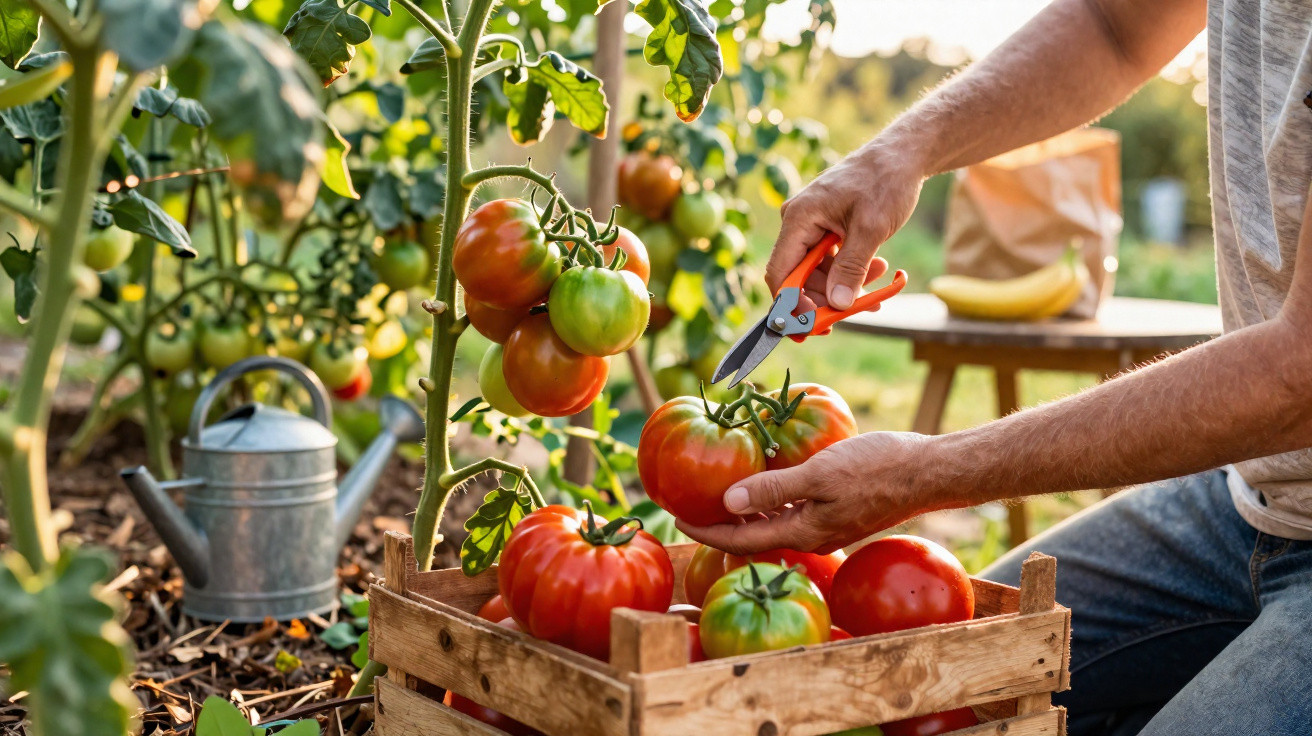
As autumn approaches, many vegetable gardens still hold green fruit. A few straightforward actions can transform the end of the season.
As daylight hours shorten and nights turn cooler, tomato plants slow their production noticeably. Even so, fruit that has already formed can still develop its colour and improve in flavour. The outcome depends on the care given to the plant: light, watering, airflow and regular picking are the key factors to monitor throughout September.
Thin tomato plants to let in more light
A heavily leafed tomato plant shields its fruit during intense summer heat. In September, however, this thick growth can become a drawback. Tomatoes hidden beneath foliage receive less light and remain more exposed to moisture, particularly following morning dew or showers.
Gradually removing the lowest leaves improves airflow around the crop. This gentle pruning also helps foliage dry more quickly and reduces conditions that favour blight, a disease which often appears as brown patches on leaves and fruit.
“The right approach is to remove a few older leaves at a time, without leaving the plant almost bare.”
Some foliage must remain, as the plant needs it to build up its reserves through photosynthesis. It is better to work in small stages every few days, using clean secateurs. Start by taking away yellowing, spotted or damaged leaves, along with any that touch the ground.
- Remove leaves below the first trusses of fruit.
- Avoid pruning immediately after heavy rain.
- Disinfect the blades between plants suspected of being diseased.
- Do not leave diseased leaves at the base of the plants.
Cut back watering without allowing the soil to dry out
Late summer calls for more restrained watering. Plants no longer have the same requirements as they did in July, when the sun was strong for several hours each day. Too much water can make fruit swell too quickly. The skins may then split, creating favourable conditions for mould.
The main problem is caused by sharp fluctuations: a plant left thirsty for several days and then given a large amount of water will react poorly. Smaller amounts applied regularly at the base of the plant are therefore preferable. Water in the morning where possible, without wetting the leaves.
Adjust watering to the weather
A spell of late heat or particularly light soil means sufficient watering must continue. Conversely, watering can be stopped after several wet days. Mulching with straw, thoroughly dried grass cuttings or healthy fallen leaves helps maintain more even moisture levels.
| Observed situation | Recommended response |
|---|---|
| Soil dry several centimetres below the surface | Water moderately at the base of the plant |
| Frequent rainfall | Stop watering |
| Fruit splitting | Keep soil moisture more consistent |
| Damp, spotted leaves | Improve ventilation and remove affected parts |
Feed the plant sparingly
The plant is still directing energy towards the trusses already growing. A liquid feed can support it, provided the dose is not excessive. Fertilisers rich in potassium encourage fruit formation and ripening. Well-diluted comfrey feed or a seaweed-based fertiliser may be suitable.
Avoid feeds that are very high in nitrogen at this point. They mainly promote new leaf growth, when the aim is to focus resources on the tomatoes already present. Late flowers rarely have enough time to produce ripe fruit before cold weather returns for good.
Pick ripe tomatoes every few days
Leaving fully coloured tomatoes on the plant may seem harmless. However, regular harvesting frees up energy for fruit that is still green. Check the vegetable garden every two or three days. Pick tomatoes once they have reached their usual colour and begin to yield slightly under very gentle pressure.
“The sooner fruit ready to eat is removed, the more the plant can focus on trusses that are still ripening.”
Small round varieties and cherry tomatoes often colour up before large, fleshy fruit. Do not therefore expect the entire crop to ripen at the same pace. Handle tomatoes carefully and, ideally, keep their small stalk attached so that neighbouring trusses are not damaged.
Ripen the last tomatoes indoors
When night temperatures fall markedly or a prolonged rainy spell is forecast, it can be wise to pick fruit that is already well developed, even if it is still green. Tomatoes are among the few vegetables that can continue ripening after they have been harvested.
Put only healthy fruit, with no cracks or suspicious marks, in a crate or on a tray. A room at around 18 to 20 degrees is ideal. Direct sunlight is unnecessary. Above all, avoid cold conditions, as they halt ripening and affect the texture.
The role of the natural gas produced by fruit
Tomatoes release ethylene, a gas naturally produced by certain fruit as it ripens. This is why a tomato placed beside a ripe apple can turn red more quickly. A paper bag, left slightly open to prevent condensation, can also concentrate this gas around the fruit.
Inspect the crate every day. A single tomato starting to rot can contaminate the rest. Fruit picked when completely hard and very dark green will require more patience than tomatoes whose skins are already starting to lighten or develop different shades.
Take care with very immature fruit
A tomato that is truly green, small and still far from its final size will not always give a satisfying result indoors. It may remain firm, bland or watery. Fruit that is almost mature is the best candidate for this method.
Unripe tomatoes also contain more solanine, a substance naturally found in certain plants from the nightshade family. It is best to wait until they have changed colour completely before eating them raw. Tomatoes that remain green can be used in suitable recipes, such as chutney or fritters, provided the dishes are properly cooked and not eaten in excessive quantities.
Checking the vegetable garden regularly throughout September often makes all the difference. Removing a few leaves, keeping watering steady and picking at the right time can help you enjoy the season’s final trusses for longer.
Comments
No comments yet. Be the first to comment!
Leave a Comment