
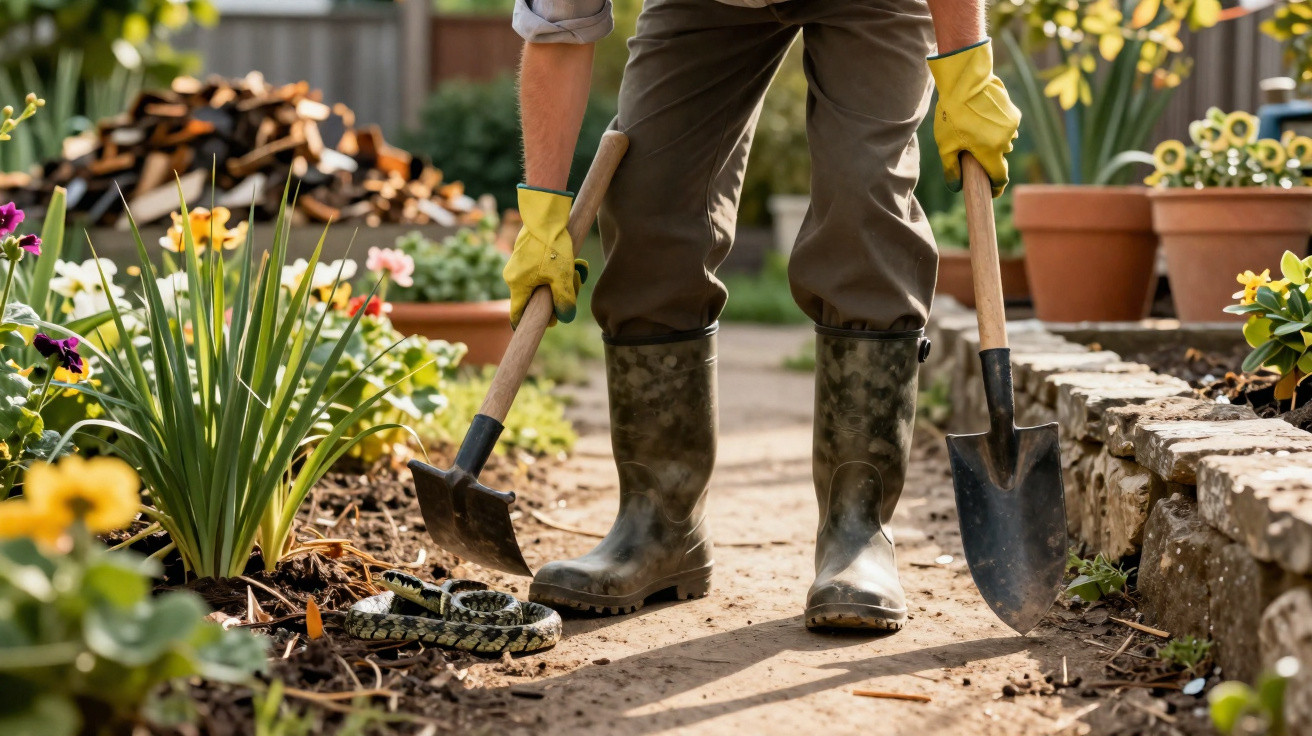
When you’re out in the garden during spring and summer, you might be thinking about backache, sunburn or thorns - but venomous snakes rarely come to mind. Yet a surprising number of bites happen right at home while weeding or tidying up our own patch of green. One common instinctive movement when pulling weeds puts hands exactly where an adder or another snake feels threatened.
The single hand movement that makes gardening risky
Most keen gardeners will recognise the moment: you bend down, spot a few unwanted blades or shoots - and simply reach in. Under a shrub, into a dense clump of lavender, through long grass, or into a pile of half-rotted leaves. Grab, pull, move on. It feels quick and efficient, but it’s precisely this blind reach that experts flag as the real issue.
"Rule number one is: don’t put your hand anywhere your eyes can’t see."
From April through to early autumn, snakes seek out sunny, sheltered spots. They lie still, warming up and conserving energy, and they usually try to remain unnoticed. If, seemingly out of nowhere, a hand drops straight into their personal space, they don’t bite out of aggression - they bite defensively.
Research and accident statistics from Western Europe also show that a significant share of everyday incidents happen in gardens. Many injuries involve hands and feet - the very body parts we push into beds, hedges and leaf piles. Most bites are attributed to adders and other native venomous snakes. They are not looking for a fight; they simply want to be left alone.
Where adders and other snakes most like to hide in gardens
Snakes favour places that are warm, dry and well protected. Many typical garden features provide ideal hiding places and sun traps. If you know where they most often settle, you can adjust how you move and work.
Snakes’ favourite spots in a domestic garden
- dense perennial borders, such as lavender, low roses, ground cover plants and hedges
- shaded edges along walls, fences or buildings
- dry-stone walls and stacked natural stone with plenty of gaps
- wood piles, thick bark mulch, and heaps of leaves or twigs
- areas around the compost, or old boards and tarpaulins
Things become risky when people decide to “just quickly” tidy up: restacking logs, shifting stones, shovelling away leaves, ripping weeds from an overgrown strip. These are exactly the places where animals may be basking or hiding during the day. A hand suddenly pushing down into a thicket from above triggers stress.
More than two thirds of recorded snakebites affect hands and feet. A common scenario looks like this: someone kneels beside a lush clump of lavender, notices unwanted growth inside it, reaches in confidently - and only realises at the instant of pain that something else was lying there.
Gardening safely: how to adjust your habits
The good news is that you don’t have to give up gardening. A few small routine changes can cut the risk significantly without spoiling the enjoyment of your own green space.
Protective clothing and simple kit
- Sturdy gloves: thick leather or robust gardening gloves help not only against thorns, but also against superficial bites.
- Closed footwear: choose ankle-high gardening or walking boots rather than sandals or flip-flops.
- Long trousers: especially sensible in long grass, on banks, or near woodland edges.
Even this basic level of protection greatly reduces the danger from unexpected contact with animals you haven’t even noticed.
Use tools instead of bare hands
If you want to avoid grabbing directly into vegetation or leaf litter, standard garden tools do the job well:
- a cultivator, hoe or long-handled hand fork for weeds in beds
- a leaf rake to “comb through” dense clumps of perennials
- a spade or shovel to lift boards, stones or sheet metal
- a litter picker or hand trowel when working in compost or leaf piles
"A few deliberate movements with a tool are usually enough for a snake to retreat before your fingers get anywhere near."
How to move safely through beds
Alongside equipment, behaviour makes a major difference. Minor changes can have a big impact:
- Move plants first: nudge or lift perennials, grasses or leaf piles briefly with a tool - animals feel the vibration and often withdraw.
- Work from light to dark: start with open, clearly visible areas, then move gradually into denser, shadier spots.
- Pull shrubs towards you: draw a plant group slightly towards you before your hand disappears behind branches.
- Avoid surprises: never yank up buckets, boards, slabs or sheeting with your bare hands; lift with a tool first and check.
What to do if a bite happens anyway
Even with great care, a bite can still occur. Panic doesn’t help. Knowing a few key steps helps you stay in control and reduces strain on the circulation.
Respond correctly - step by step
- move away from the animal; don’t try to catch or kill it
- stay calm; sit down or lie down
- call the emergency services (112) and clearly say you suspect a snakebite
- remove rings, watches, bracelets and tight footwear near the bite site
- wash the skin with soap and water and cover it with a clean cloth
- keep the affected arm or leg still and raise it slightly above the heart
- for pain, use only paracetamol; avoid blood-thinning medicines
Many instinctive “first aid” actions can make things worse. They belong on the do-not-do list:
- no tourniquet and no tight pressure bandage
- no ice packs or cooling packs directly on the wound
- no cutting or slicing the bite area
- no sucking the venom out, including with special pumps
- no alcohol, strong coffee or energy drinks
- no DIY experiments with syringes or “miracle cures"
"Modern hospitals monitor patients closely and decide case by case whether antivenom is needed - many bites are milder than feared."
How dangerous are adders in German-speaking countries really?
In Central Europe, only a small number of venomous snakes are found - above all the adder and, in some areas, the asp viper. Both tend to avoid people and will usually try to disappear early. Fatal outcomes are extremely rare, particularly thanks to rapid emergency care.
Children, older people and those with pre-existing conditions are at greater risk. Even so, with prompt medical treatment, the outlook is generally good. The important thing is not to dismiss a bite - but also not to spiral into blind panic.
Creating a wildlife-friendly garden - while still staying safe
Many gardeners want to provide habitat for insects, birds and hedgehogs. Dead wood, stone walls and wildflowers are part of that - and the same structures are also useful for reptiles. That doesn’t have to be a contradiction. With conscious planning, you can offer refuges for wildlife and still work safely.
- place leaf and twig piles towards the edge of the property, not right next to the patio or a play area
- create clearly defined paths so you’re not walking through dense undergrowth
- site seating areas a little away from log stacks or compost zones
- explain to children that they shouldn’t climb into stone heaps or firewood piles
If you keep these points in mind, there’s no need to fear every rustle in the border. Gardening can remain what it should be: relaxing, physically active and close to nature - just with your eyes open and without that careless reach into the unseen.
Comments
No comments yet. Be the first to comment!
Leave a Comment