
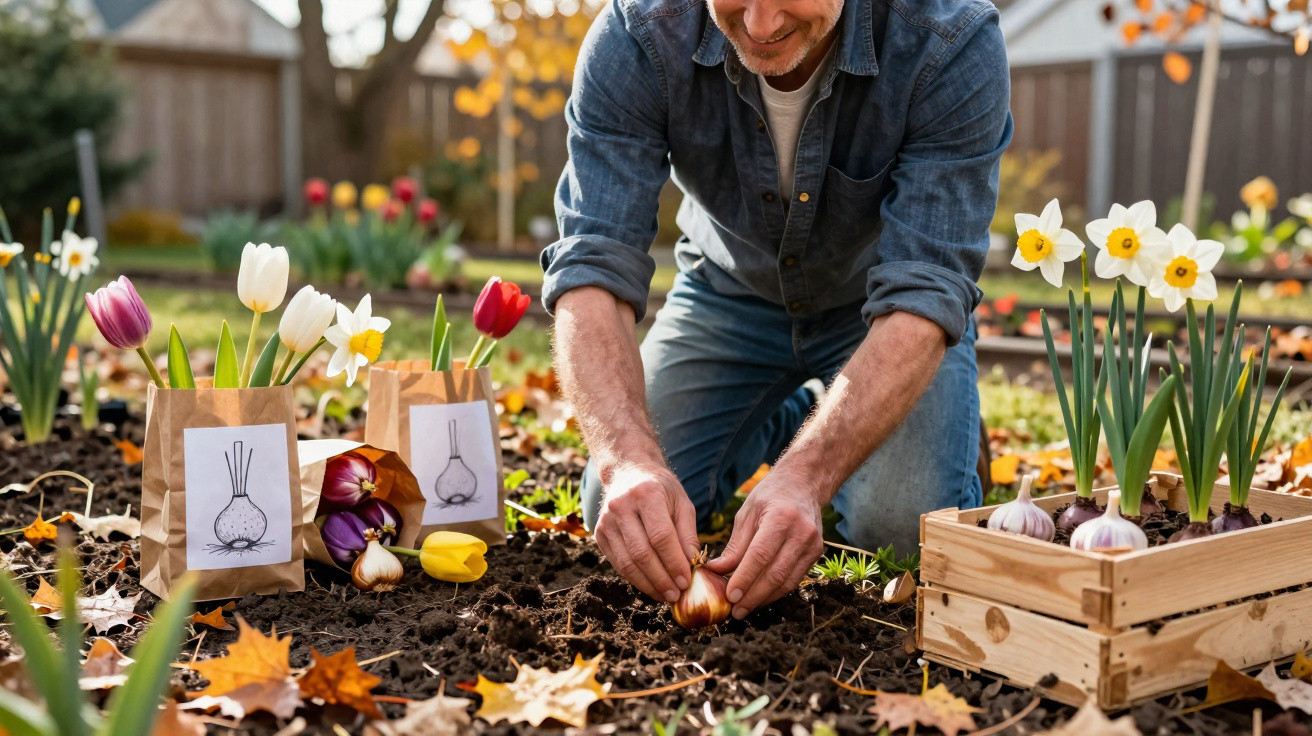
On October mornings, the lawn is still wet and your hands can sting slightly against the cold soil. Yet in tidy vegetable plots and small urban gardens alike, seasoned gardeners do not put their tools away: they plant. At first glance, October may not seem remarkable, but it brings together soil that still holds warmth, cool air and regular rainfall - a rare combination that lets plants establish themselves quietly. While many people already picture the garden asleep, experienced gardeners are actually preparing for the following spring. A few bulbs, perennials, garlic plants or shrubs set into the ground now can transform an outdoor space as soon as the first fine days arrive. The real secret lies beneath the surface.
In October, the garden is still working when it seems to be resting
We all know that point when the days grow shorter and the temptation to stay indoors outweighs the desire to head back outside. However, October soil often retains the warmth gathered over summer, while cooler nights slow plants’ above-ground growth and encourage root development. Rather than using their energy to produce leaves or flowers, they quietly settle into the place where they have been planted.
In a border, a shrub planted in October can continue developing roots for several weeks before the first hard frosts. By spring, it will therefore have a clear head start over an identical specimen bought and planted in April. Nurseries see this every year: from October to November, container-grown plants usually need less watering than those planted when warmer weather returns, provided the ground is neither frozen nor waterlogged.
This period is especially valuable because rainfall takes over from the hosepipe. That is no minor benefit when it is easy to forget how dry a spring can become. Roots thrive in this gentle, consistent moisture, away from the strain of intense heat. The garden does not sleep in autumn; it simply adopts a different pace. It is also when the difference becomes clear between planting for an immediate display and planting for lasting results.
Bulbs, garlic and perennials: what experienced gardeners plant now
The easiest place to begin is with spring bulbs: tulips, daffodils, crocuses, hyacinths, muscari or alliums. As a general rule, plant them at a depth of two or three times their own height, with the pointed end facing upwards, in loosened, free-draining soil. In particularly damp spots, especially in heavy clay soils, a handful of sand at the bottom of the planting hole can sometimes be enough to prevent bulbs from rotting.
Autumn garlic also deserves a place, particularly varieties suited to areas with pronounced winters. Plant each clove point upwards, roughly 3 or 4 centimetres deep, leaving around 10 centimetres between each one. A common mistake is to use supermarket garlic, which may have been treated to stop it sprouting; it is better to choose certified planting stock or seek advice from a local grower. Let us be honest: nobody really does that every day, but this small extra step prevents plenty of disappointment.
October is also an especially favourable planting window for perennials, roses, native hedges and certain bare-root fruit trees.
“An autumn planting does not always create the most beautiful garden straight away, but it often builds the strongest one.”
Before filling in the planting hole, a few habits make a genuine difference:
- water thoroughly immediately after planting, even if it is raining;
- mulch around the base with fallen leaves, woodchip or mature compost;
- avoid fertilisers that are too high in nitrogen, as they encourage young stems to grow at the wrong time;
- mark new plantings with a label, because winter quickly erases memories.
The small autumn effort that truly transforms spring
Planting in October does not require a flawless garden or whole weekends spent kneeling in flowerbeds. A patch of lawn can accommodate a handful of naturalised daffodils, a balcony can hold pots layered with tulip bulbs, and three strawberry plants moved into enriched soil can already promise generous harvests. What matters is giving roots the time the season provides.
One straightforward rule remains: do not plant in soil that is saturated with water or frozen deeply. Many well-intentioned efforts lead to lost plants because the soil is compacted too firmly or a shrub’s crown - the vulnerable area between roots and stems - is buried. It is better to plant less, but plant properly, then keep an eye on moisture levels during the first few weeks if autumn proves unusually dry.
The experienced gardener does not try to control everything; they watch and learn. A fallen leaf becomes mulch, an area where water collects shows where drainage is needed, and a sheltered corner can accommodate more delicate plants. October rewards patience: the willingness to work today without expecting a spectacular result tomorrow morning. When the first shoots break through the soil in spring, these discreet actions are often the ones that bring the greatest pride.
| Key point | Detail | Added value for the reader |
|---|---|---|
| Planting bulbs | Tulips, daffodils and crocuses establish themselves before winter | Early flowering without last-minute work in spring |
| Planting autumn garlic | Regionally suited cloves planted in well-drained soil | Often larger bulbs to harvest the following summer |
| Mulching after planting | Fallen leaves, woodchip or compost around young plants | Less watering, protected soil and encouraged underground life |

Comments
No comments yet. Be the first to comment!
Leave a Comment