
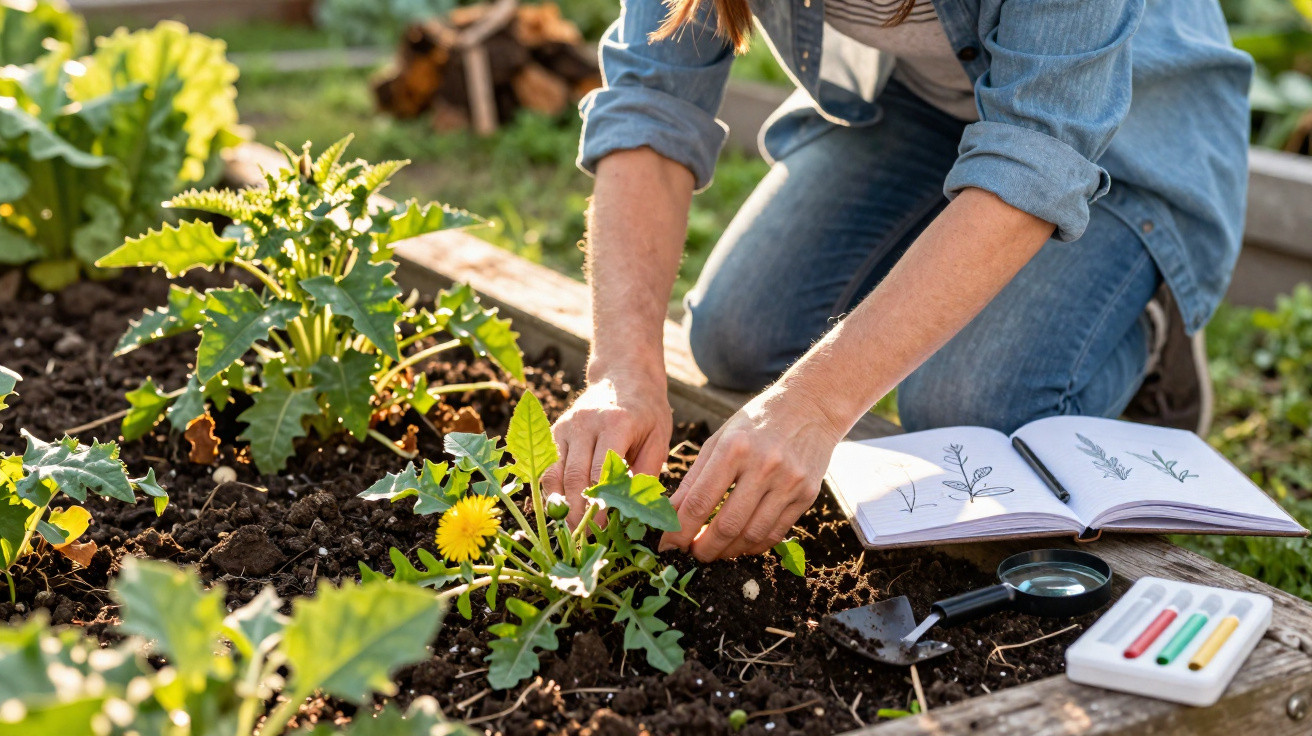
Many amateur gardeners spend hours on their knees in spring, stripping every unfamiliar plant from the beds without mercy. The idea of a perfectly tidy garden runs deep. Yet these self-seeded plants can offer a surprisingly accurate read-out of soil condition - free of charge and available at any time. If you learn to interpret them instead of automatically weeding them out, you can cut down on work and, over time, improve your harvest.
Weeds as a diagnostic tool: what your soil is trying to tell you
Bioindicator plants - the garden’s “blood test”
What we casually label as weeds is driven by a straightforward principle: seeds only germinate when conditions suit them. Moisture, temperature, compaction, nutrient status and the life within the soil all determine which species take hold. In that sense, spontaneous wild plants act like a living measuring instrument.
"Anyone who reads wild plants like a lab report avoids expensive soil tests and makes far better decisions in the garden."
If the same group of plants keeps appearing in one spot, it is rarely coincidence. The soil is providing exactly the environment in which those species have an advantage. From that, you can infer things such as:
- Nutrient levels (for example, high or low nitrogen)
- Soil type (sandy, loamy, very clay-rich)
- Soil structure (loose or compacted)
- Humus content and the activity of micro-organisms
- Moisture (dry, moist, waterlogged)
If you pull out every seedling immediately, you lose this information. Often, a quick look before you start weeding is enough to grasp what is happening below the surface.
Why the overall picture matters more than one plant
A single thistle somewhere in the lawn does not tell you much. It becomes meaningful when particular species show up across a wider area or cluster in specific patches. That is when a reliable pattern starts to emerge.
Gardeners who want to read their soil deliberately tend to do the following:
- View the space in zones (beds, paths, lawn, near the compost).
- Note the dominant wild plants in each zone.
- Spot recurring species and obvious concentrations.
- Check, using a regional plant guide or a reputable app, what site conditions those species prefer.
For instance, if a carpet of the same wild herbs repeatedly turns up across several beds, it can reveal more about soil properties than looking at your cultivated plants - which are often influenced by extra feeding and watering.
When weeds bring good news: signs of fertile soils
Nettles - a nutrient powerhouse, not the enemy
Many people see nettles as a nuisance, especially along fences and around compost areas. But if you treat them purely as troublemakers, you miss what they indicate: a dense stand usually points to soil rich in organic matter and high in nitrogen. Often, there is also a good amount of iron present.
An area like this is ideal for heavy feeders such as:
- Pumpkin and courgette
- Brassicas (for example, savoy cabbage, broccoli)


Comments
No comments yet. Be the first to comment!
Leave a Comment