
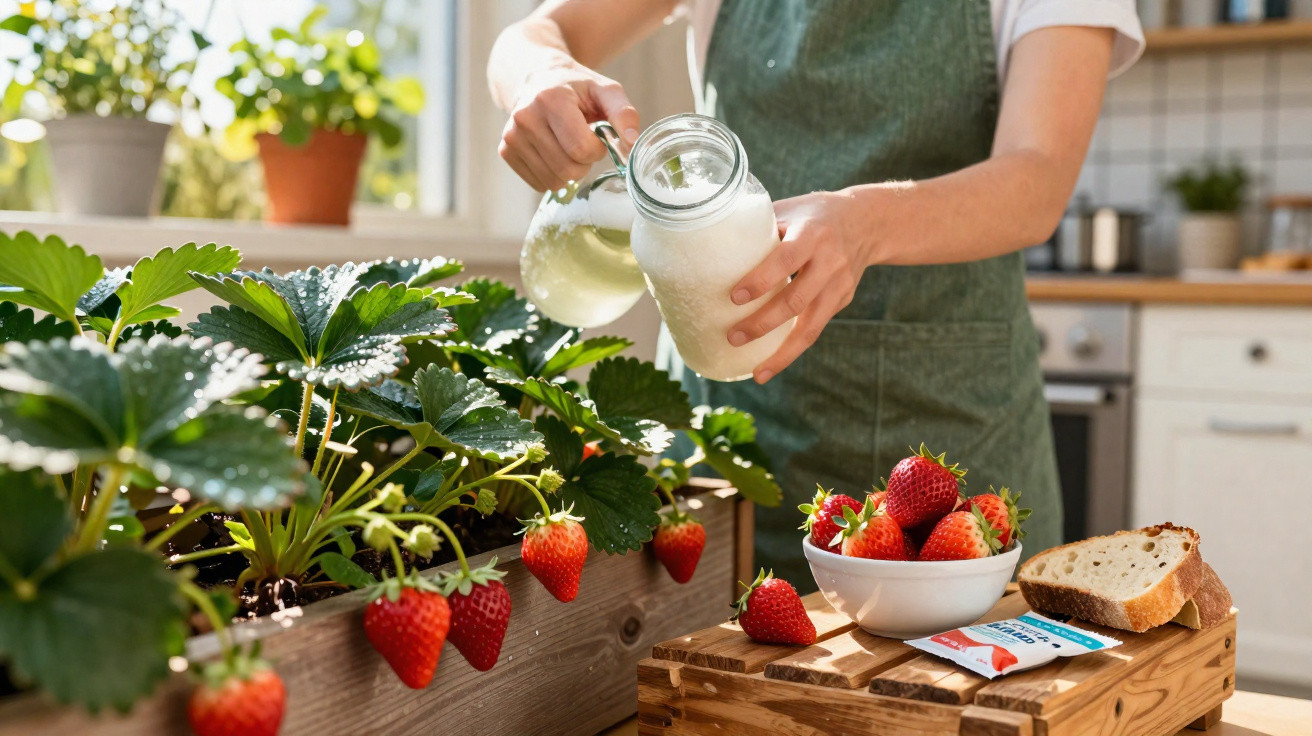
Reports are piling up on gardening forums from hobby growers whose strawberry plants have suddenly started producing noticeably larger, juicier fruit - thanks to a homemade liquid fertiliser made from just three everyday ingredients. It sounds like a fairy tale, but it’s largely rooted in sound soil biology.
The simple strawberry turbo from your kitchen
The basic idea is straightforward: a homemade liquid feed made from yeast, water and sugar doesn’t only support the plants - it primarily energises the life in the soil. It takes only a few minutes to mix up.
"The fertiliser works in two ways: yeast provides nutrients, sugar feeds beneficial microorganisms in the soil."
Recipe: how to mix up the yeast fertiliser
- 50 grams of fresh yeast or 1 teaspoon of dried yeast
- 1 litre of lukewarm water
- 1 tablespoon of sugar
Stir everything thoroughly in a bowl or watering can until the yeast has dissolved well. Then leave the mixture at room temperature for 24 hours so it can start to ferment gently. A thin foam and a mild yeasty smell are normal.
After this fermentation stage, you need to dilute it: 1 part yeast solution to 5 parts water. Only then is it suitable for feeding plants.
Around 0.5 litre of the diluted solution per strawberry plant is usually enough. Apply it to the root zone rather than over the leaves. Ideally, the soil should already be slightly moist so the nutrients distribute evenly.
Why yeast can genuinely boost strawberries
The effect is far more about biochemistry than magic. Yeast contains B vitamins, proteins and minerals such as nitrogen, phosphorus and potassium - all building blocks plants rely on for growth and fruit formation.
What makes it especially interesting is the partnership with sugar. Sugar acts as a quick energy source for soil microorganisms. These tiny organisms break down organic matter, convert nutrients into forms plants can take up, and help improve soil structure.
"The more alive the soil, the better the root growth - and the stronger and more productive the strawberry plant."
Soil researchers have been pointing out for years that active soil microbiology helps keep nutrient cycles moving. In this context, sugar and yeast work like a starter signal: more microbes, more conversion, and more available nutrients around the roots.
When it delivers the biggest benefit
- Spring: at the start of the growth phase when plants begin to shoot again.
- Just before and at the start of flowering: to support flower set and fruit development.
- At most every 3–4 weeks: more frequent applications don’t automatically produce better results.
If you’re already using heavily fertilised compost or fresh manure, start cautiously and watch how the plants respond. Too much nitrogen can lead to lots of leaf growth and less flavour in the fruit.
Alternative natural fertilisers for experimental gardeners
Not every strawberry variety - and not every soil - reacts in the same way. If you like testing methods, you can try other homemade feeds and compare results.
Fermented bread, nettles and more
- Stale bread fertiliser: soak old bread in water and leave it for about a week until it ferments. Then dilute 1:10 with water and use as a liquid feed.
- Nettle tea (nettle feed): steep fresh nettles in water for several days to weeks until the smell becomes strong. Dilute heavily before using (1:20), otherwise it can be too harsh.
- Sour milk compost mix: combine soured or out-of-date milk with compost. This creates a calcium-rich feed that supports strong cell walls - important for firm strawberries rather than soft, mushy fruit.
- Diluted chicken manure: if you have access to chicken droppings, dilute them with water at 1:10. Apply only before flowering, otherwise there’s a risk of overfeeding the fruit.
Each option provides a different nutrient balance. If you have multiple beds, it’s easy to test which approach gives the best yield in your own garden.
How to get the maximum from your strawberry plants
Even the best fertiliser won’t do much if the site and care are off. Strawberries respond strongly to light levels, watering habits and soil reaction.
| Factor | Recommendation |
|---|---|
| Sunlight | 6–8 hours of direct sun per day for full flavour |
| Watering | Keep evenly moist; avoid waterlogging and severe drying out |
| Soil pH | Slightly acidic to neutral; ideally around 5.5–6.8 |
| Plant spacing | 30–45 centimetres between plants for good air circulation |
Strawberries thrive in loose, humus-rich soil. Heavy ground benefits from compost worked in and a little sand. In very light soils, a mulch layer of straw or grass clippings can help retain moisture and keep the fruit clean.
Common mistakes that stop giant strawberries
- Planting too close together so the plants shade each other.
- Beds that stay wet with no drainage, causing roots to rot.
- Using the same plot year after year, increasing disease pressure.
- Relying only on mineral fertiliser, which can leave soil life depleted.
A simple crop rotation prevents many issues: don’t keep strawberries in the same spot for more than three years, and in between sow soil-improving plants such as clover or phacelia.
How safe is the yeast trick for the garden and the environment?
Compared with harsh mineral fertilisers, the yeast-and-sugar mix is generally gentler. Nutrient levels remain moderate - especially once diluted - which helps protect groundwater and soil organisms.
Even so, a bit of care is worthwhile:
- Don’t apply it undiluted, otherwise localised salt stress can affect the roots.
- Use smaller doses for container plants because the soil volume is limited.
- Don’t seal bottles or canisters with leftovers airtight; fermentation gases need a little space.
If you’re unsure, trial the feed on just a few plants first and compare the size, taste and overall health of the fruit with untreated plants.
More than fertiliser: what else makes strawberries big and aromatic
Beyond nutrients, variety choice and general care matter a great deal. Some modern varieties are bred for naturally large fruit, while others prioritise aroma over size. If you’re aiming for oversized strawberries, you can start by choosing the right variety.
It becomes particularly effective when you combine methods: yeast fertiliser, loose humus-rich soil, plenty of sun, targeted watering, and regularly removing old leaves can make a noticeable difference together. Many gardeners report that the first flush after good feeding often produces especially large fruit.
For family gardens, there’s another benefit: children can help mix the "magical potion", see results quickly, and feel a direct connection to the fruit they later pick and eat. And once you’ve harvested a palm-sized strawberry from your own bed, you’ll very likely repeat the experiment next year.
Comments
No comments yet. Be the first to comment!
Leave a Comment