
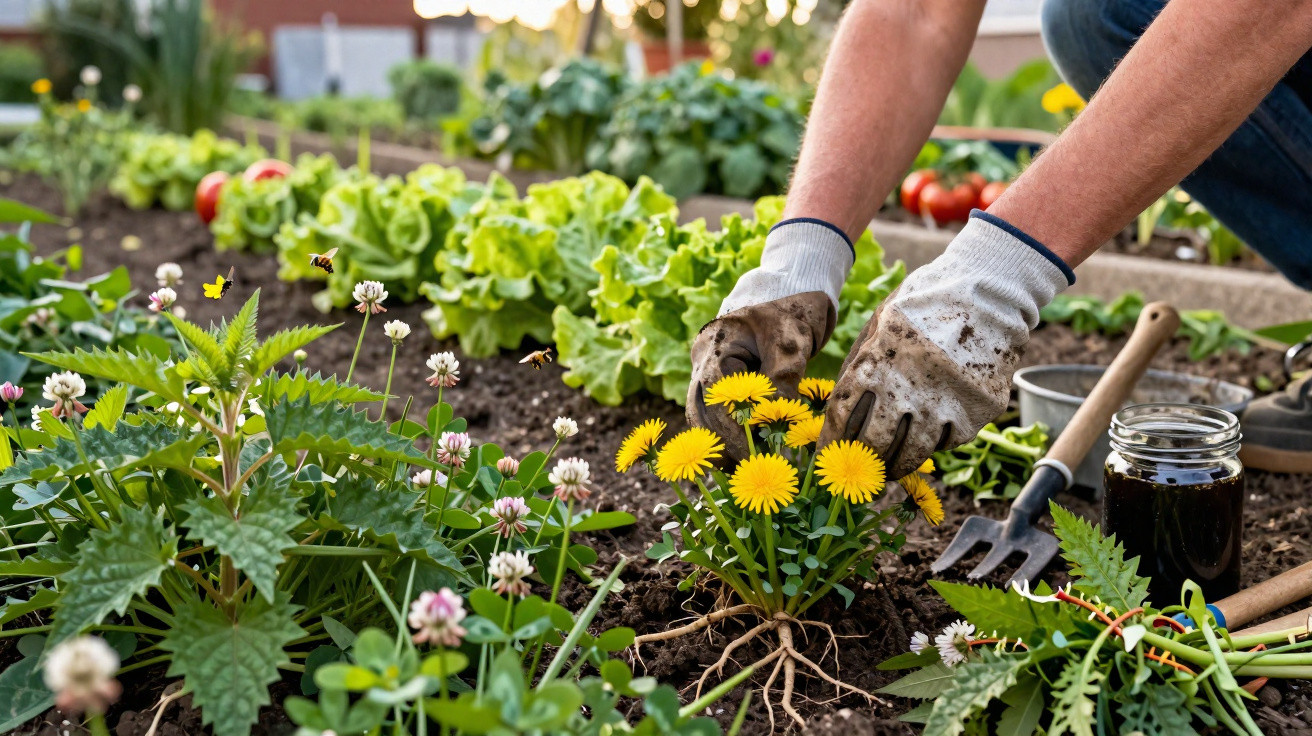
If you want a tidy garden, March and April often turn into a big clear-out: every yellow flower gets plucked, every “wild-looking corner” is stripped back. Dandelions, clover, stinging nettles: out they go. Yet that instinct can backfire. These supposed troublemakers are, in reality, free soil workers, insect magnets and eco-friendly fertiliser - and they can make your vegetable garden far more resilient.
Why “weeds” in spring are often your best ally
Garden advice has long repeated the same mantra: remove anything you didn’t sow. Research and real-world experience in nature-friendly gardening paint a different picture. Plants that appear on their own in a bed are often signalling what’s happening in the soil - and, quite often, they’re also part of the remedy.
“Many classic ‘weeds’ are bio-indicators, soil looseners, fertiliser providers and insect filling stations all rolled into one.”
Three plants stand out in particular:
- Dandelion
- Clover
- Stinging nettle
Used wisely rather than wiped out, they improve soil structure, cut your need for fertiliser and support biodiversity - without pricey products from the DIY shop.
Dandelion - the hidden soil engineer in the vegetable patch
Few plants are pulled up as automatically as dandelion. A bright yellow flower, then a white seed head - and it’s straight into the bucket. But below ground it behaves like a specialist tool you didn’t have to buy.
A taproot that tackles compacted soil
Dandelion’s strong taproot drives deep into the ground. Where a spade or fork usually loosens only the top few centimetres, it can break through compaction further down.
- Compacted soil barely lets air and water through.
- Vegetable roots can effectively suffocate.
- Dandelions create vertical channels for water, oxygen and other roots.
A few scattered dandelions in a lawn or bed often point to fertile soil. If they spread heavily, it can indicate serious compaction or an excess of animal-based organic matter. Either way, the plant is offering a free soil “read-out”.
An early-season lifeline for hungry insects
While fruit trees and many perennials are still waking up in spring, dandelions are already flowering in vivid yellow. For bees and other pollinators, they can be one of the first proper food sources of the year.
“If you mow or pull every yellow flower in March and April, you cut off an essential filling station for pollinators - and indirectly weaken your yield in the vegetable garden.”
Beekeepers have been emphasising for years how crucial early blooms are for colonies to recover after winter. In built-up areas, where flower-rich meadows are now scarce, every patch of dandelions matters.
Free “super-veg” from your lawn
Dandelion isn’t just useful - it’s edible and genuinely nutritious. The leaves provide plenty of fibre, B vitamins, beta-carotene, and minerals such as iron and calcium.
Common ways to use it:
- Leaves: young in salads; older leaves mixed with milder greens
- Unopened flower buds: as the base for an aromatic “dandelion jam”
- Stems: cooked as a vegetable side dish
If you avoid harvesting right next to busy roads or along popular dog-walking routes, dandelion becomes true “zero-cost veg” from your own garden.
Clover - the little fertiliser factory in the lawn
Clover used to be a normal component of most lawn seed mixes. It stayed green when grass scorched and helped the soil along. Only with the rise of chemical weedkillers did it become labelled the “enemy” - ironically because it does something many people now pay for in expensive fertilisers.
Nitrogen from the air - free for your vegetables
Bacteria living on clover roots capture nitrogen from the air and convert it into plant-available nutrients. Some of that nitrogen ends up in the surrounding soil, where other plants can use it.
“A lawn with clover partly supplies itself with nitrogen - and needs far less synthetic fertiliser.”
If you tolerate clover near your beds, or deliberately use it as an undersown companion, you can greatly reduce the need for synthetic fertiliser. That’s kinder to your budget and helps lower nitrate pollution in groundwater.
A safety net during hot summers
Where a traditional ornamental lawn quickly turns yellow in dry spells, clover often stays green for surprisingly long. The reason is simple: it typically roots deeper than many lawn grasses and can access remaining moisture.
That brings several benefits at once:
- Lawn areas stay green and usable for longer.
- Ground cover reduces drying out.
- The garden’s microclimate remains more comfortable.
In summers with hosepipe bans or high water costs, a clover-rich lawn can make a noticeable difference.
Weeks of flowers for bees, bumblebees and butterflies
Clover can bloom for weeks, producing white or pink flower heads that offer generous nectar and pollen. If you scalp it constantly with the mower, you remove a major food source for insects.
A practical compromise is to keep using the lawn, but mow one or two strips less often and allow clover to flower there - for instance along the edge of the vegetable garden. That way the lawn still functions, while beds that depend on pollinating insects also benefit.
Stinging nettle - from hated “stinger” to eco all-rounder
Many people got stung by nettles as children - and the memory sticks. Even so, this plant deserves a second look. If you banish it completely, you remove a key piece of a garden ecosystem that can largely look after itself.
A sign of nutrient-rich soil
Stinging nettles thrive where plenty of organic matter is breaking down: compost areas, old manure heaps and nitrogen-rich soils. In other words, they indicate places where the ground is particularly rich in nutrients and minerals.
At the same time, nettles absorb surplus nutrients and store them. When the cut material rots down or goes onto the compost heap, those nutrients return to the soil in a more readily available form.
Habitat for dozens of animal species
“Without stinging nettles, up to 30 highly specialised animal species are missing from the garden - including some of the most striking native butterflies.”
Several butterfly species depend on nettles as a food plant. Remove the nettles, and those butterflies disappear too. Add to that many insects, spiders and beetles - and predators such as birds or ladybirds. Leaving a few square metres of nettles in a corner effectively creates a miniature high-rise for wildlife.
Nettle feed: organic power fertiliser and plant support
A strong plant extract can be made from nettles, and it’s widely used by allotment and home gardeners:
- Roughly chop fresh nettles.
- Put them in a bucket with water (around 1 part plant to 10 parts water).
- Leave to ferment for several days to weeks, until it smells strongly.
- Strain off the liquid and dilute before use.
The resulting liquid feed contains plenty of nitrogen, minerals and micro-organisms. Applied diluted to the soil, it works as an organic fertiliser. Sprayed onto leaves, it can strengthen plants and help them cope better with aphids and some diseases.
If you plan a small nettle patch near your beds, you can also draw aphids there and, at the same time, attract their natural enemies - a useful building block for natural pest control.
How to integrate “weeds” cleverly into your vegetable garden
No one needs to let the garden run wild. The idea is to allow certain wild plants in moderation and manage their growth, rather than trying to eradicate them completely.
Practical tactics: more benefit, less hassle
- Dandelion: leave a handful of plants in the lawn or along bed edges; tolerate the flowers for insects; only dig them out where they directly crowd young plants.
- Clover: accept it in the lawn, set the mowing height to 5–7 cm, and avoid heavily nitrogen-rich synthetic fertilisers.
- Stinging nettle: designate a clearly defined corner at the edge of the garden or by the compost; cut regularly before it sets seed; compost the cuttings or use them for nettle feed.
Handled this way, you keep these plants under control while still benefiting from what they do: loosening soil, supplying nutrients and attracting beneficial insects.
What gardeners should really know about “weeds”
In botany, there is no such thing as a “weed”. Specialists talk instead about companion plants or spontaneous vegetation. Each of these plants plays a role in the ecosystem. Many bring nutrients up from deeper layers, shade the soil surface, reduce erosion, or provide food for insects and birds.
In a vegetable garden especially, a limited amount of wild diversity can add stability. Children pick up knowledge of native species as they go, gardeners gain free indicators of soil issues, and the garden contributes far more to biodiversity than any sterile gravel area ever could.
If you rethink part of your usual spring “tidying routine”, you can save work, money and stress - and gradually build a garden that is healthier, more alive and more resilient to weather extremes. Those three most disliked “weeds” can turn out to be surprisingly loyal allies.

Comments
No comments yet. Be the first to comment!
Leave a Comment