
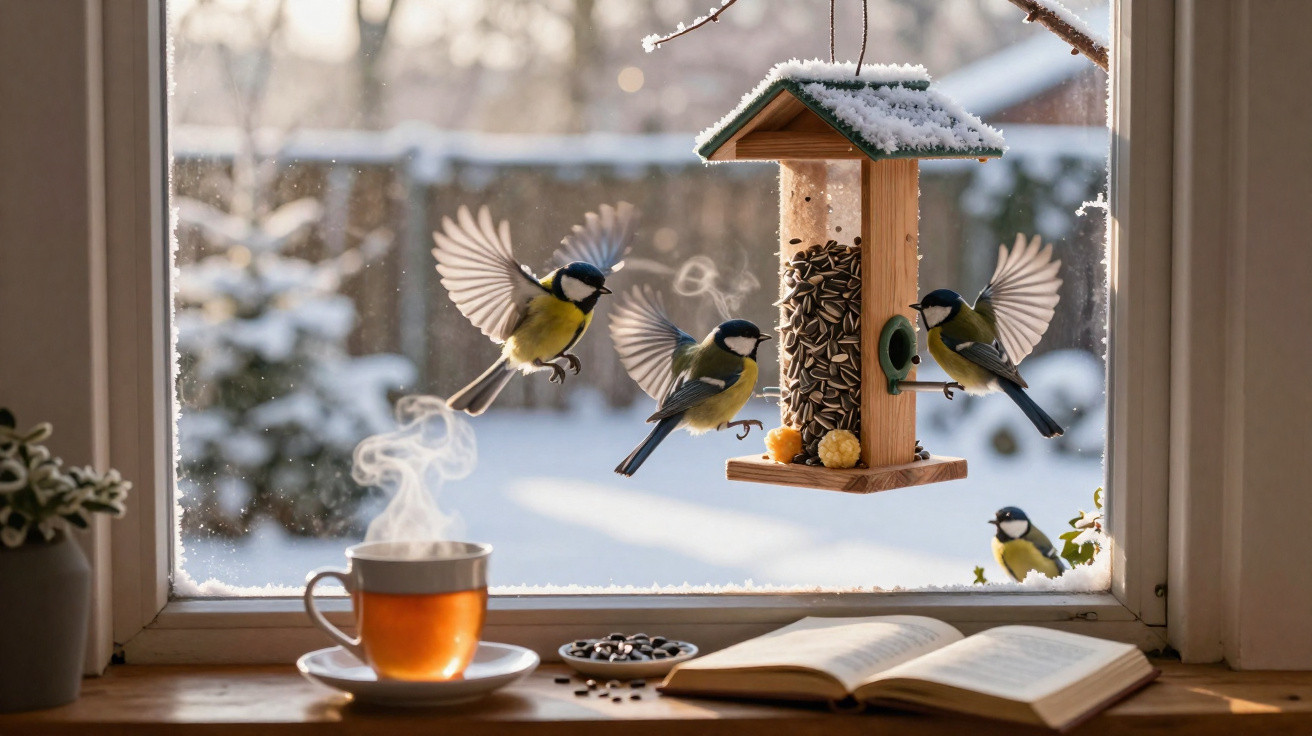
In winter, many garden owners wonder why hardly any tits show up in their own garden, while next door it seems to be a constant flurry of wings. The reason is rarely the planting scheme; much more often it comes down to timing, consistency and the quality of what’s put out. If you understand their daily rhythm, even a quiet garden can become a lively stage.
Why tits love fixed times in winter
Tits are among the classic winter visitors to gardens, parks and balconies. Great tits and blue tits in particular stand out with their bright plumage and clear, ringing calls. In summer you hear them almost everywhere; in winter, some spots can feel strangely empty.
That isn’t down to chance. These birds run on a strict energy-saving routine. Every minute spent searching for food in vain drains precious reserves-and those reserves are exactly what they need to stay warm overnight. As a result, they tend to avoid places where food appears unpredictably.
"Tits don’t just remember where food is available, they also remember-pretty precisely-when it’s worth visiting."
They have a kind of internal clock and link specific locations with certain times of day. If you provide food at the same time consistently, you’ll quickly become part of that established schedule.
The key time in the morning
In winter, the most important moment for tits is the first proper energy top-up after a cold night. That’s where gardeners have the biggest influence.
Feeding just before or at sunrise
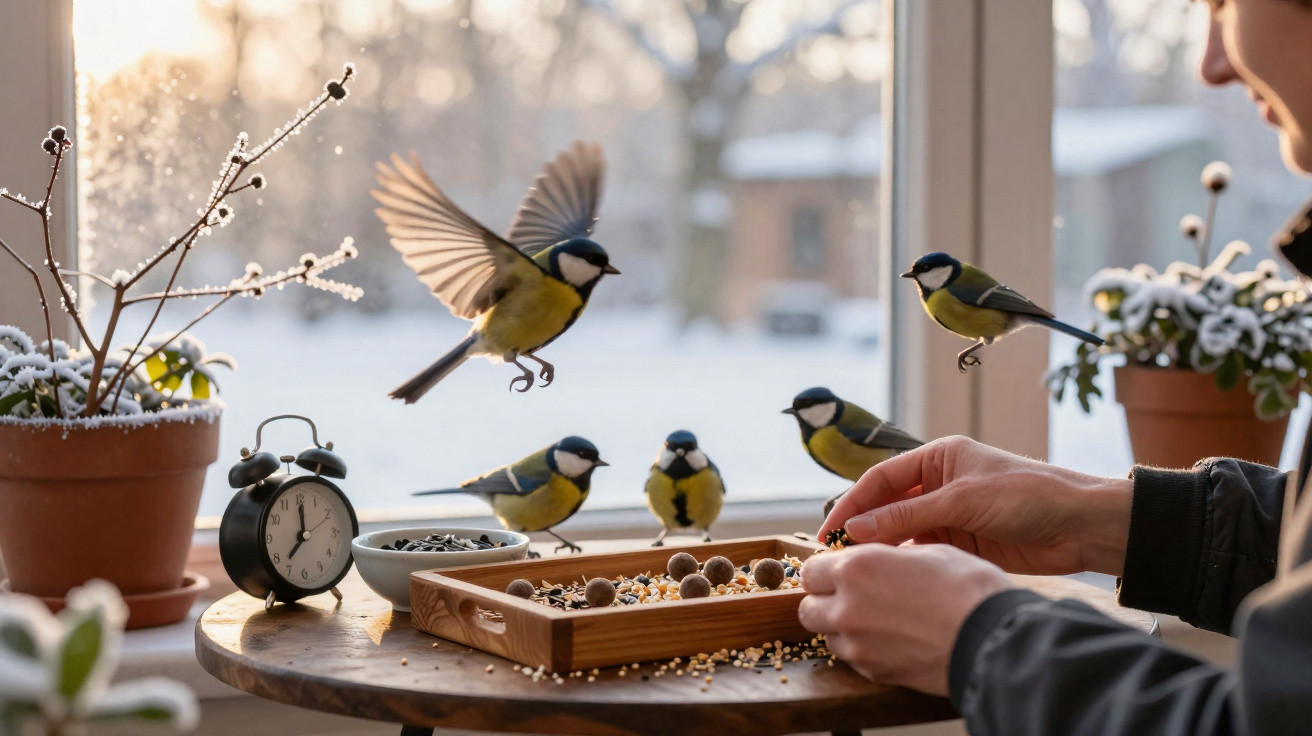
The most effective approach is to put food out at the same time every day-ideally shortly before, or exactly at, sunrise. That’s when the birds actively start foraging to refill depleted energy stores.
- Choose a time: about 30 minutes before to 30 minutes after sunrise
- Stick to it every day, including weekends
- Have everything ready before the first birds arrive
If you keep this window consistent for weeks, tits will head for your garden almost to the minute. They go first to places where they can be confident the effort will pay off.
Consistency beats any “feeding blitz”
Many people feed irregularly: sometimes in the morning, sometimes at midday, then not at all for a few days. To birds, that kind of place resembles a poorly stocked petrol station-you might get lucky, but you’ll often find empty shelves.
Tits then switch to other gardens where things are more reliable. If you stay consistent, the benefits show quickly:
- The birds don’t need to fly as far and use less energy.
- They’re more likely to remain loyal to your garden.
- You can watch their behaviour up close-often right by the window.
"A dependable ritual at the same time works like a permanent invitation sign for tits."
If you travel in winter or won’t be home for a while, it’s worth agreeing something with neighbours. A neighbour can top up the feeder for a few days so the routine doesn’t fall apart.
What really matters at the bird feeder right now
Getting the timing right isn’t enough on its own. In winter, tits mainly need concentrated energy. Their tiny bodies lose heat quickly at night and must replace those losses fast.
Fat is essential in winter-handled sensibly
Particularly suitable options for tits include:
- black sunflower seeds – very energy-dense and easy to open
- fat balls without netting – preferably without plastic nets, so birds can’t become tangled
- seed mixes with a high fat content – labelled specifically as “winter feed”
- unsalted peanuts – only roughly chopped and offered in suitable feeders
High-fat food helps them keep their body temperature stable even through icy nights. During prolonged hard frosts, a dependable feeding spot can become crucial for survival.
What tits should not eat
Less suitable-or outright risky-are:
- salted or seasoned leftovers
- cooked leftovers such as pasta or rice
- bread and rolls – they swell in the stomach and offer little nutritional value
- any food showing signs of mould
A good rule of thumb: if you wouldn’t eat it yourself any more, it doesn’t belong in the feeder. Spoiled feed can make birds ill and weaken whole local populations.
A garden as a winter refuge, not a cage
The aim of feeding birds should be to support a natural, lively garden-not to replace free foraging, and certainly not to try to train wild animals. Tits remain wild birds, even if they seem increasingly tame over time.
"Feeding should support, not create dependence."
If you make your garden bird-friendly, you create more than a feeding point. Even a handful of measures can make a noticeable difference:
- thorny shrubs such as dog roses or hawthorn to provide cover from cats
- leaving a few areas with leaves and dead wood as insect shelter
- native shrubs that produce berries
- avoiding pesticides so enough insects survive
This way, tits and other species find shelter and natural food sources throughout the year. The feeder then becomes a supplement rather than the only option.
How long to feed-and what happens in spring?
If you start in late autumn, you can continue winter feeding well into March. Nights are often still cold then, while energy demand is already rising because birds are marking out territory and preparing for the breeding season.
In spring, tits shift their diet back towards protein-rich food such as insects. Young birds need mostly animal protein, so seeds become much less important. Seed feed doesn’t do harm, but the balance of their diet changes naturally.
Common questions-answered briefly
| Question | Answer |
|---|---|
| Can I feed at midday instead? | Yes, but early morning remains the most important time. If you only feed at midday, you’re missing potential. |
| Will this attract only tits? | You’ll usually also see sparrows and robins. That’s normal and part of a lively bird community. |
| Do the birds become “spoilt”? | With an appropriate, nature-friendly garden, they remain self-sufficient. They use the food as an additional source. |
More benefits than just pretty birdsong
A well-used feeding station offers more than attractive photo opportunities. From spring onwards, tits eat large numbers of caterpillars and other insects. That takes pressure off trees, shrubs and even fruit crops. Helping them through winter can therefore strengthen your own plants indirectly.
Regular feeding also encourages children and adults to pay closer attention to nature. Seeing small birds arrive punctually each day teaches just how finely tuned-and sensitive-these routines are. Small changes, such as a different time or an empty feeder, have an immediate effect.
If you’re keen to try it, you don’t need much to begin: a sturdy feeder, a bag of sunflower seeds, a clear idea of your local sunrise time-and the willingness to keep the routine going. After only a few days, mornings won’t feel quiet; instead, your garden can look like a small stage with regulars on wings.
Comments
No comments yet. Be the first to comment!
Leave a Comment