
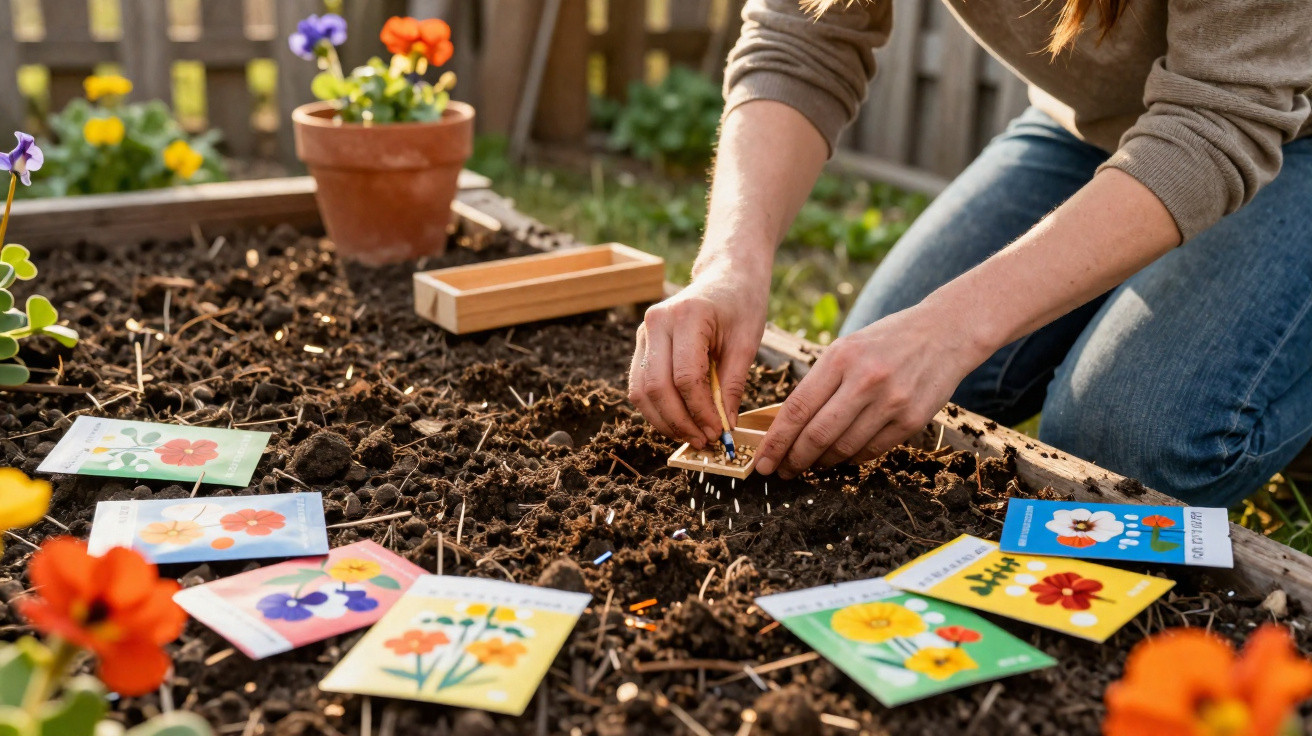
The days are stretching out and you can feel that familiar itch to get stuck into the garden - yet the borders still look bleak. This is exactly the moment, in the often-overlooked month of March, when a few well-chosen sowings can set up a summer bed that flowers for months and looks almost like something from a postcard.
Why March decides what your summer garden looks like
March sits in the middle ground: the sun has real warmth to it and the air can feel gentle, but in many places the soil is still cold. In plenty of regions, late frosts remain a risk well into April. If you brush that aside, you may simply lose young seedlings to the cold.
That is why experienced hobby gardeners like to get a head start now: they sow under glass, in a greenhouse, in a cold frame, or just on a bright windowsill. While it can still feel like winter outdoors, the plants are already building roots and leaf growth in sheltered conditions.
"If you sow in March, you won’t be harvesting gaps in summer, but continuous carpets of flowers."
Annual flowering plants, in particular, suit this early push. Many begin blooming in early summer and - with a bit of care - keep going right into autumn. They help prevent those notorious “flowering pauses”, when beds suddenly look bare even though you thought you had planted “enough”.
Smart seed choices: how to avoid disappointment
Almost every gardener knows the story: you open the packet, sow diligently, water faithfully - and in the end only a few weak little plants appear. Often the issue is not your technique at all, but the seed you chose.
That is why more and more garden fans are turning to open-pollinated, seed-saving varieties. These can be collected in late summer or autumn and sown again the following spring. Over time, you build a small personal seed stash that becomes better and better suited to your own soil and local conditions.
Many local groups, swap events, and even libraries now offer simple “seed libraries”, where you bring your own seeds and take away new varieties. It is kind to your budget and it also helps protect diversity in the garden.
"Plants grown from your own, locally adapted seed often look tougher and more vigorous than freshly bought packet seed."
The 7 best flowers to sow in March
If you want a lush, colourful garden in summer, you do not need to exhaust yourself in March. Some plants are surprisingly straightforward, grow quickly, and flower reliably once they are established.
Here are seven varieties that many hobby gardeners have had excellent results with:
Zinnias: a firework of colour for borders and vases
Zinnias are classic summer flowers and hard to beat for bold, glowing colour. From shocking pink through yellow and orange to softer pastel shades, there is a huge range. They work brilliantly as a focal point in the border and keep providing fresh stems for the vase.
- Position: full sun, sheltered from wind
- Sowing: indoors in pots, then plant out later
- Benefit: flowers continuously; the more you cut, the more it produces
Sweet peas: nostalgic climbers with real perfume
Sweet peas bring romantic charm to fences, trellises, or balcony railings. Their flowers give off a strong fragrance that feels like a traditional cottage garden. They are especially useful in small gardens because they do not demand much ground space - they grow upwards.
If you start them in pots in March, you can plant the young plants out onto a support after the last frosts, giving you a flowering screen as early as the start of summer.
Nasturtiums: pretty, easy, and edible
Nasturtiums are almost the perfect “beginner flower”. They forgive a lot, cope with poorer soils, and look particularly good when they spill over walls or tumble from raised beds. They are also interesting in the kitchen: both leaves and flowers are edible and have a lightly peppery taste.
On the plate, the bright blooms add a surprise to salads, open sandwiches, or as a garnish on barbecue dishes.
Sweet alyssum and stock relatives: fragrance by the seating area
If you like sitting out on the terrace in the evening, it is worth planning in strongly scented plants. Traditional bedding flowers with intense perfume suit paths, seating areas, or the space by the front door. They come into their own on still summer evenings when the scent hangs in the warm air.
A useful tip: these flowers are particularly effective near herbs such as lavender or thyme, because the fragrances complement each other.
Gold buttons and other long-flowering yellow favourites
Long-flowering plants in golden yellow bring a sense of sunshine to a border even when the sky is grey. Many varieties bloom with barely a pause and are also popular with insects. If you are aiming for a natural, lively garden, these choices make a lot of sense.
They also work well mixed with ornamental grasses or used as edging along paths.
Love-in-a-mist: playful structure in a perennial border
This finely textured summer flower looks as though it belongs in a storybook: delicate, almost fern-like foliage and airy blooms in blue, white, or pink. It slips beautifully into perennial borders and adds lightness without overpowering neighbouring plants.
After flowering, it forms decorative seed pods that are ideal for dried arrangements. If you leave a few to stand, it will happily self-seed.
Poppies: wild meadow charm at home
Poppies bring a completely different mood into the garden: more meadow than formal display, more ease than perfection. They are especially at home in naturalistic corners, at the edge of fruit trees, or combined with ornamental grasses.
Many poppy types will reseed by themselves. If you do not want to start again from scratch each year, simply let a few pods ripen and remain in the bed.
Sowing in pots or straight into the border?
Which approach is best depends largely on where you live. In cooler areas where frosts linger late, it is safer to begin indoors or under cover in a greenhouse. In milder locations, you can sow tougher species directly outdoors.
| Situation | Recommended method |
|---|---|
| Cool region, late frost into April | Sow in trays or pots indoors, then prick out and plant out later |
| Mild climate, sheltered garden | Sow directly into the border once the soil has dried out |
| Very small balcony or terrace | Sow straight into boxes, tubs, or large pots |
Practical tips for sturdy young plants
To turn seeds into strong, healthy plants, a few simple rules go a long way:
- Cover only lightly: many flower seeds germinate better when they are only thinly covered with compost or sand.
- Water gently: early on, use a spray bottle or a watering can with a fine rose so the seeds are not washed away.
- Bright, but not scorching: seedlings want plenty of light, but cope poorly with harsh midday sun behind glass.
- Harden off before planting out: for a few days, put young plants outside during the day in a sheltered spot before they move into the bed.
How to combine the 7 flowers successfully
A bed becomes more interesting when each plant is not lined up neatly in rows, but when colours, heights, and shapes are mixed. One idea: place zinnias in strong tones through the centre, then edge them with long-flowering golden yellows. Thread in small “islands” of love-in-a-mist to keep everything airy. Let nasturtiums hang over the front edge, while poppies grouped together add wilder accents.
If you enjoy picking flowers, also plan a small cutting patch. There, zinnias, poppies, and scented climbers can grow close together. The more you harvest for the vase, the more fresh buds will follow.
Risks you should keep an eye on
Even tough summer flowers come with a few potential pitfalls. Waterlogging often causes seeds to rot before they ever germinate. That is why a loose, well-drained soil - or a good-quality seed compost - is worth its weight in gold. Slugs adore young shoots, especially from poppies and nasturtiums. Simple barriers such as slug collars, rough strips of bark mulch, or evening checks can make a huge difference.
If you sow very early in March, keep an eye on sudden temperature drops. One cold night can do serious damage to young plants that are not frost hardy. When in doubt, it can be better to start one to two weeks later, but under steadier conditions.
Why the effort is worth it, especially for beginners
Many new gardeners head to the garden centre in May and pay a lot for ready-grown plants. With a bit of confidence to sow in March, you can avoid much of that cost - and you gain access to a range of varieties that are rarely offered in shops.
At the same time, it strengthens your connection to the garden. When you follow your flowers from seed to first bloom, each new bud feels like a small success. And that is exactly where that special pride comes from when, in high summer, the garden suddenly glows in every colour - and you know it all began in March with a few unassuming seeds.
Comments
No comments yet. Be the first to comment!
Leave a Comment