
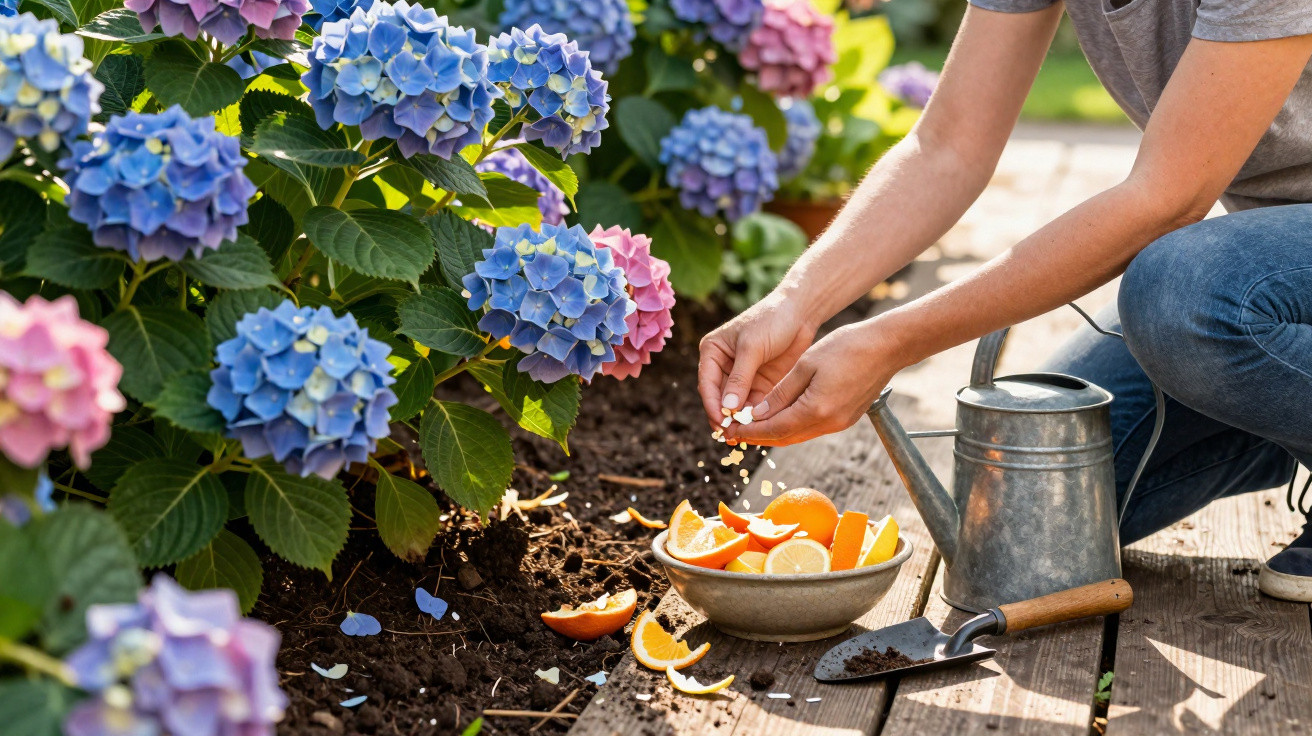
If you grow hydrangeas in the garden, you will know the frustration: instead of tight, round flower heads, the blooms droop and the foliage looks washed out. It is easy to reach for pricey specialist fertiliser, often with very little to show for it. Yet a straightforward alternative is usually already sitting in the kitchen - and otherwise ends up in the food waste.
Why hydrangeas in the garden so often struggle
Hydrangeas are classic ericaceous plants. They prefer slightly acidic soil and are often described as plants for “acid soil”. If the shrub is growing in lime-rich ground, things gradually start to go wrong.
- The soil pH rises.
- Nutrients such as iron and magnesium become less available.
- Leaves turn yellow while the leaf veins remain green.
- Flower heads become smaller and paler.
Many gardeners put this down to a “bad summer” or not feeding enough. In reality, the problem is often simply the wrong pH. Hydrangeas cope best at around pH 5 to 6.5. In many suburban gardens, however, the figure is noticeably higher - because lime dominates.
"If you keep the pH under control, you can often skip expensive specialist fertiliser and still get more from your hydrangeas."
So the key is not only how many nutrients are in the soil, but how well the roots can absorb them in the first place. That is exactly where this kitchen trick comes in.
An underrated fertiliser: citrus peel instead of food waste
What would normally go straight into the food caddy can be surprisingly helpful for hydrangeas: dried peel from oranges and other citrus fruit. It can deliver several benefits at once.
How citrus peel helps the soil
Once dried, citrus peel contributes three things:
- Mildly acidic organic matter – supports the kind of pH range hydrangeas prefer.
- Minerals such as potassium, magnesium and a little calcium – important for flower formation and robust growth.
- Food for soil life – microbes and earthworms break it down and improve soil structure.
Potassium helps strengthen stems and supports sturdy, well-formed flower heads. Magnesium is involved in chlorophyll production; a deficiency can also show up as pale leaves. Citrus peel is not a miracle feed, but it targets these pressure points well.
"If you use kitchen scraps wisely, you build up a soil environment over time in which hydrangeas visibly look more vigorous."
Important: never put fresh, whole peel straight on the soil. It can attract fungus gnats, and decomposition can drag on for months. Preparation is what makes the difference.
Preparing citrus peel properly: from fruit peel to a hydrangea booster
For the peel to work as a natural fertiliser, it needs to be fully dried first. The method is straightforward, but it does require a little patience.
Step-by-step guide
- Collect the peel: Use only untreated fruit, or peel that has been thoroughly washed. Tear thicker peel into smaller pieces.
- Dry it out:
- Either spread it on a tray or plate and leave it for a few days in a warm, airy spot.
- Or dry it in the oven at a low temperature (no more than 50–60°C, with the door slightly ajar) until it is hard and brittle.
- Crush it: Blitz the brittle peel into a coarse powder in a blender, or chop it very finely.
- Apply it: Sprinkle a thin layer around the hydrangea’s root zone, lightly cover with soil or compost, then water in well.
Getting the amount right matters: once a month during the growing season is enough. If your plants are otherwise well cared for, a single late-summer application is often sufficient.
"Several paper-thin applications are better than one thick layer that puts the soil under strain."
How the peel works in the soil
In the ground, dried citrus peel breaks down gradually. Microorganisms decompose the organic material and slowly release minerals over time. This happens far more evenly than with liquid feeds.
The main benefits at a glance:
- Gentle nudging of the pH towards “slightly acidic”.
- Slow-release nutrients rather than a short-lived overdose.
- More active soil life, which also helps mobilise other nutrients.
You will not see changes overnight. After a few weeks, leaf colour is usually richer and new growth looks stronger. The following year, flower heads can be larger and denser - especially if the soil was previously very lime-heavy.
Combine with other measures: how to make hydrangeas truly impressive
Citrus peel on its own will not fix a completely unsuitable site. If your garden has heavy, lime-rich soil, it helps to adjust a few other factors as well.
The most important partners for strong hydrangeas
- Acidic compost: Work in compost made from leaves of oaks, beeches or fruit trees.
- Suitable mulch: Add a layer of pine bark or dried conifer needles around the root area.
- Water correctly: Use rainwater where possible. In hard-water areas, tap water pushes pH up again.
- Check the position: Partial shade is ideal; midday sun stresses many varieties.
If you are planting from scratch, you can choose an appropriate growing medium immediately - for example, ericaceous compost mixed with garden soil. In established borders, improve conditions step by step by incorporating organic materials with a mildly acidic effect each year; citrus peel is one useful component of that approach.
What hobby gardeners should also know
A common question is whether the essential oils in citrus fruit might harm plants. When the peel is dried and crushed, those oils are released very slowly. Used sparingly, the quantities are so small that problems are unlikely.
It also makes sense not to rely on just one type of fruit. If you regularly eat oranges, mandarins, lemons or grapefruit, you can mix the peels. That creates a more varied organic blend that supports soil life over the long term.
"The best results come from collecting kitchen scraps over months and adding small portions to your hydrangeas again and again."
This trick is also worthwhile for anyone without a garden, using a large pot on a balcony or terrace. In containers, standard compost can become depleted quickly. A thin layer of citrus-peel powder, paired with a little fresh compost, can give potted hydrangeas a noticeable lift.
If you grow ericaceous plants more broadly - such as rhododendrons, skimmias or blueberries - you can carefully try the same method. Start with small amounts and watch how the plants respond. Over time, you will develop a feel for what your soil can handle.
Ultimately, the main takeaway is simple: not every garden needs yet another fertiliser from the garden centre. Often, it is enough to look again at what your kitchen produces every day. Using citrus peel deliberately supports hydrangeas with minimal effort - and you can look forward to shrubs that are clearly more vigorous, with richer colour in the border through summer.
Comments
No comments yet. Be the first to comment!
Leave a Comment