

What looks like a disaster at first glance can turn out, on closer inspection, to be a quiet advantage for your garden and lawn. Moles loosen the soil, eat pests and leave behind free, fine, crumbly earth. If you try to wipe them out at all costs, you often do more harm than good - and miss out on an unexpected helper living just beneath the turf.
Why molehills drive gardeners mad
A typical mole tunnel runs about 15 to 30 centimetres below the surface. From above, you won’t notice anything - until the animal pushes its spoil up through exit shafts, like miniature volcanoes. In just a few nights, a smooth lawn can turn into a bumpy landscape.
Visually, it’s frustrating: the area looks untidy, uneven and “ruined”. Children can easily twist an ankle while playing, and the mower judders over the lumps. In the vegetable garden, seedlings can lean or topple, roots may end up partly exposed, and beds can look as though they’ve been ploughed. Many gardeners then automatically assume they’re dealing with a pest - and reach for drastic solutions.
This is exactly where the most common mistake happens: the mole gets labelled an enemy across the board, without understanding its real role in the garden ecosystem.
What moles really do beneath your lawn
The European mole (Talpa europaea) is built for life underground. With its cylindrical body and powerful front paws, it drives through loose, damp soils, creating an underground network of runs and chambers.
This digging work acts like free soil cultivation - without a spade, a powered cultivator or a scarifier.
The key effects at a glance:
- Soil aeration: The tunnels carry air into deeper layers, giving roots more oxygen.
- Improved drainage: Waterlogging decreases and rainwater soaks away more quickly.
- Breaking up compaction: Especially in heavy, clay-rich soils, looser zones form again.
- Light natural fertilising: The animals’ droppings add nutrients - in small but steady amounts.
Despite what many people believe, moles do not eat plant roots. They are strict carnivores. Their diet consists mainly of:
- Earthworms
- Chafer grubs and other soil-dwelling larvae
- Caterpillars, woodlice and beetles
- sometimes slugs as well
A single animal eats roughly its own body weight each day. In doing so, it quietly reduces exactly the pests that chew grass roots, ornamental plants and vegetable crops. Many problems later blamed on “the soil” are, in reality, down to these larvae - not the mole itself.
The one measure that really harms your garden
If you go for total eradication, you’re often making the wrong call. Poison baits, pumping car exhaust into tunnels, or even homemade explosive devices don’t just harm the mole. They contaminate the soil, endanger pets and wildlife, and in extreme cases can put people at risk too.
Reaching for chemical products wipes out one of the most important pest hunters in the soil in a single stroke - and lets its natural opponents carry on unchecked.
At the same time, you lose the benefits for soil structure and aeration. In many gardens, conditions for lawns and beds then deteriorate for the long term:
- The soil compacts more quickly.
- Waterlogging increases and fungal diseases become more common.
- Beetle larvae and other pests spread.
There’s also a legal aspect: many aggressive methods are now banned or only permitted with restrictions. Using them can become expensive if neighbours complain or authorities take notice.
How to benefit from moles without losing control of the garden
The good news is that you don’t need a guerrilla war to live with moles. A better approach is to divide the garden clearly into “work zones” for the animal and areas that need protection for lawn and vegetables.
Plan mole-free zones deliberately
If you’re creating an ornamental lawn at the front of the house or an important vegetable bed, you can prevent problems from the outset. A proven option is a sturdy, fine-mesh wire barrier designed to deter moles.
How to do it:
- When laying a new lawn or bed, spread the mesh across the whole area.
- Install the mesh 40 to 50 centimetres deep in the soil.
- Add the normal topsoil layer above it, then establish the lawn or bed as usual.
The animals hit the barrier and move on to dig to the side. That keeps sensitive zones largely free of hills, while the soil outside continues to be “worked” at no cost. This is particularly useful in:
- formal front gardens
- children’s play areas
- densely planted vegetable beds with lots of young plants
Leave certain areas as a retreat
At the back of the garden, in an orchard, or on an extensive meadow, a mole can work with relatively little disturbance. The visual impact there is minor, while the benefits still fully apply.
Suitable retreat areas include, for example:
- strips along hedges
- rows of trees in an orchard
- wildflower meadows or natural corners
If you intentionally keep these areas “open”, you encourage the animals to orient themselves there and be less active under an ornamental lawn.
What to do when the hills still get on your nerves
You’re unlikely to avoid molehills entirely. But with a few simple steps, you can make the traces far less disruptive day to day.
- Level the hills: Spread the soil with a rake and press it down lightly so the lawn surface closes up again.
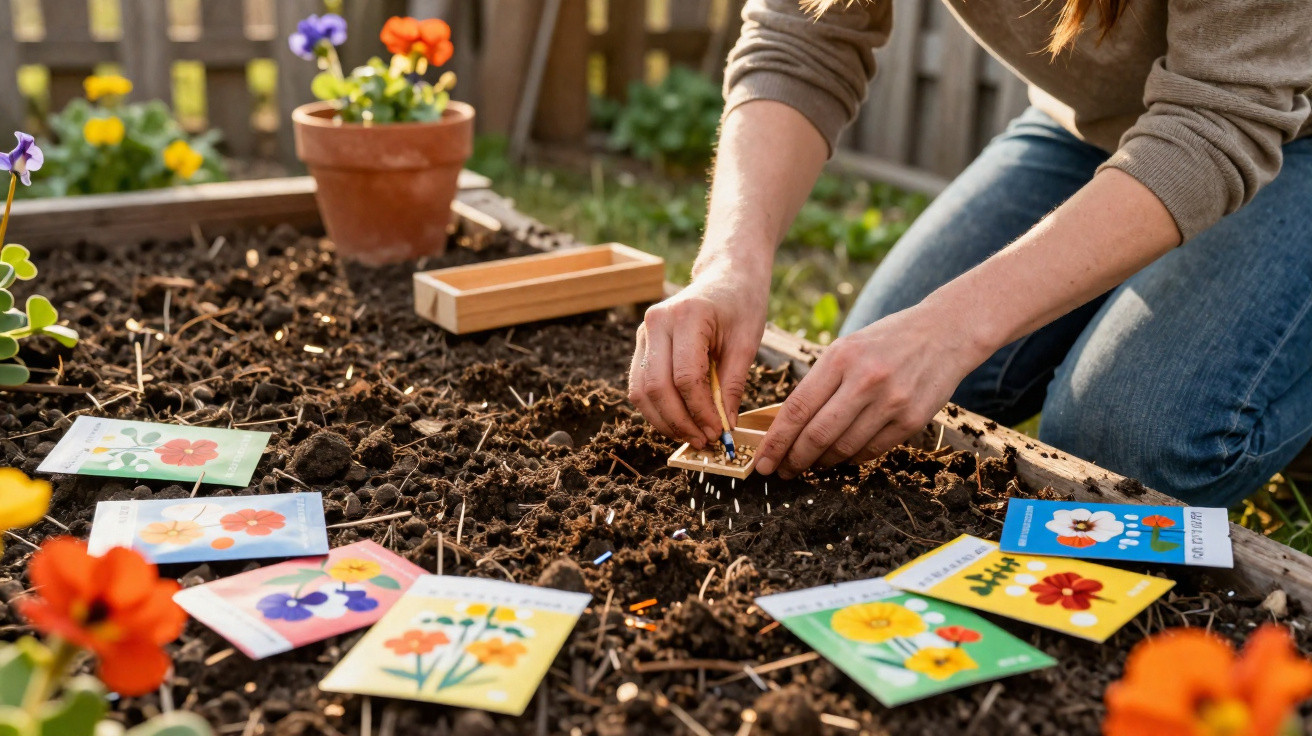
- Put the soil to use: The very fine, loose mole soil is ideal for seed trays, pots and window boxes.
- Gentle pressure: Metal rods with plastic bottles or wind chimes create light vibrations in the ground. Moles dislike this and often shift a few metres away.
- Technical aids: Solar- or battery-powered ultrasonic devices emit sound waves intended to keep animals away from sensitive areas.
Every molehill can be turned into a small stock of free growing medium - ideal for your next sowing.
How to avoid common misconceptions about moles
A lot of half-truths circulate on this topic. Three points come up again and again in garden chats:
- “Moles eat my plants”: Wrong. They eat animals in the soil, not roots. Hollowed-out root areas are usually caused by chafer grubs.
- “Lots of hills means a mole invasion”: Often, a whole line of hills comes from a single animal patrolling its territory.
- “Only poison works long term”: The effect rarely lasts, it harms soil life, and it doesn’t fix the underlying issue.
If you understand these misconceptions, you’ll view the hills far more calmly and respond more rationally. Ultimately, it’s about balancing appearance, safety in the garden and a healthy living soil.
Moles as a building block of a resilient garden
Living soil is the foundation of a tough lawn and strong plants. Earthworms, micro-organisms and beetles all form a complex network. The mole plays a regulating role here by keeping certain insects in check and, through its tunnels, creating new habitats.
If you also value a tidy lawn, the best approach is to do both at once: protect the areas that need it with practical barriers, and allow less sensitive parts to serve as the working ground for this little civil engineer. That way the garden stays usable, without switching off the natural helpers beneath the surface.
In the long run, the biggest winners are hobby gardeners who manage the balancing act: not treating every hill as a personal attack, but as a sign that there’s far more going on under the turf than meets the eye - and that much of it ultimately benefits the lawn.
Comments
No comments yet. Be the first to comment!
Leave a Comment