
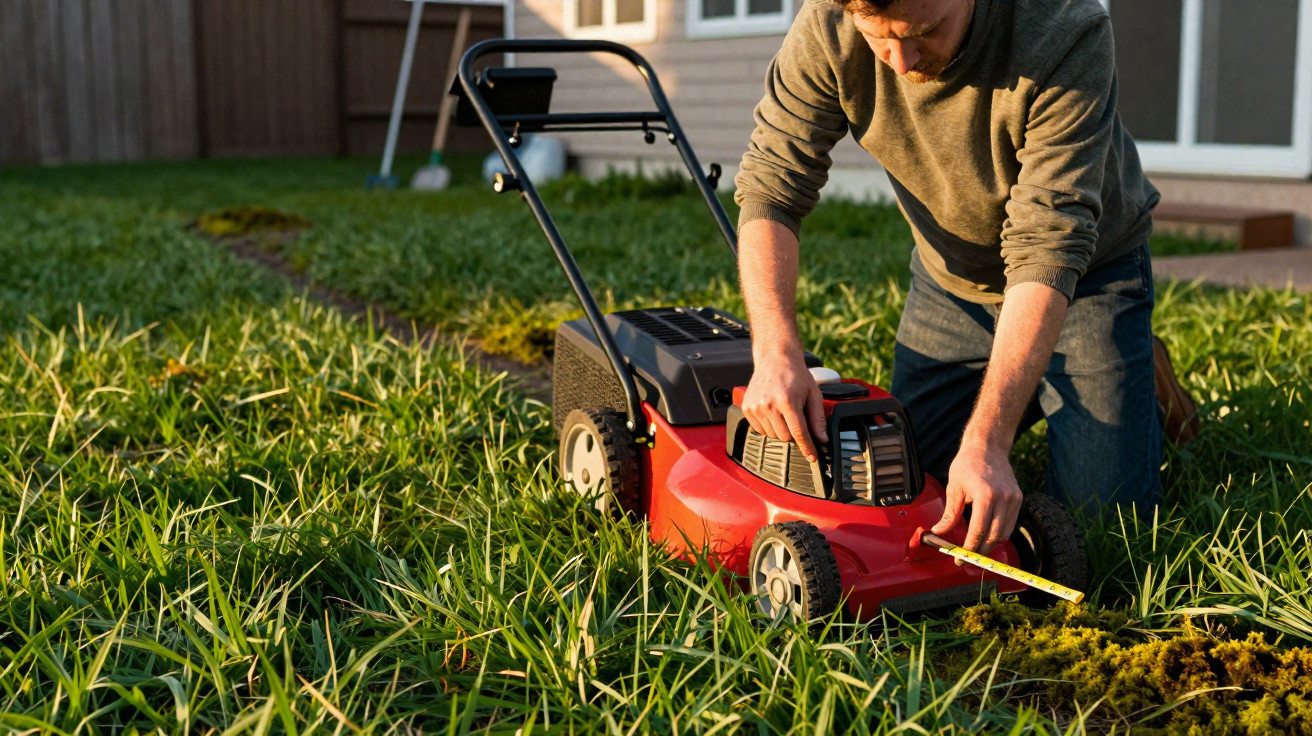
The real trigger often isn’t in the soil or the weather at all, but in a rather overlooked detail: the setting on the lawnmower axle. A difference of just a few centimetres can decide whether your garden looks like a lush green carpet or like a soggy sports pitch in November.
Why cutting height makes all the difference
Grass blades work like tiny solar panels. The more leaf area they have, the better photosynthesis can run - and the stronger the roots become. If you cut too low, you take away that energy source, so the lawn has to live off its reserves instead of building fresh strength.
If the lawn is left permanently very long, another issue appears: the lower growth gets hardly any air, moisture lingers, and dead blades form a dense thatch. That damp layer is exactly what moss and weeds thrive in.
Cutting height determines whether grass develops stable roots - or whether moss and weeds take over the gaps.
So the aim is balance: low enough to look tidy, but high enough for the grass to stay resilient.
The ideal lawn height - depending on sun and shade
One key point: the “right” height depends on how the area is used and how much light it gets. A hard-wearing family lawn in full sun needs different settings from a shady lawn beneath mature trees.
Lawn in a sunny garden: 4 to 5 centimetres
For typical home gardens with plenty of light, this is a reliable rule of thumb:
- Spring: 4–5 cm
- Summer: 6–8 cm (for better heat protection)
- Autumn: 5–7 cm
In spring, a height between four and five centimetres is a sensible compromise: the surface looks well kept, the blades keep enough leaf mass, and roots can push deeper into the soil. Drop below three centimetres and even ornamental lawns start to struggle - the grass yellows more quickly and bare patches appear.
Shady spots and damp corners: 6 to 8 centimetres
Where trees, walls, or buildings cut out a lot of light, grass needs more leaf area to collect enough energy. In those conditions:
- Shady or very damp areas: 6–8 cm
Longer blades capture more light and also help hold moss back. That’s because every moss patch competes directly with grass for space, moisture, and nutrients. When grass has sufficient height - and therefore vigour - it can outcompete moss far more effectively.
Ornamental lawns and an “English” look
If you want a very fine ornamental lawn, you can lower the height a little further. Special seed mixes with finer leaves can tolerate:
- 2–2.5 cm on purely ornamental areas that are hardly ever walked on
This level is not suitable for play lawns or family gardens. Children, pets, and garden furniture all put the blades under pressure - and combined with a low cut, the balance can quickly tip towards moss and clover.
The golden rule: never cut more than a third
Just as important as the target height is how much you remove in each cut. Experienced gardeners stick to the so-called one-third rule.
Never remove more than a third of the current blade length - otherwise the lawn has to draw on its reserves.
So if the lawn is sitting at nine centimetres, it should be left at six centimetres after mowing - not three. Taking far more off weakens the grass dramatically. The plants respond with stress, shed leaf tissue, roots become shallower, and the surface dries out faster.
How often to mow - and when to start each year?
Across the gardening year, that leads to fairly clear intervals:
- From March: first cuts; set the mower to its highest setting and just take the tips off
- April to June: during growth spurts, mow 1–2 times per week
- July to September: at least weekly; cut higher during dry spells
- October: final cuts; gradually set the height to 5–7 cm
Many people wait too long before the first mow, let the grass shoot up, and then “scalp” it very short afterwards. That exact combination gives moss and weeds the perfect opening.
Common mistakes that encourage moss
A wrong mower setting is often only part of the story. In practice, the same patterns show up again and again.
- “As short as possible, then I won’t have to do it again so soon”: results in scorched, yellow patches.
- Very infrequent mowing with a drastic cut: puts the grass under heavy stress every time.
- Always using the same height, whether it’s spring or midsummer: ignores growth phases and weather conditions.
- Mowing on wet ground: the blades tear at the grass, causing wounds that moss can move into.
If you change these habits, you give the grass a clear advantage over the cushions that like to spread.
Stabilise your lawn with a few simple steps
The good news: you don’t need to rip out the whole garden to get a thatchy lawn back into shape. Often, a few targeted measures - combined with the right height - are enough.
- Set the lawnmower correctly: on a flat surface, check that the blades really run at four, five, or seven centimetres above ground level - don’t rely on guesswork.
- Mow regularly, but gently: cut more often and remove only a little, rather than mowing rarely and cutting hard.
- Aerate the soil: use an aerator or a garden fork to punch holes so water and air can reach the roots.
- Remove thatch and old moss: if needed, use a scarifier, but only when the lawn is growing strongly in spring.
- Check the pH level: very acidic soils favour moss. Lime if necessary, but only after a test - not “just in case”.
Two or three clicks on the cutting-height adjustment can achieve more than the most expensive lawn feed.
Why moss seems so stubborn - and where it’s fine to leave it
Moss isn’t a classic “enemy”, but a survival specialist. It copes with low light, needs very few nutrients, and grows where grass has long since given up: in compacted soils, permanently wet dips, or deep shade behind hedges.
If you only fight moss patches without changing the conditions, you’ll face the same issue every year. The correct lawn height, air in the soil, and a reasonably balanced pH take away a large part of this survivor’s advantages.
At the same time, there are places where moss can absolutely be left to do its thing: beneath old trees, in more natural corners, or on shady garden walls. In those spots, you can deliberately allow a “moss garden” - and focus your effort on the actual lawn.
Practical day-to-day checks: keeping an eye on the height
A simple routine helps: while mowing, stop now and again and measure a blade between the soil and the tip with two fingers. If you’re not sure, use a ruler or a small wooden stick with markings and stand it briefly in the turf.
Over time, you’ll develop a feel for what four, five, or seven centimetres looks like. Then a quick glance - and the sound of the mower - is enough to tell whether it’s scraping too low or gliding lightly over the tips.
That turns an often underestimated twist of the mower setting into a genuinely effective tool against moss - and helps the lawn stay denser, greener, and tougher without chemicals.






Comments
No comments yet. Be the first to comment!
Leave a Comment