
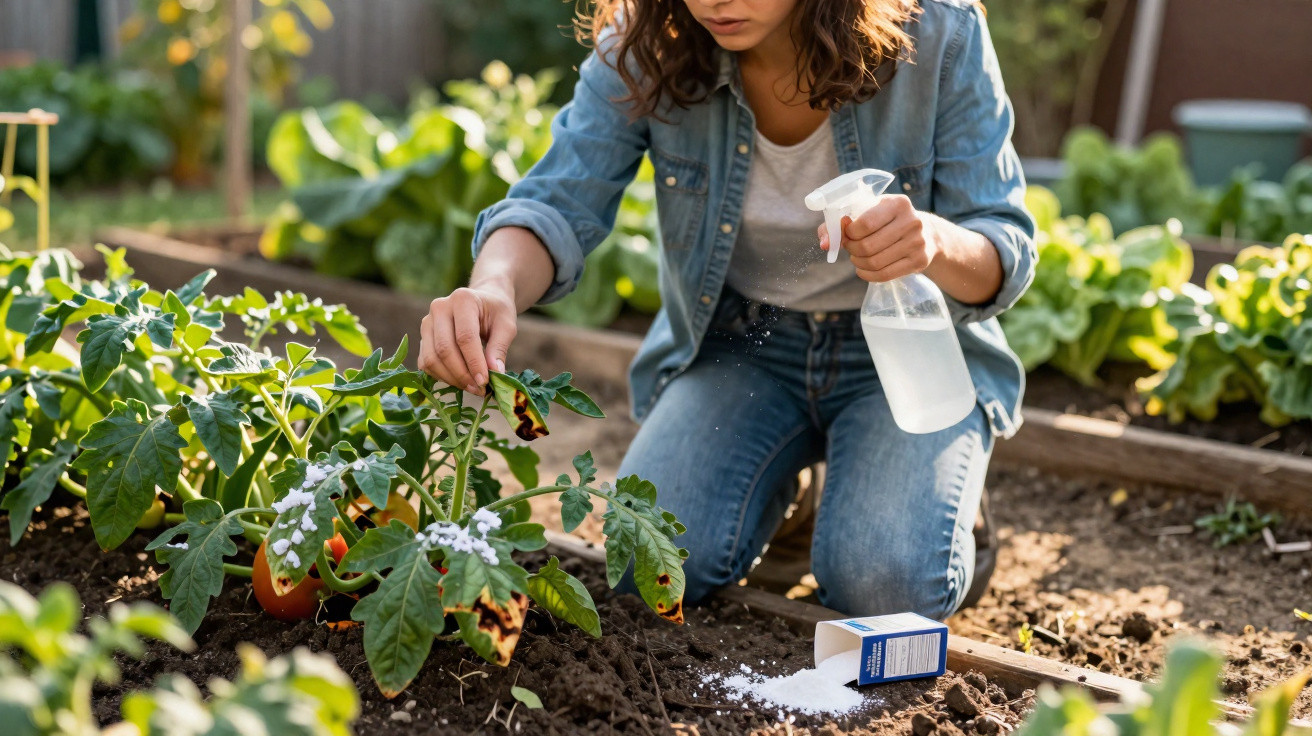
More and more amateur gardeners are reaching for household remedies instead of chemicals. On social media, countless videos promote a simple white powder mixture as a cure for fungal diseases, “weeds” and pests. What starts out as an eco-friendly hack can quickly end in scorched leaves, weakened plants and soil that no longer delivers water properly.
How the “harmless” powder became a garden craze
The product at the centre of this trend is something most people already have in their kitchen cupboard: bicarbonate of soda (also known as baking soda). At home it is seen as a versatile all-rounder - for cleaning, neutralising odours and baking. That wholesome reputation has carried it straight into the garden.
In guides and forums, the powder is often described as:
- “natural” and therefore safe
- biodegradable
- cheap and available everywhere
- effective against fungi, “weeds” and pests
If you are already wary of synthetic fungicides, it is easy to be persuaded. On top of that, “bicarbonate of soda” simply sounds far less threatening than “pesticide” or “fungicide”. Many people reason that if you can eat it, it cannot seriously harm plants.
“That exact assumption is why a cleaning product ends up being used like an all-purpose poison cocktail in the veg patch.”
Another common misunderstanding is assuming that what removes lichen from a patio or cleans paving joints will also “look after” courgettes, tomatoes and lettuce. The fact that delicate leaf surfaces react very differently from stone or tiles is often overlooked.
A spray for powdery mildew - and the bed went downhill
For many, the trigger for experimenting with bicarbonate of soda is powdery mildew: the white, dusty coating that appears on roses, squash-family crops and many other plants. One “organic recipe” in particular has gone viral, circulating in endless variations across gardening groups:
- 1 litre of water
- about 1 teaspoon of bicarbonate of soda
- 1 teaspoon of liquid soap or soft soap
- a little vegetable oil
The mixture is typically sprayed generously over both the upper and lower leaf surfaces, often in bright, warm conditions. At first, it can look as though it works: the white fungal coating does indeed recede a little.
But a few days later the downside becomes obvious. Leaf edges turn dark brown, then become stiff and brittle. Leaves curl up and look as if they have dried out. Tomato and courgette leaves droop limp, even though the soil is moist. Rose buds blacken and drop off. What was meant to be a “treatment” ends up acting almost like a herbicide.
What is really happening in that white powder cloud
From a chemical perspective, the powder is sodium hydrogen carbonate. The troublesome part is right there in the name: sodium. This substance can build up in plants and in the soil, throwing several processes out of balance.
Salt stress on the leaf
Once dissolved, bicarbonate of soda increases the salt concentration on the leaf surface. If the mixture is too strong, the following can happen:
- The salt solution draws water out of the cells.
- The leaf’s protective wax layer is damaged.
- Brown necroses form - dead patches of tissue.
This so-called phytotoxicity shows up as scorched spots, dried-out areas and dead leaf margins. The plant loses leaf mass and, with it, photosynthetic capacity.
An invisible stress test in the soil
Some of the spray inevitably ends up on the ground. In the soil, the sodium remains and alters the growing environment:
- Salt levels rise around the roots.
- The plant struggles to take up water (physiological drought).
- The pH value increases, making many nutrients less available.
From the outside, the soil can still look damp, yet the plant is effectively starving and dehydrating internally. Typical symptoms include yellow leaves with green veins - a sign of nutrient deficiency, for example iron or magnesium. At the same time, beneficial soil bacteria and fungi that normally support healthy soil life can be disrupted.
“Bicarbonate of soda doesn’t evaporate. Every new round of spraying adds another layer of salt to plants and soil.”
When bicarbonate of soda works - and where the red line lies
It is not necessary to demonise the powder entirely. Against powdery mildew, a very weakly dosed application can help in the short term, because the fungus dislikes an alkaline environment on the leaf surface. The deciding factors are dosage, frequency and precise targeting.
Guide values for a more cautious approach
Across trials and recommendations, a similar pattern appears again and again:
- 1 litre of the softest water possible, ideally rainwater
- a maximum of 1–2 grams of bicarbonate of soda (roughly half a level teaspoon tip)
- only a few drops of soap as a wetting agent, not a full teaspoon
The mixture should be applied only to infected leaves, as a fine, light spray - ideally early in the morning or in the evening, not in strong sunshine. Any follow-up treatment should be no sooner than 7 to 10 days later - if it is still needed at all.
| Aspect | Lower risk | Risky |
|---|---|---|
| Concentration | under 0.5% bicarbonate of soda | 1% and above |
| Frequency | no more than 1–2 times per season | every few days, repeated sequences |
| Area covered | targeted on affected leaves | entire garden, soil, paths |
It becomes problematic when gardeners spray the mixture “as a precaution” on everything, or even soak the soil with it. In that scenario, the balance can tip into harm very quickly.
Gentler alternatives for powdery mildew and similar problems
After the first signs of damage, many amateur gardeners switch to milder methods. Frequently mentioned options include:
- Milk or whey, roughly 1 part milk to 9 parts water, applied to leaves
- Plant feeds such as nettle brew or horsetail extracts to strengthen plants
- Better airflow: avoid planting too closely so air can circulate
- Watering properly: keep leaves as dry as possible and water the soil in the morning
- Mulching to maintain even soil moisture and reduce stress
Powdery mildew readily establishes itself on stressed plants. Choosing robust varieties, avoiding overfeeding and buffering stress from heat or drought usually reduces problems markedly - without kitchen experiments in a sprayer.
Why “natural” is not a free pass
The bicarbonate of soda story highlights a broader issue behind modern gardening myths: the word “natural” is often treated like a seal of approval. Many people equate it with “harmless” or “gentle”. In reality, natural substances can be highly damaging - from highly concentrated vinegar to essential oils.
On top of that, online recipes often combine several aggressive ingredients: bicarbonate of soda, soap, oil, alcohol, sometimes even vinegar. Each of these can stress leaves and soil on its own; together they create a cocktail that is barely predictable.
“Just because something sits in a kitchen cupboard doesn’t automatically make it a plant protection product.”
Practical tips to avoid similar garden disasters
If you want a healthy bed over the long term, a few basic principles will take you further than the next “miracle cure”:
- Treat video recipes with scepticism and do not test them immediately across the whole garden.
- Trial any new treatment on a single plant first and wait a few days.
- Keep the dose low and never add “another spoonful” by feel.
- For stubborn issues, use approved, tested products from specialist retailers.
- Focus on soil care, crop rotation and variety choice - this significantly reduces disease pressure.
If you treat plants like living things rather than like paving slabs, you quickly see the point: the garden needs less magic powder and more observation, patience and understanding of how everything connects. Bicarbonate of soda can remain useful in the home - in the veg patch, it is better kept as an exception rather than a fixed part of routine care.
Comments
No comments yet. Be the first to comment!
Leave a Comment