
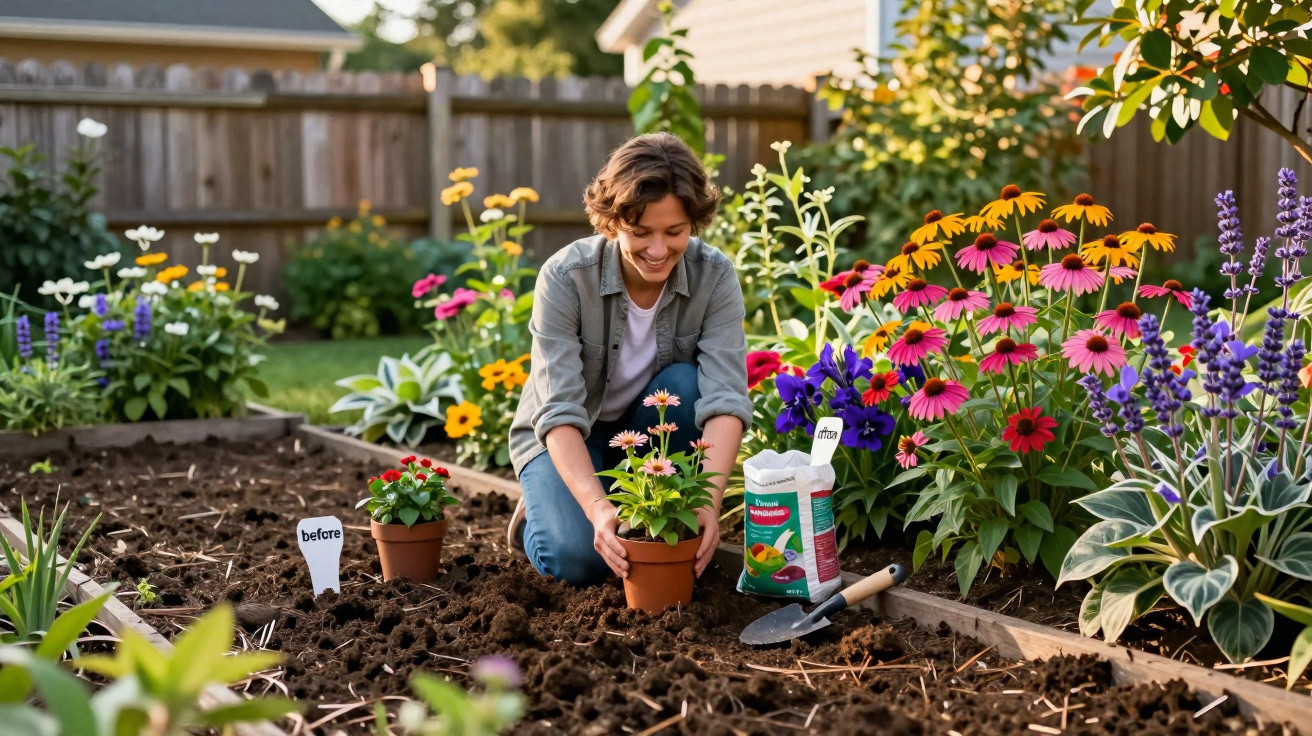
After the colder months, a glance out into the garden often reveals little more than flat, bare patches. It’s easy to assume the only answer is a full redesign-costly shrubs, lots of digging, and plenty of effort. In reality, a carefully chosen mix of long-lived perennials is often enough to make borders look almost completely renewed, with far less work than you’d expect.
Why perennials are the best choice for your garden right now
Perennials-plants that come back year after year-re-emerge each season, gain strength over time and form dense clumps. Once they’re planted properly, you don’t need to buy replacements every spring. That saves money, time and frustration, while still delivering colour from early spring right through to autumn.
Their biggest strength is how they naturally fill in: many return on their own, expand steadily and close gaps across the border little by little. With a bit of planning, you can create a garden that stays visually interesting for most of the year.
"With cleverly combined perennials, an ‘empty’ garden can look like new in one season-without a full rebuild."
Spring is your starting gun: plant now, enjoy the results in summer
Spring is the ideal window for getting perennials into the ground. After winter, the soil is still moist but no longer frozen. Periods of rain help roots establish properly before summer heat arrives.
What to keep in mind:
- The soil must not be frozen.
- Avoid waterlogging-don’t plant into soil that’s completely saturated.
- Wait for a mild spell, with no severe frost forecast.
- As a rough guide (depending on region): March to May.
In the North or at higher elevations, planting often begins in April or May. In milder areas, March can be perfectly suitable. If you take advantage of this window, you can often expect the first flowers in the same year-many perennials get going surprisingly fast.
Good preparation: how to turn “fine” into a “wow” border
Before you buy anything, take a proper look at your garden conditions. Not every perennial suits the same spot, and full sun, partial shade and deep shade all demand different choices.
Check the site before you shop
Walk around your borders calmly and make a note of:
- How many hours of sun the area receives each day.
- Whether the soil is heavy and clay-like or light and sandy.
- Whether water sits for a long time or the ground dries quickly.
A south-facing bed in full sun needs a very different plant list from a north-facing strip behind the house. Ignore a perennial’s preferences and you’ll likely see failures later.
Preparing the soil: the underrated turbo boost
For perennials across the board, better soil prep means easier establishment.
- Remove weeds thoroughly, including deep-rooted types such as ground elder or couch grass.
- Loosen the soil with a garden fork, rather than only raking the surface.
- Work in well-rotted compost to improve nutrients and structure.
- Water well after planting and add a layer of mulch.
"Compost and mulch are like a starter kit for perennial borders: more nutrients, fewer weeds, better moisture."
15 robust perennials that will noticeably upgrade your garden now
The following selection covers a range of positions and looks-from a sunny, showy border to a shady corner with a woodland feel.
For partial shade and shady areas
- Christmas rose and Lenten rose (Helleborus): Flower from late winter and bring early colour to partially shaded spots. Excellent beneath shrubs or along the edge of trees.
- Hosta: Large, ornamental leaves that vary by variety from light green to blue-green and variegated forms. Ideal for cool, shady places with slightly moist soil.
- Coral bells (Heuchera): Grown mainly for striking foliage. Colours from lime to deep purple add definition at the border edge or in pots.
- Bergenia: Thick, glossy leaves and pink-to-red spring flowers. Tolerates shade well and also copes with more difficult soils.
- Astilbe: Airy, feathery flower plumes that thrive in moist, humus-rich ground. Perfect by a pond edge or in cool, shady beds.
- Bleeding heart: Delicate, heart-shaped flowers hang in rows on arching stems. Best for partial shade to shade with loose, nutrient-rich soil.
Sun lovers for abundant flowering
- Peony: Big, often fragrant blooms and exceptional longevity-given the right spot it can remain for decades. Needs plenty of sun and a settled location.
- Lupin: Candle-like flower spikes in bold colours. Adds height and looks especially impressive planted in groups.
- Penstemon: Slender stems carrying many bell-shaped flowers. Blooms for a long period through summer, especially in warm, sheltered sites.
- Lavender: A classic for sunny, dry borders. Strongly scented, loved by bees, and useful for shaping paths, edging beds or creating a Mediterranean-style corner.
- Yarrow (Achillea): Flat, umbel-like flower heads in yellow, pink, red or white. Very tough, preferring drier, poorer soils.
- Aster: Late-season bloomers that really come into their own in autumn, adding colour when much else has finished.
- Crocosmia: Arching stems with vivid red or orange flowers. Creates powerful colour accents in summer.
- Delphinium (Delphinium): Tall, dramatic flower spires in blue, violet or white. Ideal at the back of a sunny border, though it needs staking in windy conditions.
All-rounders for gaps and long flowering periods
- Hardy geraniums: Spread in a mat and flower from spring into autumn. Excellent for filling gaps and suppressing weeds.
How to combine perennials for maximum impact
Borders look their best when they play with contrast: bold leaves beside fine textures, tall plants behind low cushions, and a mix of flowering times. If you want real “spectacle”, focus on the following:
- Layering by height: Tall at the back (delphiniums, lupins, astilbes), medium in the middle (peony, penstemon), low at the front (coral bells, hardy geraniums).
- Mix flowering seasons: Early flowers such as hellebores and bergenia, summer performers such as lavender and yarrow, and late bloomers such as asters.
- Use leaf texture: Big hosta leaves look especially three-dimensional next to fine grasses or delicate astilbes.
- Choose a colour scheme: Soft pastels or deliberate bright shades-either works, as long as you stay consistent.
"A well-planned mix ensures your border never feels completely ‘empty’-even outside the main flowering period."
Low-maintenance, not no-maintenance: what perennials actually need
Many gardeners choose perennials because they promise less work. They’re not entirely hands-off, though. A few simple routines will keep them healthy and flowering well.
| Task | Frequency | Benefit |
|---|---|---|
| Water during dry spells | During prolonged heat | Prevents drought stress, supports flowering |
| Remove spent flowers | Throughout the flowering period | Encourages fresh buds |
| Feed with compost | Once in spring | Provides long-term nutrients |
| Divide overgrown clumps | Every few years | Rejuvenates perennials, creates new plants |
Mistakes that hold back your perennial border dream
When people start out with perennials, the same issues often crop up. Three are especially common:
- Planting too closely: Perennials need space to develop. Gaps look normal at first; in two years they’re usually filled.
- The wrong position: Shade plants in full sun-or sun lovers in deep shade-will struggle. It pays to actually read the labels at the garden centre.
- Skipping mulch: Bare soil dries out quickly and gives weeds the perfect opportunity. A mulch layer of bark compost or chipped material reduces work.
Avoid these stumbling blocks and you’ll soon notice how perennial borders improve year on year. With decent care, many plants respond with stronger growth and increasingly abundant flowering.
How perennials save you money and time in the long run
Compared with annual summer bedding plants, perennials can look more expensive at the till. Over several years, the maths changes. A single peony can stay put for decades, and hardy geraniums can cover sizeable areas without you replanting every year. If you divide older clumps, you gain free new plants for other beds-or for swapping with neighbours.
Insects also benefit hugely from perennials. Lavender, yarrow, asters and penstemon provide reliable forage for bees, bumblebees and butterflies. That means a well-planned perennial border isn’t only more attractive-it’s also a small, practical contribution to biodiversity in your own garden.

Comments
No comments yet. Be the first to comment!
Leave a Comment