
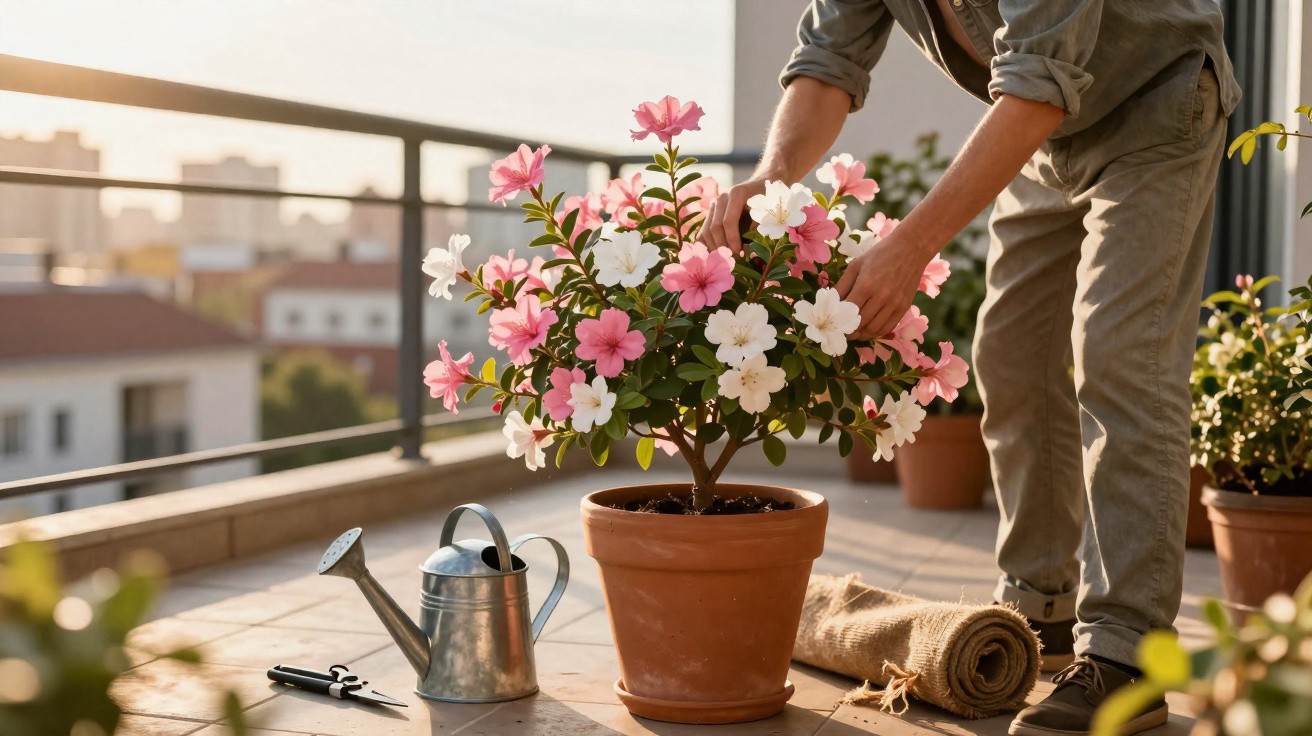
If, by July, all you can see are scorched beds and limp container plants, it’s time to rethink the planting. What’s needed are plants that flower for a long time, ask for very little attention and cope well with dry spells. One evergreen shrub from South Africa meets those requirements surprisingly well - and can bring colour for up to ten months of the year, even when grown in a pot on a balcony.
A picture-perfect shrub: butterfly-like flowers right into autumn
Polygala myrtifolia - often referred to in German as the myrtle-leaved milkwort - can seem fairly unremarkable at first glance. But as soon as spring arrives, it gets going. From its small, glossy green leaves, it produces panicle-like flower clusters in shades from pink to violet, and the individual blooms strongly resemble tiny butterflies.
In mild regions, Polygala myrtifolia flowers from April well into November - almost without a break.
Planted in the ground, the shrub develops into a dense, rounded bush roughly 1.5 to 3 metres tall, depending on climate and position. Because it keeps its leaves year-round, it provides structure in every season, while the flowers deliver months of colour. That makes it an appealing choice for:
- low flowering hedges along paths or as a boundary planting
- the back of perennial and ornamental grass borders
- large planters on a terrace, roof terrace or balcony
- smart entrance areas by the front door or patio doors
The flowers are rich in nectar, drawing in bees, hoverflies and butterflies. If you’re aiming to turn your garden into a small haven for insects, this shrub can be a reliable long-term addition - without needing daily watering.
Where this long-flowering shrub truly thrives
As the shrub originates from southern Africa, it naturally prefers warm conditions and relatively dry air and soil. In Germany and Austria, it does best mainly in mild coastal regions or in sheltered spots.
In the ground: only in genuinely mild areas
Polygala myrtifolia tolerates only brief, light frosts, down to about -5 to -6 °C. If temperatures stay below that for long, the growth above ground can be badly damaged; in extreme cases the plant may die.
For that reason, planting in a border is most suitable in:
- wine-growing climates and sheltered locations in the south-west
- very mild areas close to the coast
- urban settings with a pronounced “heat island” effect
Choose a position in full sun to light shade, with soil that is loose and well draining. Waterlogging is this shrub’s biggest enemy. Where soils are heavy and clay-rich, gardeners mix in sand, grit or fine gravel so rainwater can drain away more quickly.
In a pot: the safer option for balcony and terrace
For most of the German-speaking region, growing it in a container is the far safer approach. That way, the shrub can be outside in summer and moved somewhere protected for winter.
A good set-up includes:
- a pot at least 40 centimetres in diameter
- large drainage holes so excess water can escape
- a layer of expanded clay or gravel at the base
- a free-draining mix of compost, sand and mineral components such as lava grit or gravel
In summer, place the container in full sun, sheltered from wind - for example against a house wall or on a bright terrace. In winter, move it to a bright, cool space: a conservatory, an unheated stairwell, a light garage with a window, or a frost-free hobby room can all work well.
A winter temperature of 5 to 10 °C is ideal - it helps keep the shrub compact and in good condition.
Care: minimal effort, as long as you avoid two mistakes
Despite its long flowering season, this shrub doesn’t demand complicated care. Most issues can be avoided by respecting the conditions of its origin: plenty of light, very little wetness, and almost no frost.
Watering and feeding - with restraint
During the first year after planting, the shrub needs more water so the roots can establish properly. Later on, it becomes impressively tolerant of dry spells, especially when planted in the ground.
| Location | Watering approach |
|---|---|
| In the ground | Water thoroughly only during prolonged dry periods, then allow the soil to dry again. |
| Pot in summer | Water only when the top layer of compost is dry. Avoid waterlogging at all costs. |
| Winter quarters | Water very sparingly, just enough to stop the rootball drying out completely. |
A standard flowering-plant fertiliser is sufficient. One or two feeds in spring are usually enough to support flowering. If you use a slow-release fertiliser, a single application per season is normally adequate.
Pruning: just a light tidy-up
The shrub naturally grows quite compactly, so hard pruning is rarely required. A little annual shaping helps prevent it becoming bare at the base or looking too open.
- Light trim after the main flush of flowering, or towards the end of winter
- Shorten no more than one third of the shoots
- Remove faded, weak or inward-growing growth
With careful pruning, you can keep the shrub nicely rounded for years while also encouraging fresh flowering shoots.
Protection from frost and wet - the two rules for survival
To keep the shrub performing for a long time, two precautions matter more than any special compost or pricey fertiliser.
Frost protection on risky nights
If temperatures are expected to fall towards -5 °C, it pays to act quickly when the plant is in the ground. A thick mulch layer of bark chips, leaves or straw around the root zone helps buffer the cold. If frost is forecast overnight, cover the crown with horticultural fleece. In a container, you can temporarily move the whole plant closer to a house wall or wrap the pot and plant with insulating fleece.
Avoid waterlogging without compromise
Standing water in a saucer, or a rootball that stays constantly wet, can quickly lead to root rot. This is especially true in the colder months, when the plant loses less moisture.
- Empty saucers after rain or watering
- Never place the pot directly into decorative cachepots with no drainage
- Water less often, but thoroughly when you do
Diseases, risks and legal considerations
In parts of southern Europe, Polygala myrtifolia can act as a host plant for the bacterium Xylella fastidiosa, which can harm other plant species. In some areas, special rules therefore apply to cultivation and trade.
If you are buying in particularly sensitive regions, a quick check with local authorities or a specialist garden centre is worthwhile to see whether restrictions are in place. That can prevent hassle and unnecessary expense.
For children and pets: the shrub is not considered highly toxic, but leaves and flowers still shouldn’t be treated as a snack. Curious toddlers and dogs are best supervised - a sensible rule that applies to almost all ornamental plants in the garden.
How the shrub fits into modern gardens
The move towards low-maintenance, climate-resilient gardens works in favour of Polygala myrtifolia. Paired with Mediterranean favourites such as lavender, rosemary, rockrose or smaller ornamental grasses, it creates a look that isn’t just attractive, but also copes with limited watering.
On balconies, the shrub suits large containers planted with heat-tolerant companions such as Cape daisies, houseleeks or low, scented pelargoniums. If you want to make the flowering stand out, it’s best to underplant with subtle ground cover or grasses that visually support the violet blooms without competing with them.
For many hobby gardeners, the biggest impact is psychological: when even tough perennials start to flag in high summer, this shrub simply keeps going - green, in flower and remarkably unfazed by heat and watering restrictions. That calm resilience is exactly what makes it a quiet favourite for the drier years ahead.



Comments
No comments yet. Be the first to comment!
Leave a Comment