
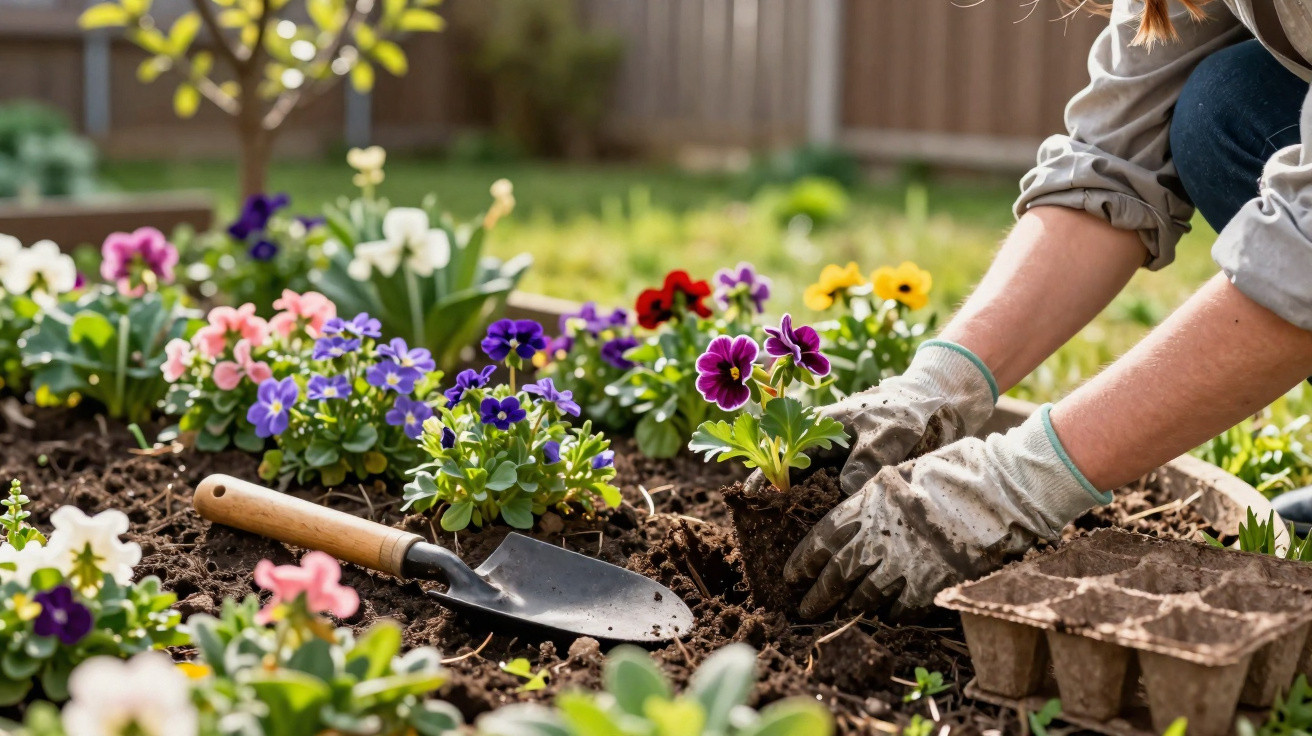
As many hobby gardeners know, it can feel like a losing battle: you finish weeding a bed, and after the next shower fresh green tufts pop up again. Your back aches, the bucket fills, and yet the borders quickly look untidy once more. Instead of fighting weeds nonstop, you can plant the soil in a way that leaves unwanted plants very little opportunity – and the best moment to start is ideally in March.
Why weeds keep coming back, even when you weed diligently
Beneath every garden bed sits an invisible “seed bank”. Over many years, seeds from chickweed, thistles, dandelions and countless other species accumulate there, simply waiting for light and moisture.
As soon as the soil is left bare and worked hard, those seeds are brought up closer to the surface. With light, water and warmth available, they germinate in huge numbers. That is why it can seem as though weeds appear out of nowhere.
"Every deep spadeful can bring thousands of dormant seeds to the surface – and trigger the next wave of weeds."
That is why experienced gardeners separate weeds into two groups:
- Annual weeds such as chickweed or purslane germinate quickly, flower, set seed and then die back.
- Perennial troublemakers such as dandelion or cleavers return year after year thanks to their strong root systems.
With annuals, it is often enough to slice them off right at the soil surface using a sharp hoe. If you avoid digging deeply, the seeds further down remain undisturbed. Perennial weeds, however, require a firmer approach: remove them with as much root as possible, especially when the ground is nicely moist. If root fragments are left behind, many species will sprout again.
Living mulch: when perennials do the job of weed membrane
Rather than keeping gaps bare, more and more gardeners are turning to ground-cover perennials. These plants spread across the surface, form dense carpets, and deprive weed seedlings of both light and space.
"Living mulch is like a green carpet layer: it protects the soil, saves work and often flowers for months."
The benefits are straightforward:
- Fewer weeds: where planting is dense, very little sunlight reaches the soil, making it hard for weeds to get established.
- Less watering: the “carpet” helps retain moisture, so the ground dries out more slowly.
- Soil protection: heavy rain does not hit bare earth directly, so the structure holds together better.
- More life in the garden: flowers attract bees, bumblebees and other beneficial insects, while soil organisms thrive around the roots.
A favourite among many experts is Brunnera macrophylla, commonly known as Caucasus forget-me-not. It forms heart-shaped leaves and, in spring, produces masses of small sky-blue flowers reminiscent of true forget-me-nots. In semi-shade to shade, it gradually develops into a dense, flowering ground-cover.
For sunnier spots, gardeners choose other ground covers, such as cushion phlox, various cranesbill (Geranium) varieties, or low-growing lady’s mantle types. The idea is the same in every case: build dense planting quickly and stay ahead of unwanted weeds.
Why March is the ideal month for planting
Once the soil has dried out in spring and no longer feels sticky or smeary, the prime window opens for establishing this living mulch. The plants then have a full growing season to settle in and spread.
A typical March routine for preparing a bed looks like this:
- A final thorough weed: remove existing weeds along with their roots, and lift out stubborn species carefully.
- Loosen only shallowly: use a cultivator or rake and work just a few centimetres deep at most, so you do not reawaken the dormant seed bank.
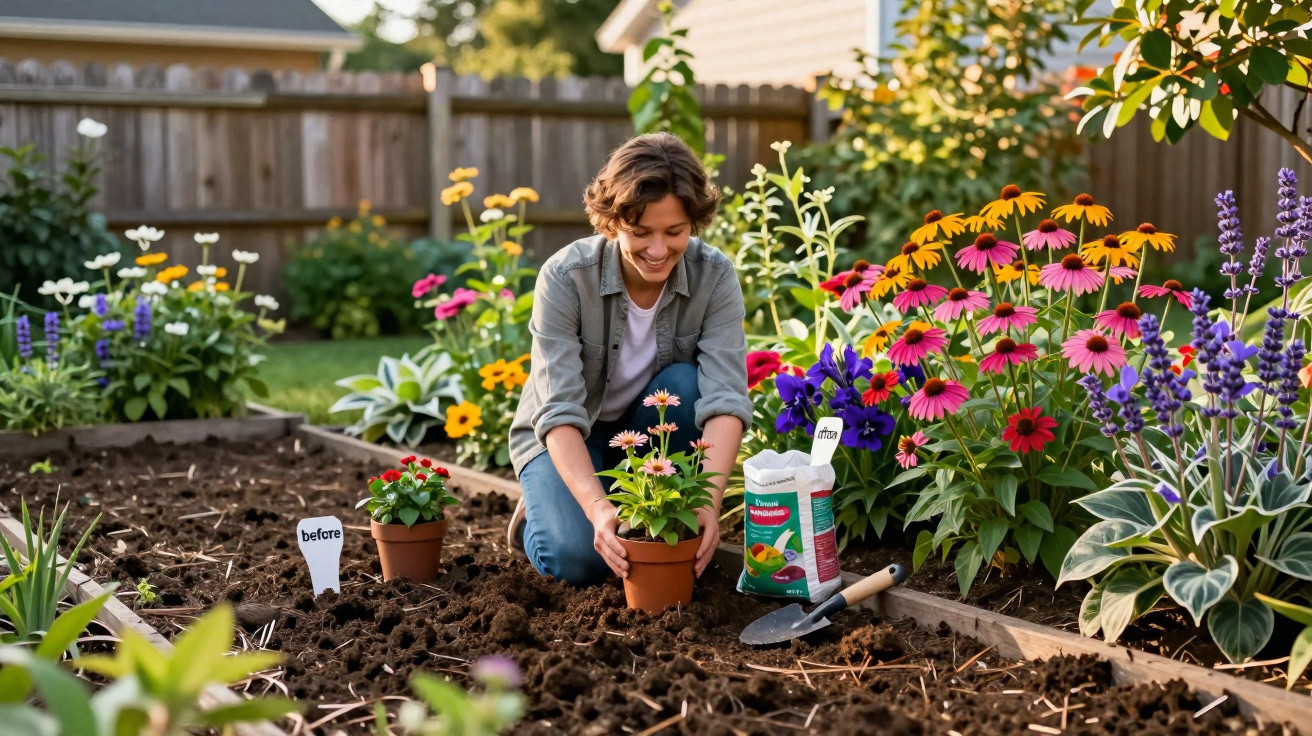
- Incorporate compost: a thin layer of well-rotted compost improves soil structure and supplies nutrients for the new perennials.
- Plant closely: choose slightly tighter spacing so foliage meets quickly and closes gaps.
- Water in and keep watch: soak in well, water again during dry spells in the first few weeks, and pull any individual weeds immediately.
"The first season is the build-up phase: if you stay consistent this year, you will have much less work in the years that follow."
These perennials are particularly suitable as ground cover
Depending on the location – sunny, semi-shaded or shaded – different species make sense. Here is a small selection:
| Position | Plant | Special features |
|---|---|---|
| Semi-shade to shade | Caucasus forget-me-not (Brunnera) | Spring flowering, heart-shaped leaves, likes fresh, humus-rich soils |
| Sun to semi-shade | Cranesbill varieties (Geranium) | Tough, long flowering period, fills gaps quickly |
| Full sun | Cushion phlox | Low flowering carpet, ideal for bed edges and wall tops |
| Semi-shade | Small lady’s mantle | Dense clumps, attractive leaf texture, copes well with cutting back |
The key is to match the ground cover to the conditions. A shade-lover will struggle in blazing sun, and the reverse is also true. If you already have established perennials in the garden, many can be divided and replanted as ground cover – which saves money and conserves resources.
Typical mistakes when switching to a “flower carpet”
Moving from bare soil to permanent plant carpets sounds easy, but in practice it often fails due to small details. Common stumbling blocks include:
- Spacing that is too wide: when perennials are planted too far apart, gaps remain for a long time – and weeds take advantage immediately.
- The wrong position: a sun-loving plant in deep shade barely grows and stays patchy.
- Too little water during establishment: newly planted perennials need regular help in dry springs.
- Lack of patience: many gardeners expect a dense carpet within weeks; most perennials take one to two years to really get going.
If you stay attentive in the first months and remove intrusive weeds straight away, you will be rewarded afterwards with beds that are surprisingly low-maintenance.
Practical examples for different garden types
In a busy family garden, it pays to use resilient ground covers that can cope with the occasional football or child’s shoe. Cranesbill or lady’s mantle work well here, paired with taller perennials such as coneflower or asters to bring colour later in the year.
In a terraced-house garden with narrow borders along the patio, Caucasus forget-me-not is a strong choice: in spring it provides bright blue cushions of flowers, and in summer its leaves hold the space. Ornamental grasses or hostas are good partners for shaded corners.
If you prefer a more wildlife-friendly garden, you can combine ground covers with native wild perennials. The result is a looser flowering carpet that feeds insects while still cutting down on the weeding.
What living mulch has to do with soil and climate
The approach also offers ecological benefits. Soil that stays planted retains more water and heats up less in summer. Roots loosen the ground, rain can infiltrate more effectively, and the humus layer gradually builds over time.
At the same time, there is less need for mineral fertilisers and plastic coverings. Many gardeners report that after a few years they hardly hoe at all and water much less often. Instead of spending every weekend down on your knees, you have more time to actually enjoy the garden.
So, by investing in ground-cover perennials in March, you are not only creating a beautiful flower carpet. You are building a garden system that becomes more stable year after year – making constant weeding progressively less necessary.




Comments
No comments yet. Be the first to comment!
Leave a Comment