
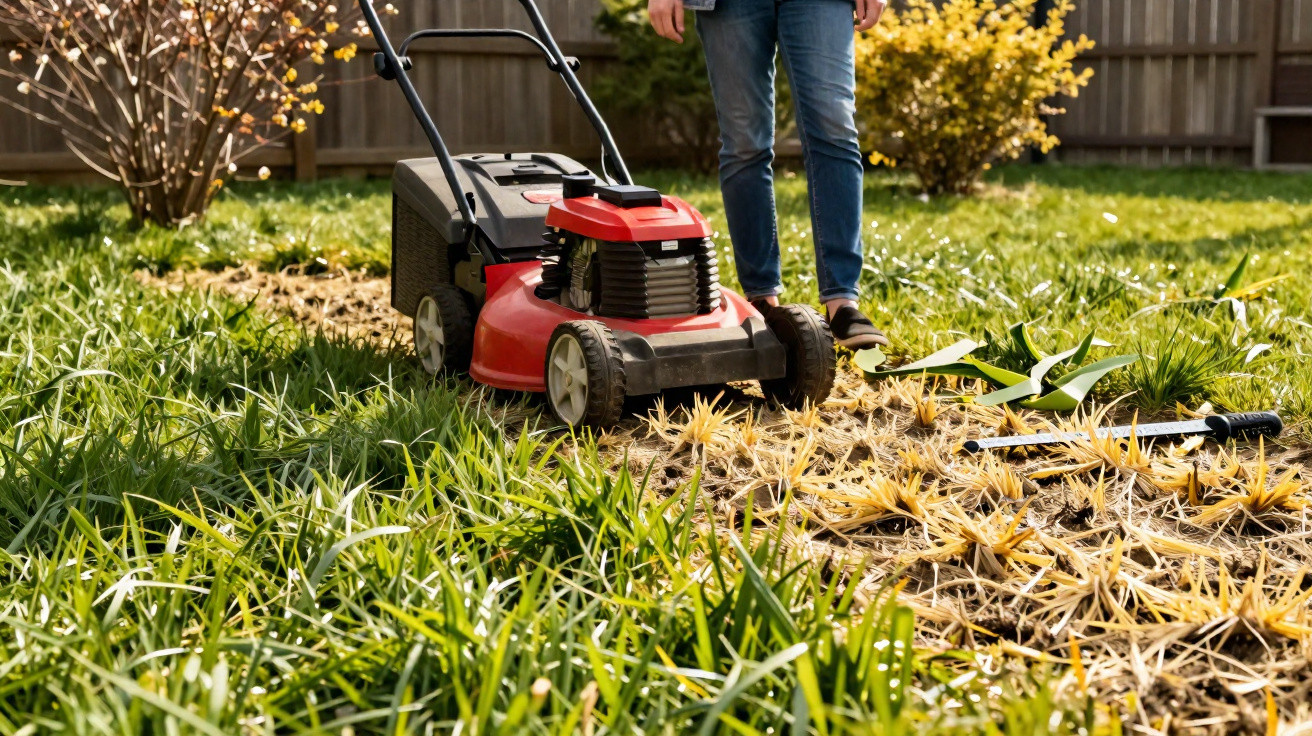
When the first mild days arrive, many keen gardeners instinctively wheel the lawnmower out of the shed. It looks diligent and well prepared, but after a long winter it can seriously weaken your turf. The key isn’t only when you make the first cut of spring, but also how low you set the blades.
Why the first cut after winter shapes the whole season
Over winter, the lawn runs on minimum power. Growth almost stops, and the blades act as an energy store for the roots. Those reserves help the grass cope with cold and wet conditions. Come spring, the lawn needs a gentle restart to build momentum again.
As temperatures gradually rise, the grass begins to shoot, roots branch out more strongly, and the sward thickens. That is exactly when it is most vulnerable. If you mow too enthusiastically at this stage, you don’t just remove the tips-you strip away part of the plant’s energy source.
"The first spring mow determines whether the lawn turns dense, richly green and resilient-or patchy, thin and prone to problems."
Rather than relying on a set date, it’s better to use clear signs in your own garden: daytime highs should stay consistently above about 10 °C, the ground must no longer be frozen or waterlogged, and the lawn should already be showing visible new growth.
The most common mistake combination: too early and far too short
The classic scenario: the soil has only just thawed, may still be a bit soft, the grass has put on a few centimetres-and then the mower goes across the lawn as if it’s mid-summer. The damage shows quickly.
Mowing too early: when the soil is still struggling
On soft, spongy ground-or ground that’s still slightly frozen-the weight of a mower acts like a roller. The top layer of soil compacts, small air pockets disappear, and the roots get less oxygen. The lawn often responds with yellowish patches, and the blades snap more easily.
Those gaps then become ideal territory for moss and unwanted weeds. They take advantage of every bare spot and crowd out the weakened grass. Instead of an even green, you end up with a patchy, uneven mix.
Cutting too low: a shave rather than care
The second big error is setting the mower to “golf green” height straight away. That removes the lawn’s protective cover. Professionals recommend removing no more than one third of the current blade length in a single cut. So if the grass measures about 9 cm, the cutting height should be around 6 cm-not 3.
A sensible spring target is roughly 5 to 7 cm. That length shields the soil from direct sun, slows drying out, and encourages roots to grow deeper rather than staying close to the surface.
"A lawn cut too short scorches faster, loses strength and stays sensitive for the entire season."
How to choose the right time for the first cut
The calendar is only a rough guide. A few straightforward checks in the garden are far more dependable.
- Daytime highs are consistently above 10 °C.
- No night frost is forecast in the next few days.
- The ground feels neither frozen nor squelchy.
- The blades have clearly grown, around 8 to 10 cm tall.
- The area is showing a stronger green again instead of winter grey.
If you work through these points, you’ll quickly sense whether the lawn is ready. In many areas this falls in March or April-though depending on location, it can be later.
The right mowing approach: settings, blades, strategy
Use a high setting for the first passes
At the start of the season, set the mower to the highest or second-highest position. The aim isn’t a picture-perfect lawn straight away, but a gentle tidy-up. After one or two higher cuts, you can lower the height step by step-provided the lawn is growing strongly.
A useful rule of thumb: after mowing, at least 5 to 7 cm should remain. If you’re unsure, measure with a ruler or tape measure-especially early in the year, that quick check pays off.
Sharp blades instead of a “tearing” cut
Blunt mower blades rip the grass rather than slicing it cleanly. The cut ends become ragged, turn brownish and look unhealthy. At the same time, those damaged tips are perfect entry points for fungal diseases.
Before the first run across the lawn, it’s worth doing a brief inspection:
- Clean the blade: remove old grass build-up and hardened residue.
- Sharpen the blade or have it ground by a specialist.
- Check the fixings: is everything tight, with nothing loose?
- Don’t skip safety: switch off the ignition and unplug the power lead.
"A clean, smooth cut is a sign: the mower is in good order and the lawn isn’t being harmed unnecessarily."
What to do before the first mow
Before the mower gets going, the lawn itself benefits from a small “spring check-up”.
Clear and lightly lift the lawn
Fallen twigs, leaf litter, pine needles and old leaves should be removed thoroughly. They block light, encourage rot and slow down new growth. In most cases, a rake or leaf broom is enough.
If the surface is heavily thatched, light scarifying can help-but not too early and not too aggressively. The soil should already be warmer and the lawn reasonably strong; otherwise, the process can weaken the sward even more.
Check for trip hazards and problem areas
Stones, toys and forgotten garden tools: anything hidden in the grass can be dangerous when mowing. A quick walk over the area prevents damage to the blade and mower-and reduces risk to anyone nearby.
Bare patches and deeper holes often become obvious at this time of year. You can level them with a little lawn topsoil and overseed before the mowing season properly gets going.
How often should you mow in spring?
Once the first cut has gone well, the next question is whether to park the mower again-or keep a steady routine. The answer mostly depends on growth.
The one-third rule helps here too: mow whenever the lawn is tall enough that you can still remove a sensible amount while sticking to that rule. In mild spells, that might be every 7 to 10 days; in cooler periods, less often.
| Growth height | Recommended cutting height |
|---|---|
| 8 cm | ca. 5–6 cm |
| 10 cm | ca. 6–7 cm |
| 12 cm | ca. 8 cm |
Regular, moderate mowing encourages dense growth. Long gaps followed by an aggressive low cut put the grass under much greater strain.
More than looks: what your mowing strategy changes
Choosing the right timing and cutting height doesn’t just affect colour. It also influences water retention, nutrient use and susceptibility to disease.
Slightly longer grass shades the soil. That reduces evaporation, which is a major advantage in dry summers. It also promotes deeper roots that can reach moisture more reliably. Closely cut lawns need watering far more often and suffer much more during heatwaves.
Fertiliser use is closely tied to mowing, too. A stressed lawn kept too short struggles to process nutrients effectively. If you mow gently, you create the conditions for a moderate spring feed to work properly.
Practical examples for a healthy start to the season
A typical situation: you have an average family garden, the first warm days are arriving, and the lawn is about 9 cm high. The ground feels springy underfoot but not muddy. In that case, a first careful cut down to around 6 cm is usually a good move. A week later, check growth again and adjust your schedule.
A different picture: the lawn is still grey-brown, the blades are thin and uneven, daytime temperatures are 6 to 8 °C, and there’s a risk of light frost at night. Here, patience beats action. If you mow anyway, you take away the last energy reserves from grass that’s already struggling.
If you keep these differences in mind, you can avoid expensive fixes such as heavy overseeding or a full relawn. The most important levers really are the right moment and the right cutting height-not the most expensive machine.






Comments
No comments yet. Be the first to comment!
Leave a Comment