
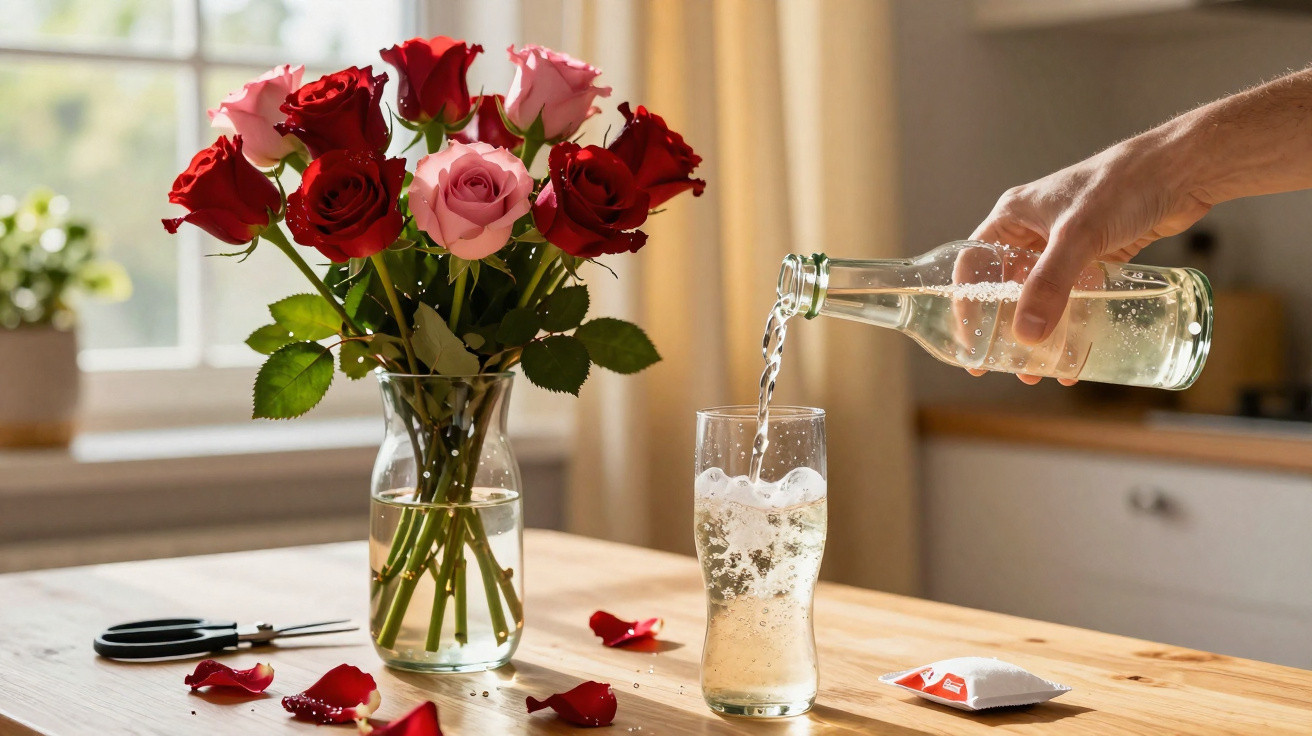
Heads often start to droop after only a few days. A simple kitchen trick can make a noticeable difference.
Plenty of flower lovers know the disappointment: you treat yourself (or someone you care about) to a beautiful bunch of roses and, almost as soon as they’re in the vase, the trouble starts. The blooms fade far sooner than you expected, even though you keep changing the water. There’s no dark magic behind the rapid decline-just biology. And that’s exactly where a surprisingly effective hack comes in, using an everyday drink straight from the fridge.
Why tap water alone makes roses tire quickly
The moment you cut a rose, it loses its life support system: the roots. In soil, the plant normally receives minerals and uses photosynthesis to create sugars via its leaves. In a vase, only one of those inputs remains: water.
Tap water keeps the flower hydrated, but it provides very little energy. The rose then has to run on the last sugar reserves stored in the stem. Once those reserves are used up, you start to see the change:
- the flower heads begin to droop
- the colours look duller
- the leaves lose their firmness
At the same time, a second (often underestimated) process is happening: in lukewarm, stagnant water, bacteria and fungi multiply quickly. They settle in the stem’s internal vessels and clog them.
“The rose dies of thirst in the vase-not because there isn’t water, but because its internal channels are blocked.”
That’s why some bouquets collapse in no time, even with fresh water. If you address both issues-lack of nutrients and microbes-you can significantly extend how long your roses last.
What roses really need: sugar and a clean environment
For blooms to keep opening and stay firm, they mainly need energy in the form of sugar. In the garden, the plant supplies that sugar itself. In a vase, it has to come from elsewhere. Adding ordinary granulated sugar to the water seems sensible, but it creates a new issue: it feeds bacteria just as readily as it feeds the rose.
This is where a drink many people already keep chilled becomes useful: clear lemon-lime lemonade, such as Sprite or 7Up. These drinks bring two qualities that suit cut flowers well:
- plenty of sugar as a source of energy
- noticeable acidity, which slows germ growth
The sugar compensates for the missing photosynthesis. In effect, the rose gets its “bloom fuel” delivered straight into the water. Meanwhile, the acidity means bacteria multiply much more slowly, so the stem vessels stay open for longer.
“The combination of sugar and acidity creates almost perfect lab conditions in flower water: nourishing for the rose, uncomfortable for germs.”
That pairing explains why roses in lemonade-water often look fresh for much longer than roses standing in plain tap water.
The right mix for roses: how to gain 5 to 7 days of freshness
The hack only works if the ratio is right. Too much sugar or too much acidity can damage plant tissue. A simple, reliable mix is:
- 1 part lemon-lime lemonade (Sprite or 7Up, not “Zero” or “Light”)
- 3 parts clean tap water or filtered water
The low-calorie versions don’t make the cut because they contain no real sugar. Sweeteners don’t provide the flower with energy-so the most important benefit disappears.
Step-by-step guide for your rose “elixir”
To get the full effect from the lemonade trick, it’s not just about the drink-it’s also about preparing the bouquet properly.
- Rinse the vase thoroughly with hot water to remove old germs.
- Pour in the mix: one part Sprite or 7Up and three parts water, all at room temperature.
- Remove any leaves that would sit below the waterline-otherwise they rot and contaminate the water.
- Using a sharp knife or clean, sharp scissors, cut the stems at an angle by about 2 cm.
- Place the roses into the prepared mix promptly, so the vessels don’t refill with air.
- Every two to three days, refresh the water mix and trim the stems slightly again.
If you do this, you’ll often notice the difference within a few days: heads stay upright, blooms continue to open, and the water remains visibly clearer for longer.
How much longer do roses actually last?
Of course, longevity depends on several factors: the variety, how fresh the roses were when bought, and the temperature in your home. Under typical conditions, rose bouquets often look acceptable for only four to five days. With the lemonade hack, that window can be extended noticeably.
“Many households report an extra five to seven days-so the bouquet looks presentable for almost twice as long.”
It’s particularly worth trying in winter, when the heating is on and the air is dry. Low humidity puts additional stress on the blooms, so the sugar energy boost and the extra protection against microbes can make an even bigger difference.
More florist-style tips that pair well with the lemonade hack
If you want to get the most from your bouquet, combine the lemonade method with a few simple habits commonly used in floristry:
- Choose the right spot: not above a radiator, not in strong direct sunlight, and away from draughts.
- Keep them cooler overnight: if you can, move the bouquet to a cooler room or hallway at night.
- Check freshness when buying: firm, closed to half-open buds last longer than fully open roses.
- Don’t place them next to a fruit bowl: ripe fruit releases ethylene gas, which ages flowers prematurely.
Together with the sugar-and-acid mix, these steps create a practical freshness routine for cut roses that’s easy to keep up.
Why lemon-lime lemonade works: a quick look at the chemistry
Lemon-lime lemonade creates a clearly acidic environment; the pH value is usually around 3.3. In that range, many bacteria are noticeably less comfortable, while plant cells can still cope well. The drink also often contains a little carbonation, which may help dislodge small air bubbles from the stems at first.
The key substance, though, is the sugar. It travels through the open vessels into the stem and helps keep cells active for longer. That allows buds to continue opening instead of getting stuck half-open and limp.
If you want, you can achieve similar effects with homemade mixes-for example water, household sugar, and a splash of lemon juice or vinegar. Ready-made lemonade has the advantage that it already lands close to a workable balance and is quick to grab in everyday life.
Risks, limits, and which flowers are worth trying it on
The method isn’t without limits. Very sensitive stems can brown faster if the acidity is too high or there’s too much sugar. That’s why it’s sensible to test it with a single stem before treating the entire bouquet.
It tends to suit sturdy cut flowers with fairly firm stems, such as:
- roses
- certain carnation varieties
- chrysanthemums
- gerberas (in a stable, tall vase)
Very delicate spring flowers with hollow or extremely soft stems can be more sensitive. In those cases, start with a weaker mix-around a ratio of one to five (one part lemonade, five parts water)-and watch how the flowers respond.
If you enjoy having fresh bouquets at home, this approach can save money and frustration over time. A budget 1-litre bottle of lemon-lime lemonade from the supermarket is enough for plenty of vase refills and can replace expensive specialist sachets from the florist surprisingly well. It also shows how far a basic understanding of plant physiology can go-even on a living-room table.



Comments
No comments yet. Be the first to comment!
Leave a Comment