
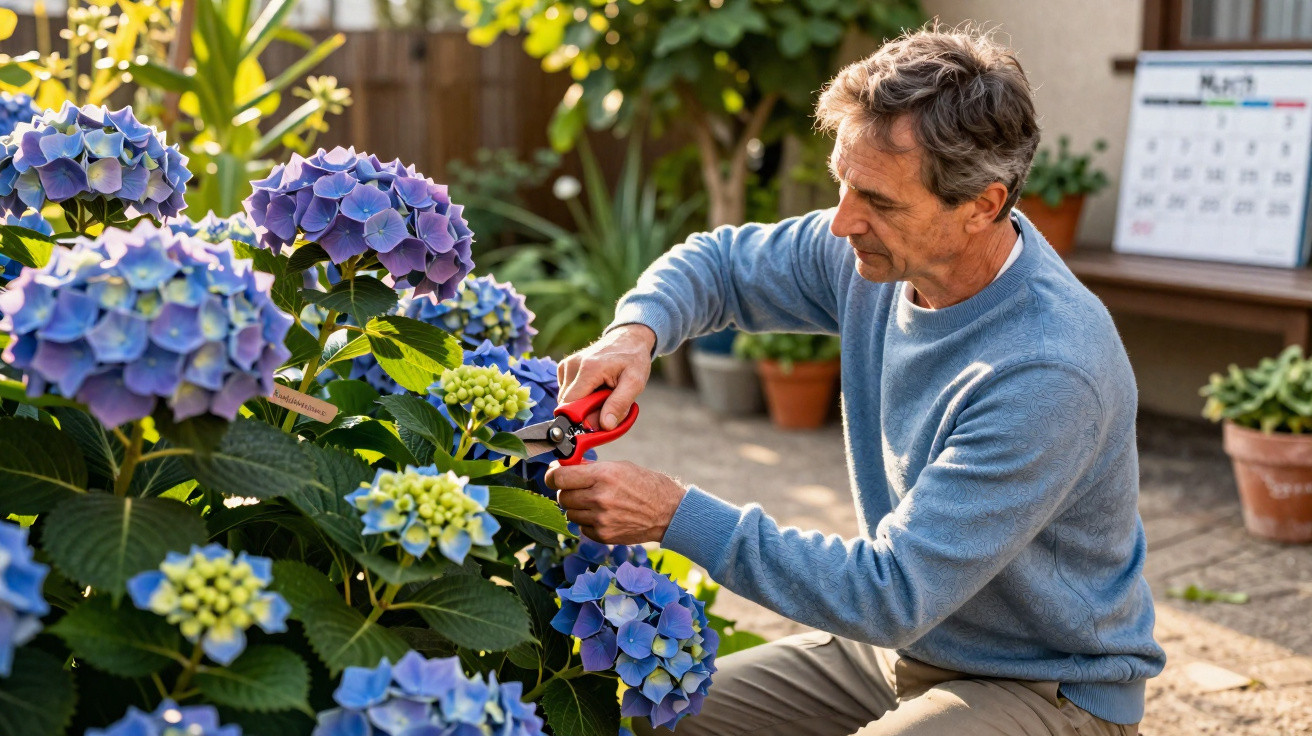
Anyone who has ever seen a photograph of hydrangeas covered in lush, ball-shaped blooms expects the same spectacle at home. Yet in many gardens the reality is different: dense, deep-green shrubs that manage only a few thin clusters of flowers. British TV gardener Monty Don puts this down mainly to one mistake that surprisingly many amateur gardeners make every March - or simply fail to do at all.
Why March determines hydrangea flowers
With plenty of varieties - particularly the much-loved mophead hydrangeas and lacecap hydrangeas (Hydrangea macrophylla) - the flower buds for summer are already sitting on last year’s growth. These shrubs bloom on what gardeners call “old wood”. If you prune at the wrong moment, you remove those pre-formed buds and then later wonder why the plant refuses to flower.
March is the tricky point. The buds start to swell, but late frosts can still strike. In that narrow window, many gardeners end up deciding (without realising it) whether the shrub will turn into a flower-packed globe in summer or simply churn out leaves.
“Anyone who cuts hydrangeas back hard in winter often cuts off the entire flower display for the coming summer too.”
Monty Don and other garden professionals stress that two separate jobs are often muddled up: simply taking away dried flower heads versus proper pruning to shape the plant. That confusion leads to overly heavy-handed cutting, especially when the urge to “tidy up” the bed is strongest in early spring.
The small cut that saves the blooms
In March, Monty Don avoids drastic pruning and instead uses a very specific, almost gentle approach. The idea is a kind of “mini trim” that makes the shrub look neat without disturbing the hidden flower buds.
How to tackle mophead and lacecap hydrangeas
His rule is not to shorten stems, but to carefully clean the plant up. The dead flower heads from the previous year are intentionally left on the shrub over winter. They act like a protective canopy for the buds beneath, shielding them from cold and wind. Only in late March does he reach for the secateurs - once the plant is beginning to wake up.
- Wait until the hardest frosts have passed and the buds are clearly swelling.
- Then locate each dried flower head.
- Just below the old flower head, look for the first strong, healthy pair of buds.
- Cut precisely above …



Comments
No comments yet. Be the first to comment!
Leave a Comment