
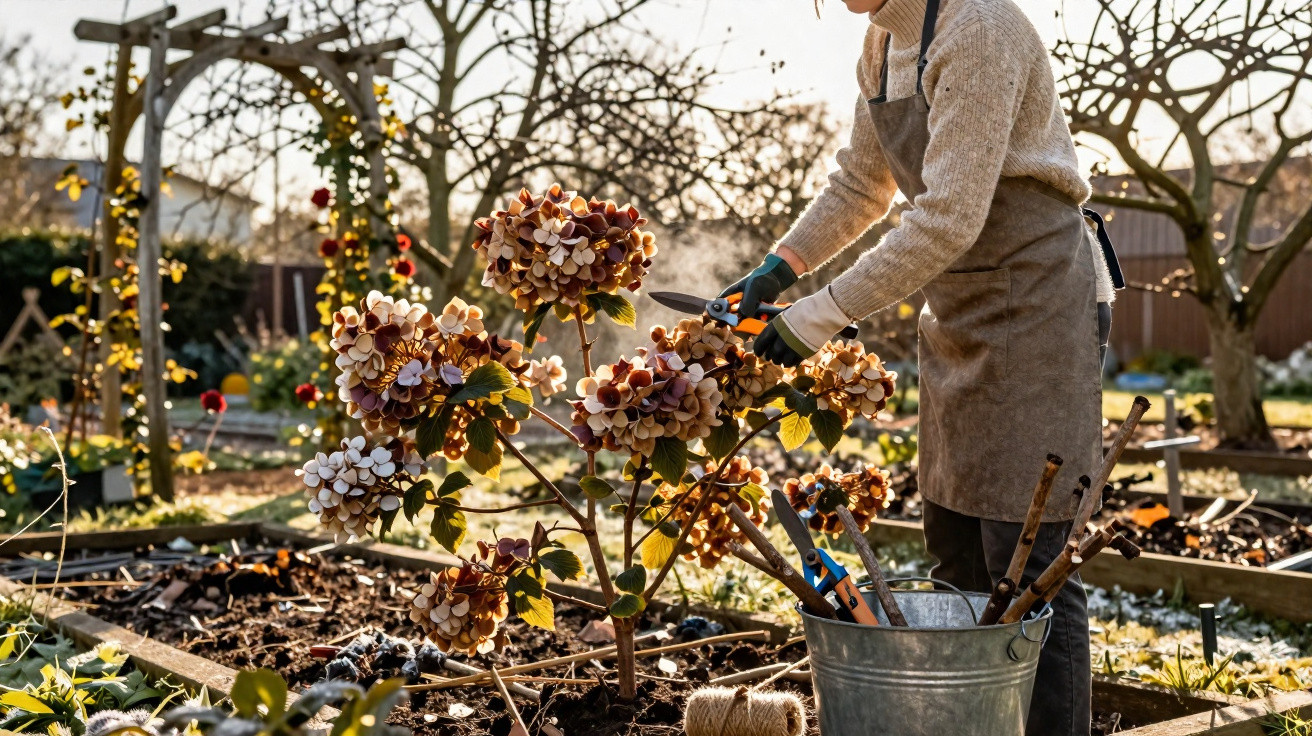
Many amateur gardeners put their feet up in winter and let beds and shrubs doze. It makes sense: outside it’s cold, wet and often unpleasant. For plants, though, this is a crucial phase. Sap retreats, growth pauses - and that is exactly why January is such a good moment for careful, targeted pruning.
Why January matters so much in the garden
In winter, plants switch into a kind of rest state that specialists call “dormancy”. Sap movement slows, shoots stop extending, and buds simply wait for warmth and light. This natural pause helps woody plants cope with frost - and it also gives you a valuable window for pruning.
“If you prune in January, you take advantage of the plants’ natural resting phase and direct their energy into strong new growth.”
With no leaves in the way, the framework of shrubs and trees is far easier to read. You can quickly spot weak, diseased or crossing branches. Overcrowded shrubs and fruit trees can be thinned and shaped now. The payoff comes months later: sturdier crowns, fewer diseases, and much heavier flowering.
Hydrangeas: a gentle tidy-up, not a drastic cutback
Hydrangeas are often seen as fussy when it comes to pruning - cut too hard and you may get little to no bloom in summer. That is why timing, and a light touch, matters.
How to prune hydrangeas in January
- Remove only the spent flower heads.
- Cut just above the first strong pair of buds.
- Take out thin, weak shoots entirely.
- Reduce very old, heavily woody growth gradually over time.
Ideally, you leave the dried flower heads on through early winter, as they can act like a small amount of frost protection. In January, you can then remove them with a clean cut directly above a clearly visible, robust pair of buds. Those buds are what will carry the next set of blooms in summer.
Avoid any radical pruning. Many traditional mophead hydrangeas form their flowers on shoots that grew the previous year. If you cut back too far, you remove those shoots - and with them, the season’s future flowers.
Climbing roses: shape them now
Climbing roses such as “Pierre de Ronsard” or “New Dawn” often repay January attention with an impressive flush of flowers. Winter makes the structure obvious, so old or dead wood is easy to identify.
Key steps for pruning climbing roses
- Cut all dead, blackened or diseased shoots back to healthy wood.
- Remove shoots that grow inwards or cross heavily.
- Tie the main canes in horizontally or in a fan shape against a wall or trellis.
- Shorten side shoots to a few buds so they produce strong flowering laterals.
The main canes are effectively the backbone of a climbing rose. When you train them slightly sloping or near-horizontal, the plant is encouraged to produce lots of side shoots - and those laterals are where most of the flowers appear.
“The better you train and thin climbing roses, the fewer fungal diseases you’ll see - and the more fragrant flowers you’ll have in summer.”
Pome fruit trees: pruning season starts now
With fruit trees, it helps to know what you are dealing with. Broadly, varieties fall into two groups:
| Group | Examples | Suitable pruning time |
|---|---|---|
| Pome fruit | Apple, pear, quince | January to March (on frost-free days) |
| Stone fruit | Cherry, plum, damson | Preferably spring/summer after harvest |
Apple and pear trees are especially easy to assess in winter. Without foliage, you can see at a glance which branches are crowding the crown, which are growing inward, and which carry fruiting wood.
How to do a winter prune on apple and pear
- Start by removing all “fruit mummies” (dried, shrivelled fruit still hanging on the tree).
- Take out damaged, dead and inward-growing branches.
- Open up the centre of the crown so light and air can move through.
- Shorten main branches to roughly 25 cm of extension growth, cutting neatly above an outward-facing bud.
- Reduce side shoots to about three buds from the base.
Fruit mummies often harbour fungi and bacteria. If they remain in place, they can trigger fresh infections the following year. Removing them decisively lowers disease pressure considerably.
Cutting above an outward-facing bud encourages new growth to develop away from the centre. That keeps the crown open and helps prevent breakage caused by branches becoming too dense.
It’s better to prune stone fruit later
Cherries, plums and other stone fruit behave differently. Many of these trees are sensitive to being cut in deep winter: wounds seal more slowly and fungi can take hold more easily.
There is another factor, too: a large share of stone fruit is produced on shoots that grew the year before. Heavy winter pruning would remove many of those fruiting sections. It is usually better to prune after harvest, or on a mild spring day once sap is rising again.
Practical tips for safe winter pruning
Before you start, check your tools and the conditions. Even the best technique is undermined if your secateurs are blunt or rusty.
- Use only sharp, clean tools: clean cuts heal faster and infections are less likely.
- Never prune in hard frost: below about –5 °C, cuts can be damaged by freezing.
- Make cuts on a slight angle: this helps rainwater run off.
- Remove thick branches in stages: reduce weight first, then finish with a clean cut at the branch collar.
“A good cut is short, clean and well considered - better a few precise interventions than wild sawing.”
Common January mistakes to avoid
When you’re keen to get started, it’s easy to overdo it. Three pitfalls show up in gardens again and again:
- Cutting hydrangeas back too hard: summer flowers may fail.
- Pruning stone fruit in deep winter: higher risk of gummosis and fungal disease.
- Creating a ‘broom crown’ on fruit trees: severe heading cuts trigger masses of water shoots.
Especially with fruit trees, staying calm pays off. A useful rule of thumb is: as much as necessary, as little as possible. The aim is always an airy, stable crown - not a harshly shortened “broom”.
Why the effort in January really pays off
Looking out of the window can be misleading: bare branches, empty beds, everything grey. Even so, you are setting up the entire gardening year right now. If you shape hydrangeas, roses and pome fruit trees in January, you prevent many problems later - and you gain a lot in return.
More flowers do not only make borders more attractive; they also provide more food for bees and other pollinators. A well-ventilated tree crown holds fewer diseases that you might otherwise feel forced to treat with sprays. And as a bonus, you create structure: the garden takes on a clear outline before spring growth begins.
If you feel uncertain, start with one tree or shrub and move deliberately slowly. Look first, decide, then cut. With each cut you build a better feel for the plant - and that is what makes winter gardening so engaging: from what looks like a lifeless framework, you gradually shape the spring to come.
Comments
No comments yet. Be the first to comment!
Leave a Comment