
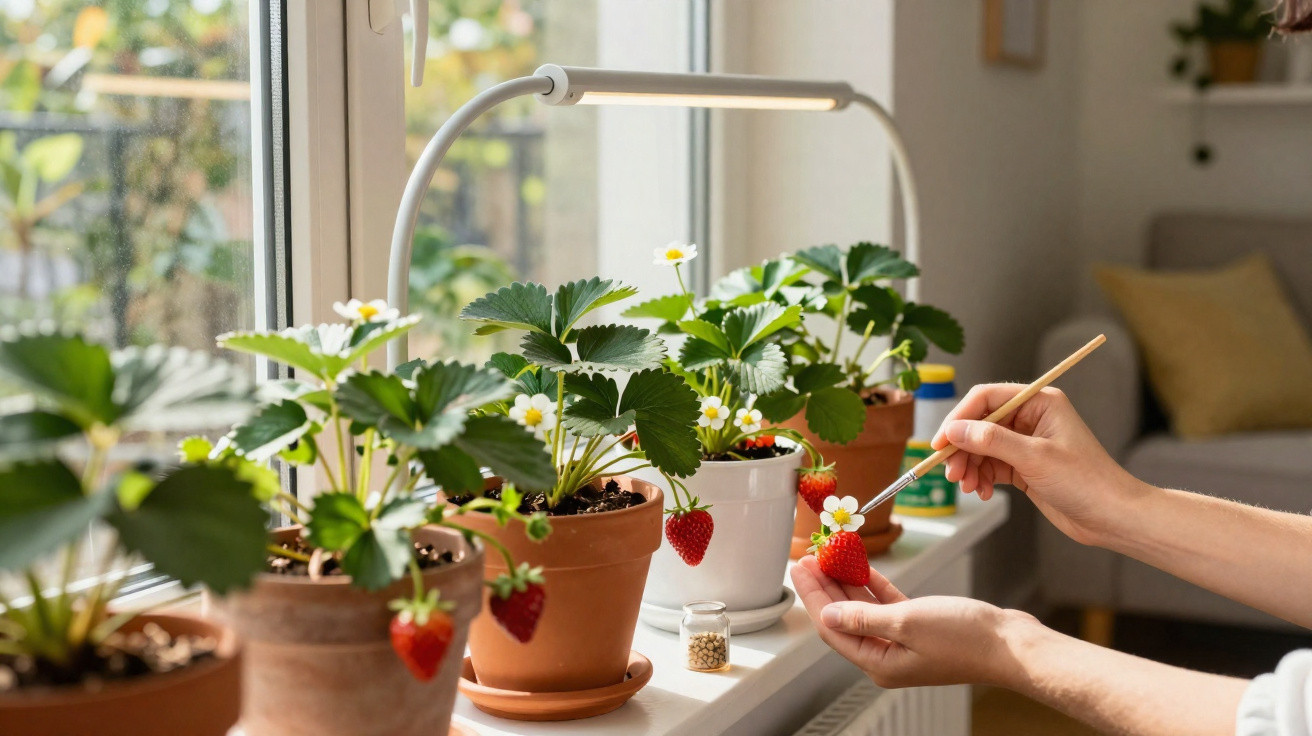
Using a professional technique, the strawberry dream can still work - right in your living room.
Anyone living in a city knows the trade-off: plenty of concrete, not much greenery. Even so, strawberries don’t have to stay a treat reserved for the weekend market. Horticulture professionals point to a surprisingly straightforward approach that helps strawberries fruit reliably on a windowsill or in the living room - and they can often end up sweeter than plants grown in a bed outside the front door.
Why strawberries can work indoors at all
Strawberries are usually thought of as classic bed plants, yet modern varieties and a few practical tweaks make them far more living-room friendly than you might expect. What matters isn’t having a garden; it’s getting the combination of variety, light, indoor conditions and care right. Manage those well and you can harvest several times a year.
"The most effective strategy for strawberries indoors is based on four pillars: suitable varieties, plenty of light, a stable indoor climate and targeted pollination."
In rented flats with bright windows, it’s easy to create a small microclimate that suits strawberries: steady warmth, protection from storms and heavy rain, and no slugs. The key is to make those advantages work for you on purpose.
Choosing the right variety: without smart selection there’s no harvest
If you simply lift any garden strawberry plant into a pot, disappointment is common. Professionals recommend three groups that have proved themselves indoors:
- Ever-bearing varieties (repeat-fruiting varieties) that keep producing new flowers and fruit over many months.
- Alpine and wild strawberries, which stay compact, are highly aromatic, and are ideal for pots.
- Compact balcony or trailing strawberries that need little space and cope well in hanging baskets or window boxes.
Alpine and wild strawberries usually produce smaller fruit, but with an intense, almost “wild” flavour. Many of these varieties germinate readily from seed and can fruit in their first year if you sow early enough. If you want results faster, buy established young plants from a garden centre or specialist online retailers.
Popular real-world choices include repeat-fruiting types such as Tristar and other modern cultivars recommended for tubs and indoor growing. They tend to remain fairly compact, form dense cushions, and keep pushing out new flowers throughout the season.
Light, windows and lamps: without brightness there are no sweet fruits
Indoors, light is the decisive factor. Strawberries love sunshine and only set plenty of flowers when they receive many hours of bright light.
"Professionals’ rule of thumb: 12 to 14 hours of bright light per day, ideally at a south- or south-west-facing window - with an LED lamp for support in winter."
A wide windowsill that catches midday and afternoon sun is best. In summer, that’s often enough by itself. During darker months, or in north-facing rooms, an LED grow light mounted directly above the pots makes a real difference. Models with a timer function remove almost all the day-to-day effort.
The ideal living-room microclimate
Alongside light, indoor conditions play a major role. Strawberries prefer warmth without overheating, and humidity without sogginess. This range is generally considered comfortable:
| Factor | Optimal range |
|---|---|
| Temperature | Around 21 °C; 20–25 °C is tolerated |
| Humidity | About 50–70% |
| Air movement | Gentle circulation, no draughts |
Common problem spots in a home include sitting right next to a radiator, leaving windows on a constant winter tilt, and doorways where cold air regularly blasts through. These situations dry plants out or stress them with sudden temperature shifts. A brighter position with some distance from the radiator is better, ideally with a wooden or cork trivet under the pot as a heat shield.
Watering, compost and feeding: keeping plants strong for the long haul
Strawberries are sensitive to waterlogging. If water sits in the pot, roots can rot quickly. The first decision is therefore the container: at least one drainage hole (several is better), plus a saucer where any excess water is poured away after a few minutes.
A simple way to judge when to water is:
- Push a finger into the compost - if the top centimetre is dry, it’s time to water.
- If your finger still feels slightly damp, it’s usually better to wait another one or two days.
In practice, many plants do fine with one thorough watering per week. In very warm, dry flats it may need to be more frequent; in a cooler bedroom, less. A loose, humus-rich compost mixed with a little sand or perlite keeps roots aerated and helps prevent waterlogging.
To keep plants going and encourage regular new flowers, feeding becomes crucial. Horticulture experts often use balanced fertilisers, for example with ratios such as 10-10-10 or 14-14-14, which provide nitrogen, phosphorus and potassium in similar amounts.
Feeding once every two to four weeks is usually sufficient. Liquid fertiliser is added to watering water, while slow-release fertiliser is worked into the top layer of compost as small granules. If you prefer organic options, choose an organic berry feed or use homemade nettle tea in a heavily diluted form.
The underestimated trick: hand pollination instead of bees
Outdoors, bees, bumblebees and other insects take care of pollination almost invisibly. Indoors, however, flowers are often left untouched - and then produce no fruit, or only misshapen, underdeveloped berries. This is one of the main differences in the professional method.
"Without active hand pollination, many flowers indoors remain ‘empty’. With a small brush, the success rate rises significantly."
The method is straightforward: using a soft brush - for instance a clean make-up brush or watercolour brush - gently sweep over the yellow anthers. Then distribute the collected pollen across the centre of the flower.
A few seconds per flower is enough, and you repeat it every two days while fresh flowers are open. Once a flower drops and the small base behind it starts to thicken, the job is done: the fruit is developing.
How long until the first harvest?
With established young plants, the first flowers often appear after just a few weeks. From there, it typically takes three to five weeks to reach a truly red, ripe strawberry, depending on the variety, light levels and temperature. If you grow from seed, the wait until the first harvest is much longer - but it also lets you bring far more variety into your home.
Typical mistakes and how to avoid them
Many failed living-room strawberry attempts run into the same issues. These pitfalls are easy to sidestep:
- Too little light: long, thin growth and hardly any flowers - the only fix is a brighter spot or an LED grow light.
- Waterlogging in the pot: yellow leaves and sour-smelling compost - without drainage holes and a structure-stable compost, it won’t work.
- No fertiliser: the plant looks pale and produces small fruit - regular, moderate feeding restores vigour.
- Ignoring pollination: loads of flowers but hardly any fruit - hand pollination solves it.
Keeping these points in mind greatly improves your chances of a steady harvest. Children in particular often love watching the whole process up close, from the first hint of buds through to ripe fruit.
Practical add-ons for a bigger yield
A useful tip from practice: growing several pots with different varieties doesn’t just increase the total harvest, it also stretches the season. Early and late types combine well, so somewhere in the room a plant is almost always setting fruit.
If you enjoy experimenting, you can try a compact indoor growing system with built-in lighting and watering. These units automate light and water, and suit anyone who likes harvesting but doesn’t want to think about watering cans every day.
Risks such as mould or fungus gnats mainly show up when compost stays wet for too long. Yellow sticky traps and stricter watering control can prevent that. If mould appears, it often helps to replace the top layer of compost, increase air circulation slightly, and extend the watering interval.
Anyone who has tasted a sun-warmed strawberry picked straight from their own living room usually doesn’t want to miss it again. With a considered mix of light, water, nutrients and a little hands-on work with the flowers, a simple windowsill becomes a small, reliable strawberry garden - even in the middle of the city on the fourth floor.
Comments
No comments yet. Be the first to comment!
Leave a Comment