
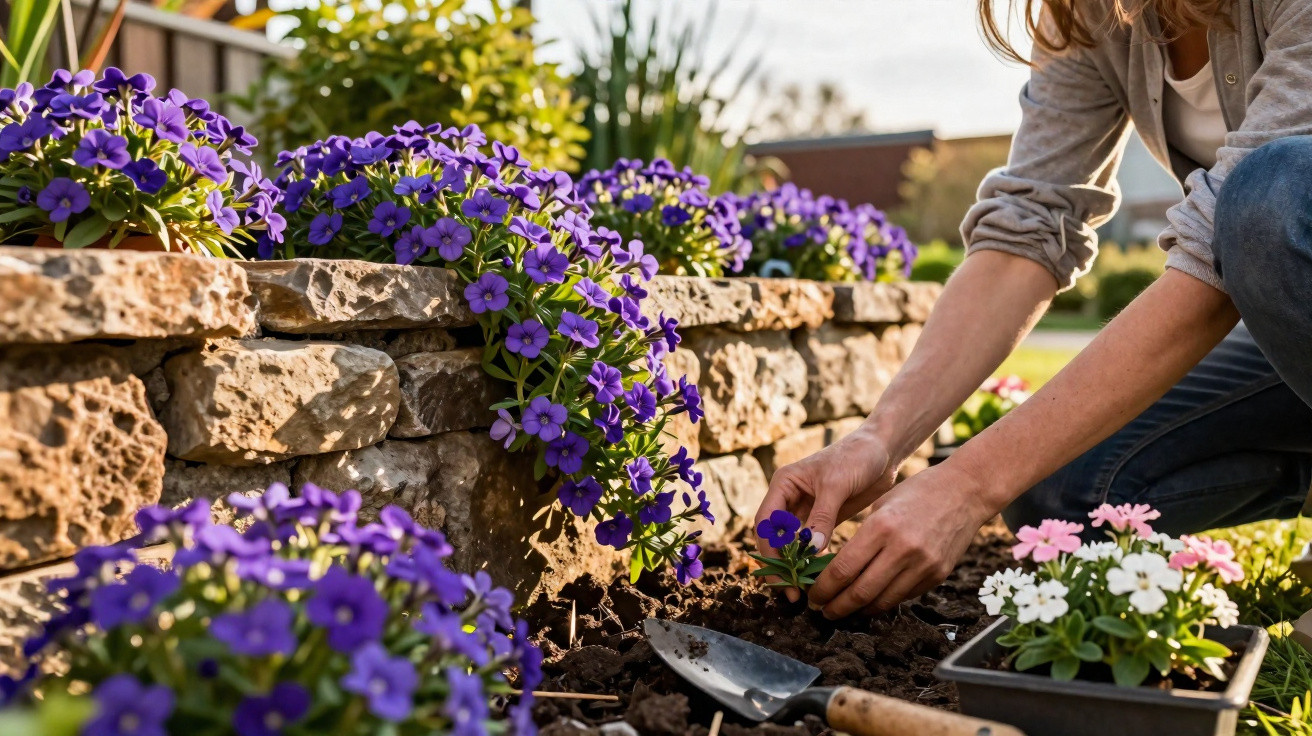
Many amateur gardeners know the situation: the borders look immaculate, the lawn is neatly trimmed, yet the retaining wall behind them remains a dull slab of concrete or stone. This is exactly where a small, violet-flowering cushion plant comes into its own, creating an almost painterly look in just a few weeks.
Why aubriete loves your wall
The plant in question is Aubrieta deltoidea, most often known here simply as aubriete (rock cress). It originates from rocky, nutrient-poor landscapes and thrives in places where plenty of other plants would give up: minimal soil, full sun, and ground that dries out quickly.
Aubriete forms low cushions, typically around 10–15 cm tall, and spreads vigorously sideways. In spring - roughly from mid-April into early summer - the foliage is covered by hundreds of small flowers in violet, purple, or soft pinkish tones. Often the blossoms dominate so completely that you see more flower than leaf, creating the effect of a dense, coloured carpet.
"An ideal spot is sunny and dry - exactly the conditions the top edge of many retaining walls naturally provides."
It prefers well-drained, rather lean soil and, once established, copes exceptionally well with drought. At the same time, it tolerates hard winters, which makes it a reliable choice for gardens across a wide range of climates.
How aubriete turns a wall into a floral picture
Plant aubriete along the top of a wall and you benefit from a simple growth habit: the shoots first run forward close to the ground and then tip over the edge. Over time, this produces a thick curtain of stems and flowers that gradually masks the bare stone face.
The pliable shoots settle into joints and small gaps without forcing stones apart or causing damage. If anything, the wall looks softer and more natural, blending far better into the garden. The effect is especially striking when several plants knit together into one continuous ribbon.
- Height: about 10–15 cm
- Habit: carpet-forming, strongly spreading sideways
- Flowering period: roughly April to June
- Flower colours: mainly violet, sometimes pink to purple
- Position: full sun, dry, free-draining
The right spot on the retaining wall
Placement is the deciding factor. A north-facing position rarely delivers abundant flowering, whereas full sun brings the strongest colour. The sweet spot is usually the top of a wall that faces south or west.
There, you can create a small planting pocket between the final stones or just behind the upper course. It does not need to be large, but a few hand-widths of depth help the roots anchor securely.
For the planting mix, a blend of the following works well:
- ordinary garden soil
- a little well-rotted compost
- a high proportion of gravel or grit for excellent drainage
Aubriete is far less forgiving of waterlogging than it is of dry spells. The stonier and looser the mix, the better it will perform long term.
How to plant aubriete by the wall
Rather than starting from seed, most gardeners will get better results with young, pot-grown plants. They establish more quickly and usually make a visible difference in the first or second year.
The best time
Two windows in the year are suitable:
- Spring: after the last frosts, once the soil has started to warm
- Autumn: in milder areas, so plants can root in before winter
With spring planting, you may even enjoy flowering in the same year. Specimens planted in autumn often get going particularly strongly the following spring.
Step by step to a cascade of flowers
Planting is straightforward:
- Clear weeds and loose debris from joints or the edge area by the wall.
- Dig out a small pocket and fill it with the prepared, gritty substrate.
- Gently tease the root ball so roots branch out more readily.
- Set the plant in so it leans slightly outwards - towards the drop over the wall.
- Firm the mix and water thoroughly once, so no air pockets remain.
After that, it is fine for the top layer to dry again. Aubriete is more likely to forgive the occasional missed watering than constant, well-intentioned soaking.
Care: minimal effort, maximum impact
Once it has rooted in, aubriete needs very little attention - a major advantage for anyone who does not want to be forever feeding and cutting back.
Cutting back for dense cushions
After the main flush, usually in May or June, a decisive trim is worthwhile. Cut the cushions back by around half. It can look drastic at first, but it encourages:
- new, vigorous shoots
- a tighter, more compact habit
- a longer lifespan for the plants
Skip this and, over the years, the cushions can thin in the centre and end up flowering mainly around the edges.
Watering and feeding
In the first few weeks after planting, do not let the soil become completely dry. Once established, rainfall is sufficient in most gardens. Only during prolonged periods of intense heat and drought is an occasional drink helpful.
It does not require heavy feeding. Overly rich soil tends to produce lush, soft growth with fewer flowers. If you want to add something, lightly work a very small amount of organic fertiliser into the surface soil in spring.
Design tips: combine with other wall plants
Retaining walls look most interesting when they are not planted with just one species. Above the wall, you could add houseleek (Joubarbe) or various Sedum species, which provide structure throughout the year.
Suitable choices for the wall’s joints include:
- creeping phlox with pink or white blooms
- wild thyme, which also brings a pleasant aroma
- compact, grass-like perennials for natural accents
Alongside aubriete’s violet flowers, these pairings create colour combinations reminiscent of alpine rocky slopes. At the same time, the abundance of blossom benefits bees, solitary bees and butterflies - turning the wall into a living habitat rather than a dead surface.
Possible problems and how to avoid them
Even though aubriete is robust, there are a few points worth watching. In very wet winters, poorly drained soil can cause root rot. The remedy is simple: when creating planting pockets, incorporate more gravel and grit.
Another issue can be competition from aggressive neighbours. Ground-covering plants such as ivy, or some grasses, may overrun the delicate cushions. Regularly cutting those back helps aubriete keep its sunny spot.
Why it is genuinely worth planting on a wall
Anyone who has seen a retaining wall completely in bloom with aubriete in spring rarely forgets it. What was once a purely functional structure becomes a true design focal point in the garden. Even small front gardens gain depth and charm this way.
The progression over time is part of the appeal: in the first year you see individual cushions, in the second they begin to join up, and by the third the surface can look like a continuous carpet of flowers. This slow but steady change is one of the pleasures of a more natural style of garden design.
If you want to go a step further, deliberately mix varieties with slightly different flower tones - from pale lilac to deep purple. That creates gentle colour transitions which look surprisingly professional with very simple means, and turns any previously bleak retaining wall into a vivid garden feature.
Comments
No comments yet. Be the first to comment!
Leave a Comment