
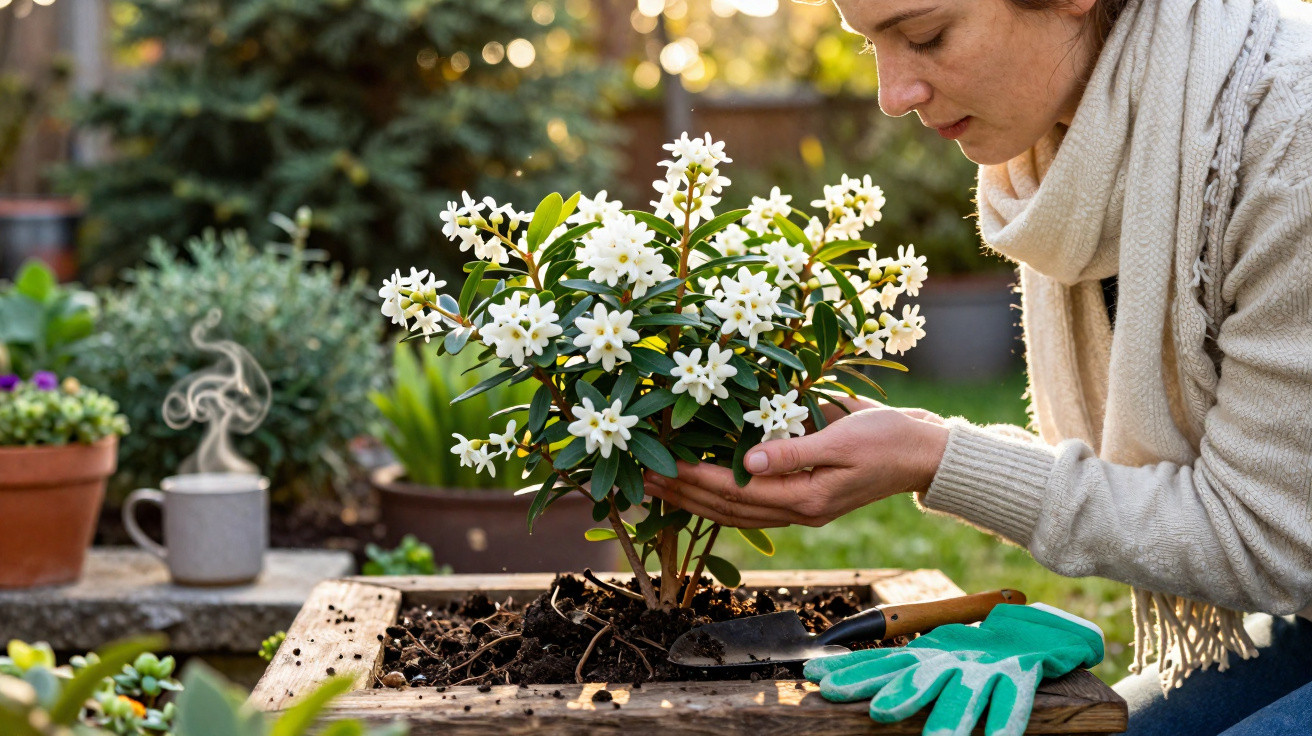
The first time I caught the scent of a sarcococca in mid-January, I genuinely assumed someone nearby had sprayed costly perfume out in the road. The air was bitterly cold, the sky was an unbroken grey, yet a gentle, honey-sweet, almost creamy perfume floated from a shadowy corner of a very small front garden. Passers-by hurried on with their collars raised, apparently unaware of it. I simply stopped. Where could that fragrance possibly be coming from?
Beneath a rain-soaked hedge, partly covered by fallen leaves, a modest evergreen shrub was flowering away quietly. Its blooms were easy to miss, but its scent was impossible to forget. I left that day with numb fingers and an entirely new fascination.
A shrub that tolerates frost, remains green and perfumes the garden throughout the year is far more than a minor detail.
A compact evergreen that transforms the garden
If sarcococca is new to you, you are certainly not the only one. Often known as sweet box or Christmas box, this understated shrub can seem almost bashful at first. It has shiny dark foliage, a neat growth habit and no obvious drama. Then winter arrives, the rest of the garden falls dormant, and it becomes an unassuming star.
Small white or cream blooms emerge along its stems, often so concealed that you might pass them twenty times without seeing a single petal. Your sense of smell, however, will notice them. Their fragrance is full and comforting, with hints of vanilla and honey that feel almost unbelievable when your breath hangs in the freezing air.
Garden designers value sarcococca for one straightforward reason: it carries on when everything else has given up. As roses sulk and hydrangeas resemble ghosts, this small shrub remains richly green and seemingly unconcerned by frost or cold winds. Nor does it need a prominent position. In fact, it is most content in those difficult shaded areas where little else will grow well.
Picture the route to your front door edged with these shrubs. In late winter, every visitor pauses briefly, puzzled as they sniff the air and try to identify the source of the scent. That momentary hesitation and small smile show exactly what a fragrant shrub can do during a dormant season.
From a botanical perspective, sarcococca is in the same family as boxwood, accounting for both its neat form and evergreen leaves. Unlike box, however, it copes exceptionally well with deep shade and urban pollution. Temperatures below freezing do not trouble it. Once it has settled in, it will also withstand brief dry periods without fuss.
The berries that develop after flowering provide another feature, appearing as polished black or deep-red dots that birds enjoy. For a shrub that seldom grows beyond one metre high, its value per square centimetre is remarkably high. Plants this quiet are often what make a garden feel inhabited in every season.
Planting and looking after a frost-hardy source of fragrance
The first step towards thriving sarcococca is simply choosing its position carefully. This is the garden's introvert. It favours shade or partial shade and a place protected from harsh, drying winds. That inconvenient passage beside the bins, a north-facing doorway, or the patch beneath a tree where lawn disappeared years ago? All are ideal.
Make a planting hole a little wider than the root ball, then loosen the soil well below it. Work in leaf mould or compost to create a rich, humus-filled foundation. During the first year, water thoroughly in dry weather so the roots grow downwards rather than staying close to the surface. Afterwards, it becomes one of those plants that requires very little thought.
Many gardeners make the same understandable error by putting fragrant shrubs right at the far end of the garden, away from the house. They then wonder why they rarely notice the perfume. With sarcococca, being nearby matters enormously. Set it close to the front entrance, beside a path you use often, near a terrace, or by the garage that you pass each day.
We all know the feeling of realising that we have invested effort in an area of the garden we scarcely look at. This shrub encourages the reverse approach. Bring fragrance and beauty into the places you travel through every day. Make winter perfume part of your normal routine, like a welcoming scent when you reach for your keys.
“Plant for your nose, not just for your eyes,” laughs Marie, a home gardener who lined her narrow driveway with sarcococca. “In February, it smells better than my living room. The neighbors keep asking what candle I’m using outside.”
To incorporate sarcococca effectively, consider using it in small, useful groups:
- Position 3 shrubs by the principal entrance to form a winter “fragrance gate”.
- Tuck 2 or 3 beneath deciduous trees, where sunshine is limited for much of the year.
- Plant a low line alongside a shaded path, turning an unremarkable passage into a sensory walk.
- Partner it with hellebores and ferns for a refined, almost woodland-style planting scheme.
- Place one near a terrace or balcony door to enjoy the scent whenever you go outside.
A garden that murmurs through every season
An evergreen, frost-hardy shrub that scents the air when nothing else is flowering can alter how you see your garden. January is no longer only a time of bare earth and dead leaves. It gives you a reason to step outside briefly in slippers, mug in hand, just to take a breath. The garden no longer has an “off” season; it simply has changing moods.
In truth, no one does that every day. Life gets busy, the weather is unreliable, and on some mornings you rush straight past it all. Still, one surprising breath of sweetness on a cold afternoon can change the tone of an entire day. It’s a tiny reminder that nature doesn’t ask permission to be generous.
Selecting plants such as sarcococca is an understated form of planning for your future self. It is for the evenings when you return home weary and the garden welcomes you, without spectacle, with a rich and gentle fragrance. It is also for the years when the climate feels uncertain, when reliable, unfussy plants that do not object to the first frost are especially welcome. This is not about creating a flawless garden. It is about making a place that continues to offer something quietly when you least expect it.
| Key point | Detail | Value for the reader |
|---|---|---|
| Year-round structure | Evergreen foliage, compact habit, shade-tolerant | A garden that remains lively in winter and in difficult areas |
| Winter fragrance | Strong, sweet scent from tiny flowers in cold months | Everyday sensory enjoyment while the rest of the garden is bare |
| Low maintenance | Frost-hardy, tolerant, minimal pruning and watering once established | Beauty and fragrance without continual work |
FAQ:
- Question 1 Which sarcococca variety is best for a small garden?
- Question 2 Does sarcococca genuinely cope with deep shade?
- Question 3 Is this shrub suitable for cold climates with frequent frost?
- Question 4 How often will I need to prune or tidy it?
- Question 5 Can sarcococca be grown in a pot on a balcony?

Comments
No comments yet. Be the first to comment!
Leave a Comment