
The gardener looked worn out. Not because she had been digging or cutting back plants, but because she had spent hours scrolling through endless plant catalogues on her phone. Perched on a plastic chair in a garden packed with pots, she was surrounded by tall grasses spilling over broken terracotta, roses competing with hydrangeas, and a birdbath tilting beneath a mass of ivy like a boat going under. She sighed and voiced a thought many of us have had: “I keep adding more and it still looks… messy.”
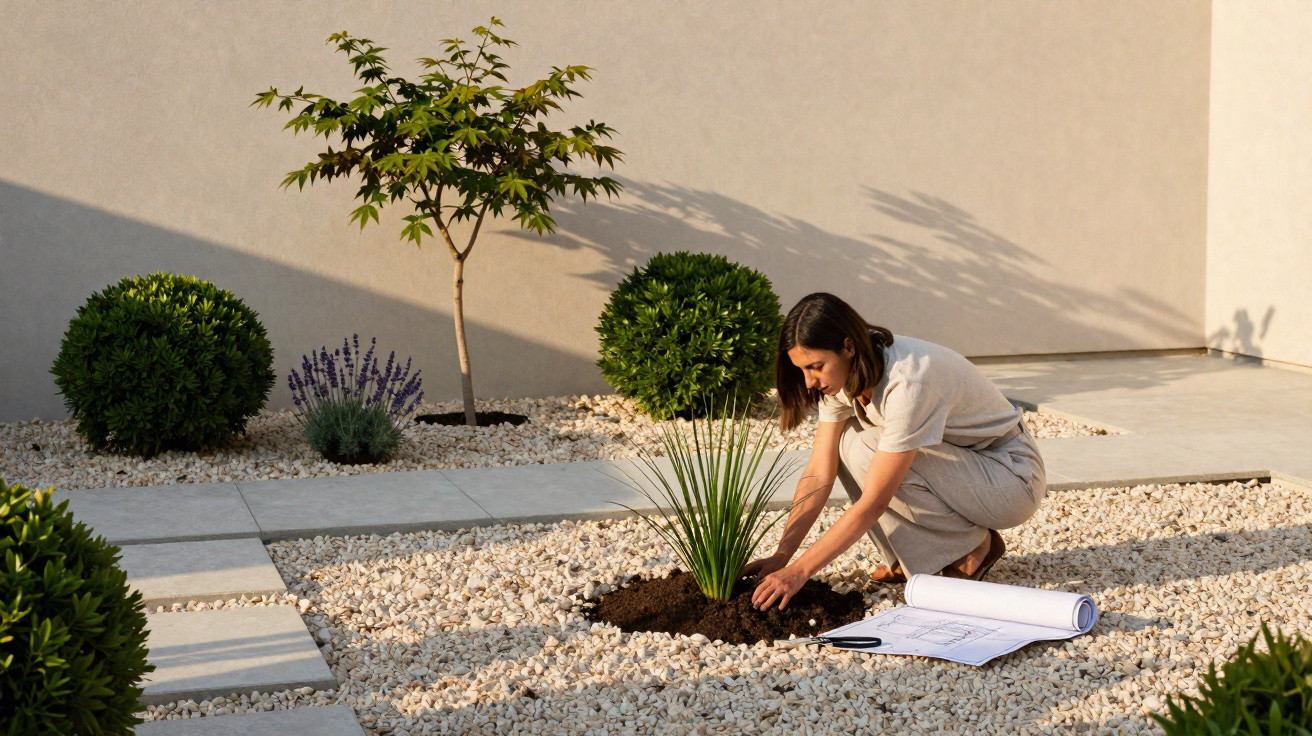
Over the road, her neighbour’s garden contained only a few plants: one sculptural tree, a low hedge, a neat strip of gravel and a single bench. Nothing else. Still, drivers slowed down to admire it. It had the understated, costly-looking serenity of a boutique hotel.
The climate was the same, and so was the street, but the atmosphere could not have been more different.
Why fewer plants often look more luxurious
Visit an upmarket open-garden event and you may spot something surprising: exposed soil, open space and clearly defined outlines. Rather than pushing through a jungle of discounted garden-centre finds, you move through a carefully arranged setting that feels like a slow, considered photograph.
Luxury gardens do not demand attention; they breathe it out. One colour is reflected in another, forms recur, and an unspoken rhythm runs through the planting. Your gaze moves easily from a neatly clipped shrub to a pale stone planter and then to one Japanese maple that appears to glow. Even a wilder area feels purposeful rather than accidental.
I once visited a compact London townhouse garden that seemed lifted from a design magazine. Its owner insisted that she had “hardly any plants.” In reality, she had twelve species: three recurring grasses, two evergreen varieties, one statement tree, a low hedge and seasonal pots beside the entrance.
Photographs of the garden regularly went viral on Pinterest, and people presumed it had cost a fortune. Its secret was not an unusual plant collection, but repetition, restraint and the confidence to retain empty space. She had removed almost 40 clashing plants that the former owner had squeezed in, and the small garden immediately seemed twice its actual size.
Too many plants usually arise for one straightforward reason: purchasing a plant provides an instant burst of pleasure, while designing a garden requires patient thought. We are naturally inclined to pick up the attractive specimen at the garden centre, rather than imagine what five of those shrubs will look like in three years. As a result, borders fill up with one of everything and become visually chaotic.
Professional designers work against that instinct. They select a limited range of plants, then ask: How large will it become? Which form will it introduce? Does it repeat something already present? They are not pursuing endless variety. Instead, they build a visual sentence in which every plant is a word with a genuine purpose.
Minimalist garden strategies professionals quietly use
One of the easiest professional approaches is to halve the plant list, then use the remaining choices in generous drifts rather than as isolated specimens. Three, five or seven matching grasses in a row instantly look deliberate. A run of identical planters filled with the same evergreen can turn an unfocused patio into a “designed” terrace.
Designers also begin with structure rather than flowers. First, they plan where the height will sit: perhaps a small tree, a hedge or one tall grass. They then fill the remaining areas with low, dependable plants that stay well behaved. The flowers you want can be placed in small, controlled sections as seasonal highlights, instead of being scattered everywhere like confetti.
The mistake I most often see from homeowners is emotional planting. A friend gives them a rose, a neighbour shares a divided hosta, a child picks a sunflower, and before long the garden has become a scrapbook of plants kept out of guilt rather than affection. They hesitate to take anything out, plant around it instead, and the entire design begins to lose balance.
Feeling attached is entirely natural, as plants hold memories. Even so, a peaceful, premium-looking garden nearly always requires some careful editing. You can respect the sentiment while relocating, or even parting with, plants that do not belong in the scheme. In truth, nobody manages this every day. Gardens change in untidy phases, and that is fine. What matters is the overall direction in which you are guiding them.
“A luxury garden isn’t about how much you plant. It’s about how much you’re willing to remove,” a landscape architect in Paris told me, standing in front of a courtyard with only seven plants and an absurd amount of mood.
- Repeat, rather than collect: Select 5–10 core species and use them throughout the garden instead of purchasing one of every plant that appeals to you.
- Put structure before flowers: Begin with trees, hedges and shrubs that look good throughout the year, then add seasonal colour as a light layer rather than the main feature.
- Keep some ground visible: Use mulch, gravel or low groundcover plants so that the soil line looks deliberate, not like an empty area that needs “more plants”.
- Choose easy-care plants: Favour resilient perennials and evergreens. The garden will remain composed when life is busy and you miss a weekend of gardening.
- Edit once a year: Set aside one day to relocate, divide or remove anything that disrupts the calm, clear appearance you want.
Living with less: a garden that breathes and lasts
The finest minimalist gardens I have seen share one quality that does not appear on plant labels: they are liveable. You can sit without having to avoid a spiky leaf, see clearly from one end to the other, and find somewhere for both your eyes and your body to rest. You sense that the space is there for humans first, plants second.
That is the understated strength of using fewer plants. You are no longer battling relentless growth or trying to find space for the newest novelty from the shop. You are curating rather than hoarding. You are leaving room for your future self, who may be tired, busy, older or suddenly passionate about something completely different. The garden continues to function even when you are not tending it.
Most of us know the feeling of standing in the middle of our own garden and being more overwhelmed than pleased. If that is where you are now, perhaps you do not need another plant. Perhaps you need a black bag, a notebook and a different question: What could I remove so that what I love can finally shine? That is the change professionals make, and once you notice it, you cannot stop seeing it.
| Key point | Detail | Value for the reader |
|---|---|---|
| Focus on fewer species | Restrict your core palette to 5–10 plants, repeating them in groups | Produces a calm, high-end appearance while making shopping and care easier |
| Design for structure first | Begin with trees, hedges and evergreen forms before introducing flowers | The garden appears “finished” all year, rather than only in peak flowering weeks |
| Edit regularly | Remove or relocate plants that interrupt the rhythm or create clutter | Lowers maintenance and stops the garden slipping back into chaos |
FAQ:
- Question 1: Does a minimalist garden mean I have to give up colourful flowers?
- Question 2: How many different plant species is “too many” for a small garden?
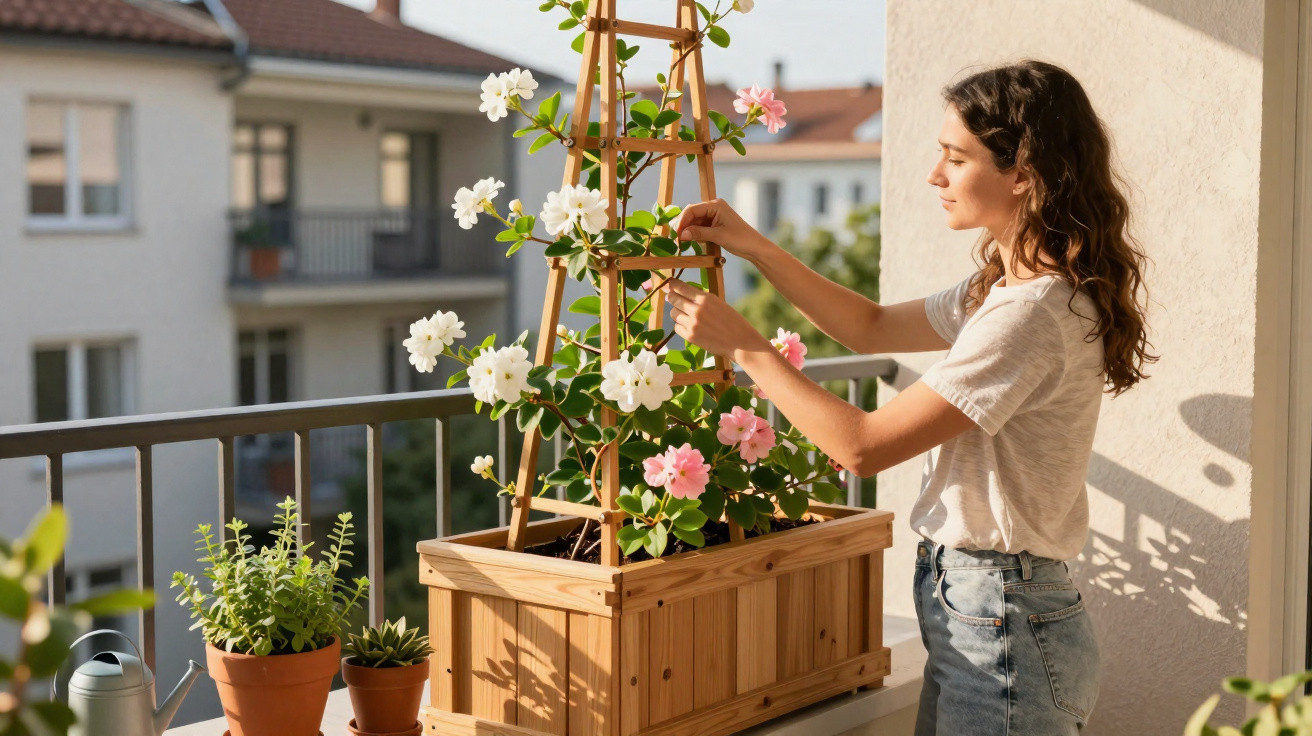
- Question 3: Can I create a premium look on a tiny balcony with just pots?
- Question 4: What should I do with plants I already own that don’t fit the new style?
- Question 5: How long does it take to see the effect of simplifying my planting?

Comments
No comments yet. Be the first to comment!
Leave a Comment