
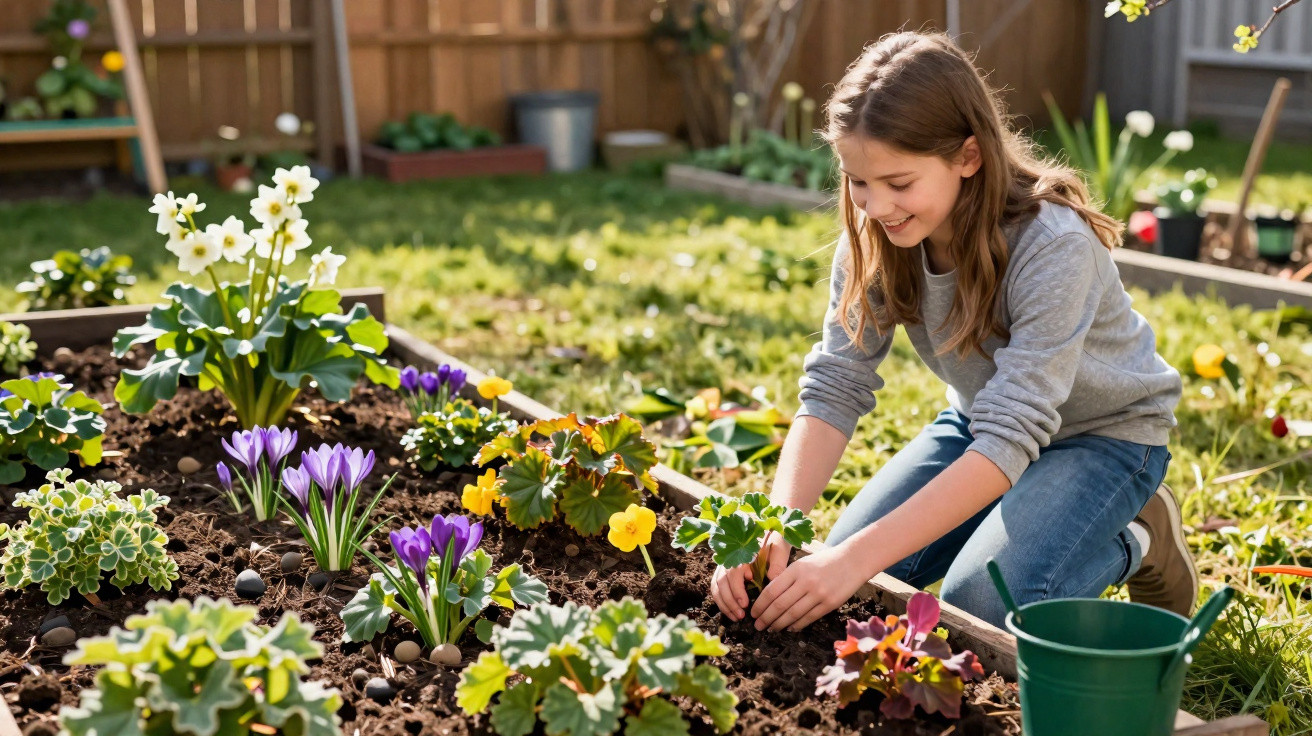
That is entirely achievable with the right plants.
Plenty of new gardeners begin full of enthusiasm, pick up bright, flowering plants on impulse at a DIY store or garden centre - and a few weeks later they are left staring at dried-up stems. It doesn’t have to turn out that way. With a handful of hardy, low-cost perennials and bulb plants, you can create a border that returns year after year, needs minimal attention, and still looks genuinely impressive.
Why budget-friendly long-lasting plants are worth their weight in gold for beginners
If you’re new to gardening, it’s easy to overestimate two things: how much time you’ll really have and how demanding many plants can be. Delicate varieties won’t forgive drought or the wrong position. What seems cheap can end up costing more, because you have to replace plants every year.
"With resilient, perennial plants, you invest once - and enjoy flowers and foliage for many years."
A particularly smart approach is to combine different flowering times like a relay team. Some plants add colour in winter, others kick off in early spring, and others carry on through summer. That way, the garden feels lively for most of the year without needing constant replanting.
The 6 easy-care and affordable favourites at a glance
For a first inexpensive starter bed, six types stand out. They have proven themselves in countless gardens and are easy to find:
- Hardy geraniums (perennial geraniums)
- Crocuses
- Hellebore (Christmas rose or Lenten rose)
- Coral bells (Heuchera)
- Bugle (creeping groundcover)
- Common ivy
You’ll usually find these as low-priced young plants in pots or as bulbs. They cope well with ordinary garden soil, don’t require specialist fertiliser, and are surprisingly forgiving if you occasionally forget to water.
A flowering relay in the border: colour from December to October
Hellebore: flowers when the rest of the garden is asleep
Hellebore blooms in the depths of winter - depending on the variety, from December through to March. While lawns look dull and shrubs are bare, its refined flowers open in white, pink, green, or purple. This perennial handles frost well and prefers partial shade, such as beneath deciduous shrubs.
Another benefit: even when it isn’t flowering, hellebore remains attractive thanks to its dark foliage, looking almost like a small, elegant houseplant outdoors.
Crocuses: bright pops of colour in late winter
Next, crocuses push up through cold ground from February onwards. Their yellow, white, or purple blooms bring a spring-like feel when little else is happening. The bulbs are very inexpensive, can be planted in large drifts, and will naturalise over time - meaning they multiply by themselves.
Crocuses work well in lawns, along bed edges, or beneath trees and shrubs. One key point: only mow or remove the leaves once they have fully died back. That is how the bulbs recharge for the following year.
Hardy geraniums: a carpet of flowers from May into autumn
From May, hardy geraniums take over. They are not the familiar balcony geraniums, but fully hardy perennials that form dense mounds. Depending on the variety, they can flower right through to October - in pink, purple, blue, or white.
Hardy geraniums spread outward, help suppress weeds, and are excellent for filling space. Cutting them back after the first flush often triggers a second, lighter round of flowers.
"With hellebore, crocuses and hardy geraniums, you get a kind of ‘flowering relay’: winter, early spring and summer are covered, without planting again every year."
Foliage stars: plants that look good even without flowers
Coral bells: colourful leaves instead of showy blooms
Coral bells are noticed less for their flowers and more for their foliage. Colours range from near-black to burgundy red to lime green, and some varieties are marbled. They add shape and interest to a bed, ensuring there is something to look at even when few plants are in bloom.
This perennial returns each year, likes free-draining soil, and does well in partial shade. It looks especially smart along paths or used as edging.
Bugle: a living carpet that keeps weeds down
Creeping bugle forms tight mats, spreads by itself, and leaves weeds very little room. In spring it sends up blue or purple flower spikes; for the rest of the year its foliage creates a continuous ground-hugging layer.
If you want to keep costs down, start with just a few plants and let bugle do the rest. It fills gaps in the border, tolerates light foot traffic, and suits partially shaded spots.
Ivy: an evergreen gap-filler
Most people know ivy, but many underestimate how useful it can be for beginners. It is tough, evergreen, and copes very well with shade. You can use it as groundcover or to green up walls and fences.
The one caveat is its vigour. If you want to keep it under control, a decisive trim once or twice a year is usually enough. Managed like that, it stays an easy-care, reliable plant in the garden.
Cut costs: propagate plants instead of buying new ones
To save the most money, don’t just choose affordable plants - multiply them yourself after a few years. Many of the plants listed are ideal for this.
- Divide perennials: Hardy geraniums and coral bells form clumps that can be split with a spade after a few years. One plant can become three or four.
- Lift and replant creeping stems: Bugle and ivy produce runners. You can separate these with a piece of root attached and plant them elsewhere.
- Let bulbs naturalise: In suitable conditions, crocuses spread on their own. Don’t mow too early and it will happen naturally.
"With division and runners, six bought plants can turn into dozens within a few years - at no extra cost."
Protecting plants from animals: simple tricks to stop scratching and nibbling
A common frustration in the garden: you plant carefully, and then cats or birds start digging exactly where the new shoots are emerging. To stop newly planted areas being disturbed, you can use straightforward, practical measures.
Helpful options include:
- small twigs or brushwood laid over vulnerable spots
- plant guards or old wire baskets to protect young plants at the start
- gentle natural “deterrents”, such as a sharp powder sprinkled nearby that animals avoid, without harming the plants
These measures work alongside the natural toughness of the plants mentioned. If you protect fresh plantings early on, you lose fewer plants - and therefore less money.
Position, watering, soil: how beginners get the most from the 6 plants
Even low-maintenance plants have basic needs. Meet those, and you’ll get a lot back with very little effort.
| Plant | Position | Water needs |
|---|---|---|
| Hellebore | Partial shade, humus-rich soil | Evenly moist, no waterlogging |
| Crocuses | Sun to partial shade | Moist in spring, rather dry in summer |
| Hardy geraniums | Sun to partial shade | Normal; short dry spells are fine |
| Coral bells | Partial shade | Moderately moist |
| Bugle | Partial shade, moist soil | Dislikes drying out too much |
| Common ivy | Shade to partial shade | Manages with little water once established |
If you follow these guidelines in broad terms, you won’t need to water or feed constantly. A mulch layer made from leaves or grass clippings helps retain moisture and slows weeds.
Practical beginner tips for an affordable, low-maintenance border
To begin, a small patch is enough. For example: around 2 square metres at the edge of a patio, divided into three zones - crocuses and bugle at the front, hardy geraniums and coral bells in the middle, and hellebore and ivy at the back. This creates depth without relying on lots of different plant types.
It also makes sense not to plant everything in one go. Start with a few tough perennials, then add more the following year using divisions. That protects your budget and gives you time to get to know the plants in your own garden: where they thrive, where they stay smaller, and where they really take off.
Using the six plants above as your framework takes much of the pressure out of the hobby. Mistakes matter less, setbacks are less painful financially, and it’s easier to stay motivated. As the plants settle in, your experience grows too - and the garden becomes more enjoyable each season without demanding huge effort.
Comments
No comments yet. Be the first to comment!
Leave a Comment