
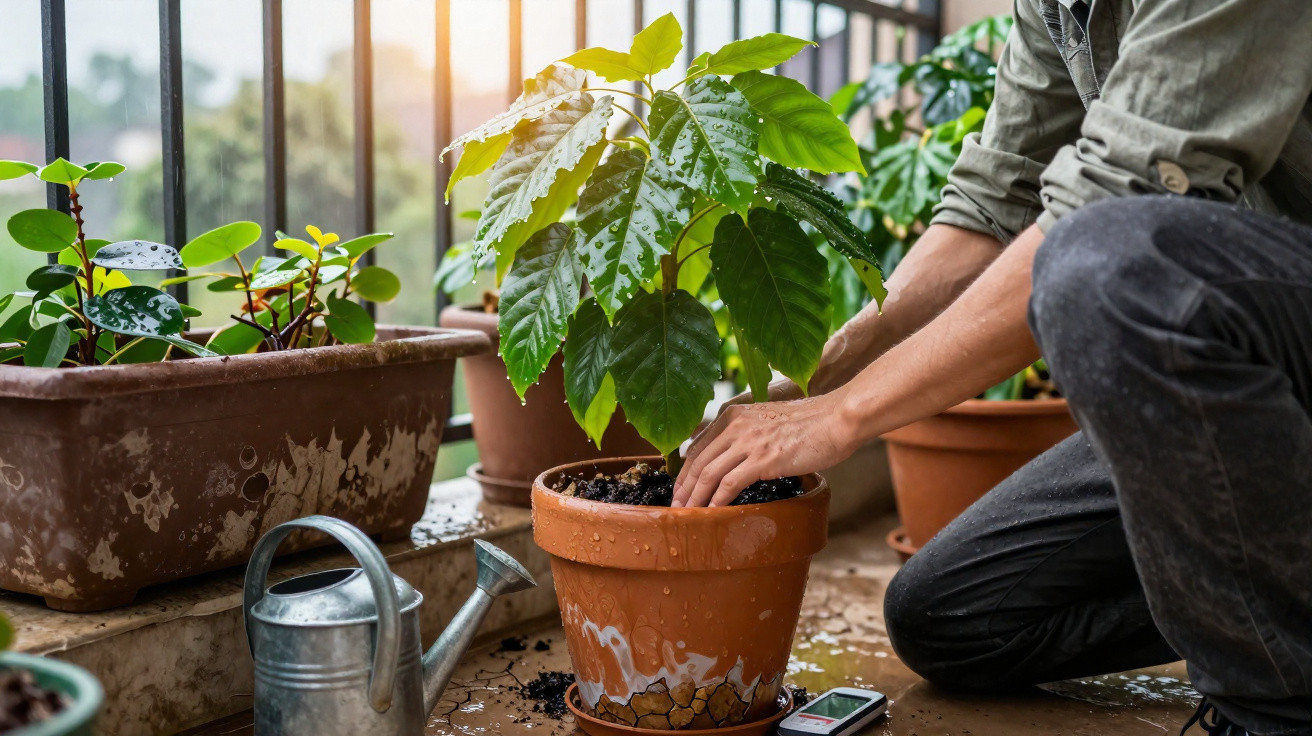
While rain drums down outside, many people sit back and relax – but for some plants, that can be a risky assumption.
From indoors, the garden can quickly appear thoroughly watered: wet paths, puddles and dark soil. Many amateur gardeners then assume they can safely leave the watering can alone. Yet, in practice, the most sensitive plants may quietly dry out in precisely these conditions – hidden beneath foliage, balconies and roof overhangs.
Why rain does not automatically reach every plant
The misleading effect of a heavy shower
When spring skies darken and a thunderstorm breaks, relief often follows at once: “Everything has had a good soaking now.” This belief is widespread, but it rarely reflects what is actually happening in a flowerbed or on a balcony.
What matters is not how dramatic the rain looks, but how much water genuinely reaches the root zone. Heavy downpours, in particular, often strike compacted or cold soil and bounce off it. The water rushes across the surface, collects in lower spots and drains away without properly penetrating deeper down.
A single short cloudburst can deliver impressive volumes of water, yet the fine roots often remain in completely dry soil.
Longer, gentler rainfall is far more effective. Hours of drizzle are much more likely to moisten the soil evenly. The water has time to soak in gradually rather than running away in streams.
Wet surface, thirsty roots
Many gardeners look only at the uppermost few millimetres of soil. This layer can appear dark and damp just minutes after rainfall. Five or ten centimetres below, however, the soil may still be bone dry. This is exactly where vegetables, roses and perennials tend to root.
Anyone relying solely on the appearance of the surface will miss this dry layer. Initially, leaves may still look healthy, but growth slows, buds drop or leaves curl up – all classic signs of water stress.
The ‘umbrella effect’ of dense leaf canopies
How foliage can shield the soil
One particularly surprising process often goes unnoticed in home gardens: dense foliage acts like a series of small umbrellas. Large lettuce heads, lush perennials, hydrangeas, rhododendrons and squash plants all channel water away to the sides.
Raindrops hit the upper leaf surfaces, run towards the edges and usually land around the outer perimeter of the plant. Very little reaches the centre, where the main roots are located. Small channels form around the outside, while the soil in the middle remains almost dry.
Dense foliage protects the soil from direct rainfall – helpful against erosion, but detrimental to the water supply directly around the root collar.
Dry islands beneath ‘jungle plants’
Anyone who scratches the soil beside the stem of a large perennial with a finger or hand cultivator after two rainy days may be surprised: beneath a thin damp crust, the soil can remain almost dusty for several centimetres. In densely planted beds, this creates a dry microclimate around the base of the plant.
If this area goes unnoticed, even hardy species can slip into a state of ongoing stress. They are standing in the middle of a wet garden, but their vital supply zone receives barely any water. Yellow leaves, stunted growth or sudden leaf drop may follow – even though it supposedly “rains all the time”.
Hidden dry spells on balconies and terraces
Why many balcony planters miss out on rain
The situation is especially deceptive in towns and suburbs. Here, architecture prevents much of the rainfall from reaching plants. Projecting roofs, balconies on the floor above, prominent edges, awnings and loggias can block most raindrops.
Rain rarely falls perfectly straight down. Even during severe weather, precipitation often blows past a building at an angle. As a result, someone may get wet at an open window because rain is blowing in, while the flower boxes on the railing or against the wall remain completely dry.
- Covered balconies: Rain generally reaches only the outer edge, or does not reach the space at all.
- Window ledges with a wide lip: Drops run off the edge while the compost stays dry.
- Terraces beneath canopies: The air is humid, but barely a drop reaches the pots.
Potted plants have almost no reserves
Plants in containers or balcony boxes have only a few litres of growing medium available. Unlike garden soil, there is no deeper layer from which roots can draw remaining moisture. Once the upper section has dried out, there is no rescue from lower levels.
Wind gusts make the issue worse. Wind pulls moisture from the compost even when the air is very humid. Everything may look “damp”, but the root ball continues to dry out.
Humid air is no substitute for watering. Sheltered pots in particular must be checked deliberately and often watered directly, even in poor weather.
How to check reliably whether rain is enough
The simple finger test in the bed
The most important check needs neither an app nor a measuring device. In many cases, the finger test is entirely sufficient.
- Push one or two fingers roughly five centimetres into the soil.
- Check how it feels: cool and clearly moist, or rather warm and crumbly?
- If the soil sticks to your fingers and feels cool, the plant can wait.
- If it is dry or feels only slightly damp, it needs water – regardless of the rain.
Making this small check part of a regular routine gives you an excellent understanding of your own soil and quickly reveals which areas generally dry out faster than others.
Lift the pot: the weight test for containers and boxes
A second straightforward method works well for potted and balcony plants: the weight test. Every plant effectively has a ‘wet weight’ and a ‘dry weight’.
Straight after thorough watering, a pot feels noticeably heavier. As plants use water, it becomes lighter and lighter. Those who lift their pots briefly at regular intervals soon develop a sense of how “empty” or “full” the water supply is.
A pot that feels unexpectedly light needs water – no matter how hard the rain is beating against the window.
Why rainy weather can be an ideal time to water
Reviving old, water-repellent compost
After a prolonged dry period, many potting composts become water-repellent. When watered with a can, the water then runs down the sides of the root ball and straight out through the bottom. The centre remains almost dry.
Rainy weather offers an unexpected advantage here: the air is humid and evaporation is low. Slowly applying lukewarm water – ideally collected rainwater – to the root ball at this time helps the compost absorb water again. The humid surroundings allow water to soak into the dry core more effectively instead of running uselessly down the edges.
Water precisely where rain never reaches
Although outdoor beds are often supplied adequately by prolonged steady rain, certain areas remain consistently under-watered: root zones beneath large leaves, narrow strips directly alongside walls and pots beneath roof overhangs.
Anyone who deliberately attends to these ‘shadow zones’ in rainy weather can use the already humid conditions to water particularly efficiently. A watering can or hose directed specifically at the root area is often enough to prevent acute stress.
Practical advice for different locations
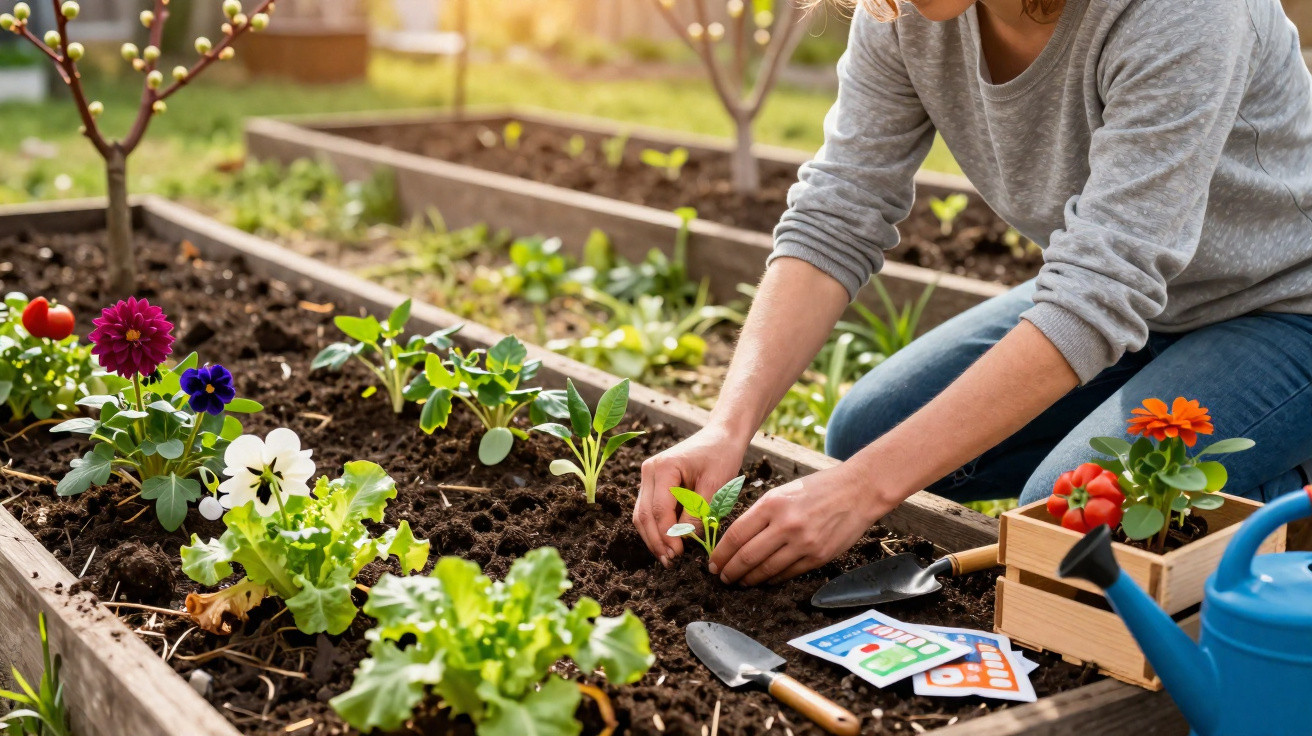
Vegetable beds and raised beds
In vegetable beds, the soil immediately around the root collar often dries out most quickly. Mulch made from grass clippings, leaves or straw can reduce this. Even so, it is worth checking beneath the mulch, particularly around large-leaved plants such as cabbage or squash. Raised beds also dry out more quickly than beds at ground level because of wind and heat radiating from the sides.
Indoor spaces and transitional areas
Plants moved from the living room to a balcony or terrace in summer can easily end up in a grey area. They are often positioned partly under cover close to the door, receiving more light but little direct rainfall. Many owners then rely on the damp weather – a common reason why houseplants outdoors suddenly begin losing leaves in summer.
Using the finger test and weight test here prevents this stress and keeps plants supplied more evenly.
The risks of misjudgement and the long-term consequences
Watering too infrequently when rainfall appears sufficient does not affect plants only in the short term. Repeated water shortages weaken the root system. Plants produce shallow, sensitive roots instead of growing deeper roots. They then react even more strongly to every dry spell.
Stressed plants also become more vulnerable to pests and disease. Aphids, spider mites and fungal infections occur far more often when plants have previously endured several dry-shock phases. A few targeted watering cans during rainy days can prevent this chain reaction.
Ultimately, rain is no replacement for checking plants yourself. Those who assess soil and pots consciously get to know their green space better and ultimately water more precisely – using less water, but at the right time and in the right place.

Comments
No comments yet. Be the first to comment!
Leave a Comment