
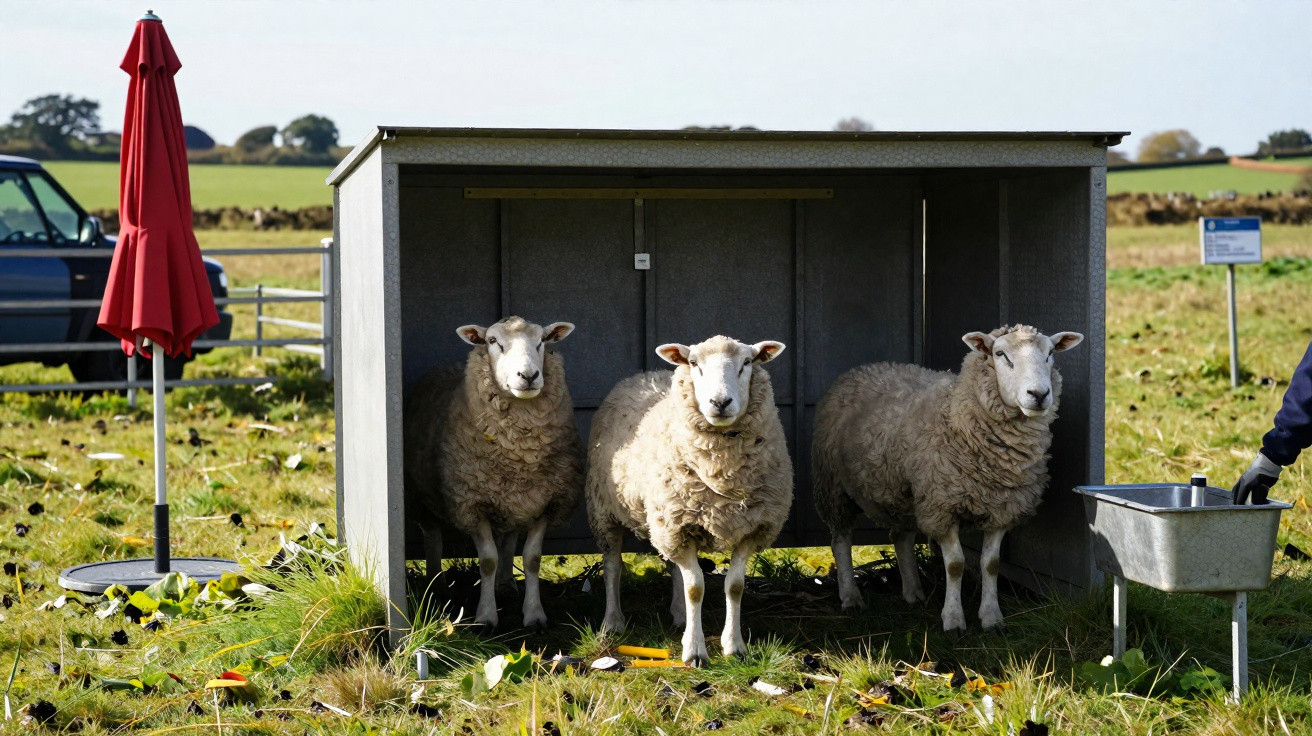
A red parasol beside a flock can make a striking picture on a sunny day. The useful lesson, though, is not that sheep have a favourite colour. It is that animals on an exposed dyke, flood bank or open pasture may quickly seek out any reliable patch of shade.
For residents, walkers and neighbours, the kindest response is not to put a garden parasol into a field. A domestic parasol can blow over, break or frighten livestock. If sheep appear to be struggling in hot weather, the safest approach is to alert the keeper or land manager, who can provide suitable shelter, water and supervision.
Sheep standing beneath a parasol are likely to be choosing shade and comfort, not expressing a preference for red.
Why shade matters on open grazing land
Sheep are well adapted to difficult weather, but they can still become uncomfortable or distressed in hot, still conditions. A thick fleece is useful in cold and wet weather, yet it can make it harder for an animal to cool down when temperatures rise.
Heat can be more challenging where sheep have:
- thick, long or dirty fleeces;
- recently been gathered, moved, shorn or handled;
- limited access to clean drinking water;
- little natural shelter;
- lambs, older animals or sheep that are already unwell;
- an exposed field with little breeze.
Dykes and flood-defence grassland are often particularly open. Trees and hedges may be limited, either because of the land’s management or because deep roots are unsuitable for the structure of a bank. In these settings, a small area of shade can attract several animals very quickly.
Sheep should always be able to move freely away from shelter. If there is only one small shaded spot, animals may crowd into it, churn up the ground or compete for space.
Is it really the red parasol they like?
A flock gathering under a red parasol does not show that red is a sheep’s preferred colour. The main attraction may simply be the cooler ground beneath it, its position in the field or the novelty of an object offering a clear shadow.
Animals can also be wary of unfamiliar equipment. A parasol that flaps, clicks, sways or casts fast-moving shadows may unsettle a flock. In an exposed field, the wind can change quickly and turn a harmless-looking object into a hazard.
For a keeper assessing whether extra shelter is needed, more useful questions are:
- Where do the sheep gather during the hottest part of the day?
- Can every animal reach water without being pushed aside?
- Is there enough shade for the size of the flock?
- Does the ground around shelter become muddy or heavily fouled?
- Is the available shelter well ventilated and secure?
A parasol that appears harmless for a few minutes may not be safe to leave in place for an afternoon, let alone overnight.
Why a garden parasol is a poor field shelter
Domestic garden parasols are not made for livestock or exposed grazing land. Even when weighted down, they can be lifted, bent or toppled by a gust. If a pole falls, ribs snap or fabric tears loose, sheep may be injured or panic.
The main risks include:
- Wind damage: open banks, coastal fields and marshland can be far windier than a sheltered garden.
- Sharp or broken parts: metal ribs, poles, spikes and fractured plastic can cause injuries.
- Entanglement: fabric, cords and ties may catch around legs, horns or fencing.
- Collapse and crowding: sheep may bunch together beneath a falling structure or become trapped against fencing.
- Blocked access: equipment near troughs, gates and tracks can obstruct livestock checks.
- Risk to the public: an object near a footpath may attract children, dogs or visitors.
Never put a parasol, gazebo, tarpaulin or similar item into a grazing field without the keeper’s permission. It should not be treated as a quick fix for animals you do not own or manage.
Good intentions help most when they support the keeper’s welfare plan rather than introducing an unfamiliar object to the field.
Better ways for keepers to provide shade
A livestock keeper may need a combination of measures during warm weather. The right option depends on the land, flock size, grazing system and any restrictions on the site.
1. Use existing shelter well
Hedges, field corners, buildings and established tree cover can provide useful refuge. Check that animals can enter and leave without being funnelled into a narrow, wet or crowded area.
2. Move grazing where practical
A field with more natural shelter may be a better option during a warm spell. Handling, transport and routine gathering can also be planned for cooler parts of the day where possible.
3. Consider properly designed shelters
A purpose-made, securely installed field shelter may suit some holdings. On flood defences, conservation sites or rented land, however, structures may require agreement from the landowner or site manager. Ventilation, safe access and secure anchoring matter as much as shade.
4. Check water more often
Clean, accessible drinking water is particularly important in warm weather. Troughs should be checked for leaks, contamination and low water levels. Make sure less assertive animals can approach the water without being crowded out.
5. Maintain airflow
Shade alone is not enough if a shelter is enclosed and stuffy. Sheep need space to enter and leave calmly, without dead ends or areas where heat builds up.
What residents and walkers can do safely
People living near grazing land often spot changes in a flock before the keeper arrives. That can be helpful during a heatwave, drought or sudden shift in weather. The safest response is usually to observe from outside the field and report a genuine concern.
Sheep commonly rest, gather together or seek a breeze, so these behaviours do not automatically mean something is wrong. More worrying signs may include persistent panting, weakness, collapse, reluctance to move, separation from the flock, or an animal caught in fencing.
If you are concerned
- Keep your distance. Do not enter the field, chase sheep or attempt to move them.
- Look for contact details. Gate signs may list the keeper, tenant farmer or site manager.
- Record the location and time. A photograph taken from a public right of way can help explain what you saw.
- Contact the person responsible. This may be the farmer, grazing manager, landowner or conservation organisation.
- Act promptly if an animal is clearly trapped or injured. Contact the keeper first where possible, or an appropriate local animal welfare service if there is an urgent welfare concern.
Keep dogs on a lead near livestock. Even a friendly dog can cause sheep to run, which is especially risky in hot conditions or near roads and water.
Common mistakes when trying to help sheep
Well-meaning actions can create new problems for livestock and their keepers.
- Feeding bread, fruit or garden waste. Sudden or unsuitable food can upset a sheep’s digestion and encourages animals to approach people.
- Leaving out buckets or makeshift water containers. They can tip, become dirty, create crowding or be unsafe for lambs.
- Putting up a parasol or tarpaulin without permission. It may blow away, injure animals, damage the ground or obstruct access.
- Assuming wool prevents overheating. Fleece offers protection, but sheep can still struggle in hot weather.
- Approaching a lamb that appears alone. Ewes and lambs may be temporarily apart while grazing; approaching can cause unnecessary disturbance.
- Opening a gate to give sheep ‘more room’. This can lead to escapes onto roads, paths or neighbouring land.
A useful reminder, rather than a solution
The sight of sheep choosing the shade of a red parasol is a useful prompt to think about welfare on exposed land. It can encourage keepers to review water, shelter, handling routines and where sheep gather on hot days.
For neighbours and walkers, practical kindness means staying observant, respecting fences and contacting the right person when something genuinely does not look right. Shade may be welcome, but safe, planned livestock care is what protects a flock over the long term.
Comments
No comments yet. Be the first to comment!
Leave a Comment