
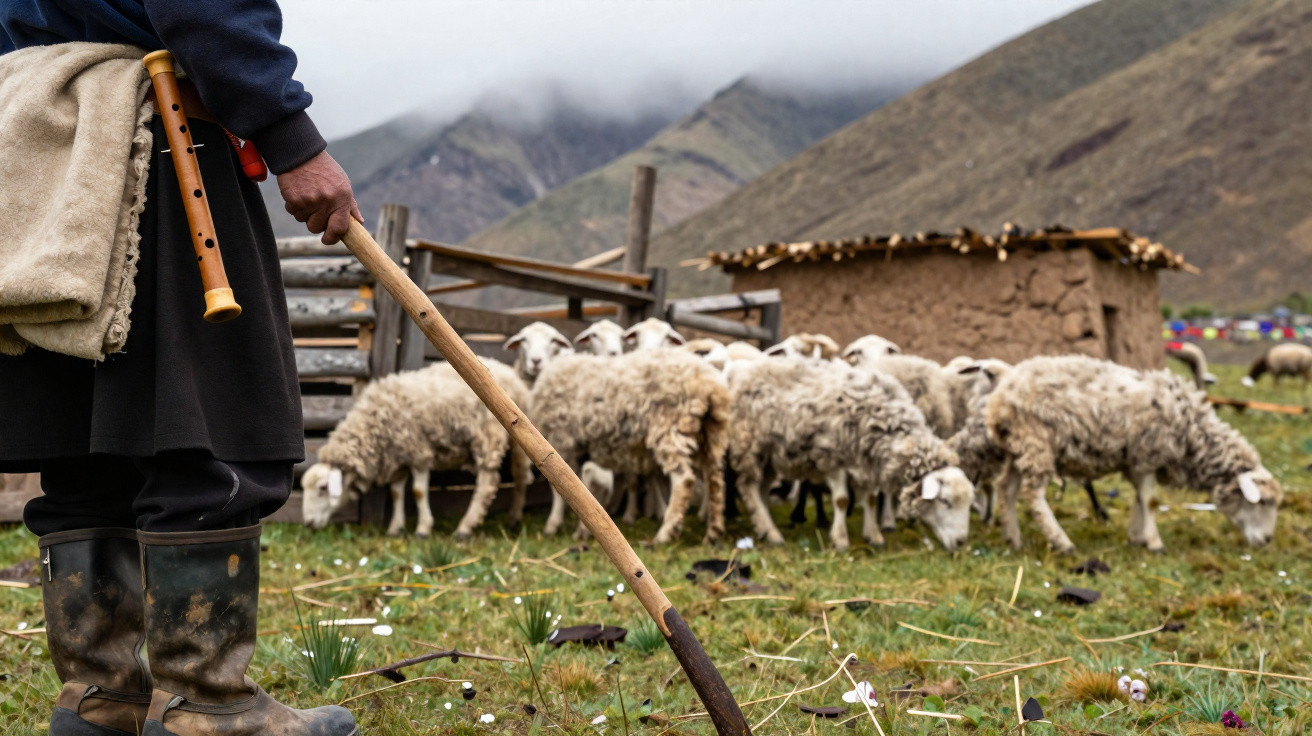
For most sheep farmers, the working day is shaped by gates, weather, feed, lambing and the need to notice quickly when an animal is not right. Juanito’s routine has much in common with that daily reality, but it takes place in Ecuador’s high Andean grasslands, at around 4,000 metres above sea level.
At 71, Juanito tends a flock of roughly 150 sheep with members of his family. His life is not a model that can simply be copied on a British holding, and his comment about disease should not be read as veterinary advice. What it does show is the value of knowing your animals, your grazing and the limits of the place where you work.
A family life in the high páramo
Juanito lives in Ecuador’s páramo: a cold, open upland landscape found above many of the country’s towns and cultivated valleys. Conditions can be harsh, with strong winds, low temperatures and rapidly changing weather.
His family is part of the Panzaleo Indigenous community and has lived in the area for generations. He has chosen to continue the work and way of life he learned from his parents rather than settle permanently in a city.
The household uses simple shelters made from locally available materials, including mud and straw. Firewood is used for cooking and warmth, while blankets and straw bedding help during cold nights. Living far from services requires careful planning: fuel, food, tools and veterinary help cannot necessarily be obtained at short notice.
“We are happy with the tranquility,” Juanito says of the place where he has spent his life.
That tranquillity does not mean the work is easy. Sheep still need feeding, checking and securing every day, whatever the weather.
The daily walk to grazing
Juanito begins by letting the flock out of its enclosure and walking with the sheep for 40 minutes or more to reach grazing. It is a familiar route, but not an automatic one. Ground conditions, available grass and the behaviour of the flock all need attention.
A shepherd on foot can spot details that are easy to miss from a distance: a sheep hanging back, a change in gait, a reduced appetite or an animal separated from the rest. The route to pasture is part of flock management, not merely a journey.
The practical routine behind close shepherding
- Look over the flock before turning out. Count sheep where practical and watch for animals that are lame, coughing, slow to move or behaving unusually.
- Choose grazing according to conditions. Wind, rain, frost, pasture cover, water and safe access all matter.
- Move stock calmly. Rushing sheep increases stress and makes it harder to notice problems.
- Use the walk to observe. Check body condition, feet, fleece and the way animals are keeping up with the group.
- Bring sheep back to a secure enclosure. Good fencing or a sound pen protects stock from wandering, adverse weather, theft and predators.
These principles are familiar to UK keepers, although the practical detail will differ greatly between an Andean hillside and a British hill farm.
More than sheep: producing food and buying essentials
Shepherding is only one part of Juanito’s household work. The family also grows some food and uses firewood for cooking. Trips to town are still necessary to buy essentials and sell some of what they produce.
That combination of livestock, food production, maintenance and occasional trade is typical of a household that must make the most of limited local resources. Being remote does not mean being entirely self-sufficient. Equipment wears out, supplies run low and produce needs a market.
For British smallholders and upland farmers, the setting may be very different, but the wider lesson is recognisable. A farm depends on many connected tasks: pasture, livestock, transport, repairs, labour, cash flow and access to suppliers all matter.
Isolation is not biosecurity
Juanito says that “not even diseases reach us”. It is an understandable way of describing a quiet, distant place, but it should not be taken literally.
Remote flocks can still be affected by parasites, respiratory illness, lameness, injuries and nutritional problems. Disease risks may arrive through bought-in stock, visitors, vehicles, footwear, shared equipment or contact with wildlife. In isolated areas, delayed access to veterinary care can make a problem more difficult to manage.
Distance from a town can reduce some contacts, but it does not replace disease prevention, daily checks or prompt veterinary advice.
UK keepers should work with their veterinary surgeon on a flock health plan suited to their holding. They must also follow the relevant rules on identification, movement records and notifiable diseases.
Sensible flock-health habits
- Discuss quarantine arrangements for incoming animals with your vet.
- Keep useful records of treatments, deaths, lambing, movements and recurring issues.
- Monitor body condition, feet, grazing pressure and water supply regularly.
- Use medicines only as directed and as part of an appropriate health plan.
- Have contact details for a vet and someone who can help in an emergency.
- Report suspected notifiable disease immediately through the appropriate official channel.
Never rely on isolation alone to protect a flock.
A practical life, not a romantic one
Remote farming is often presented as idyllic, but it involves hard physical work and fewer fall-backs when something goes wrong. Juanito values the peace of his home, his family and his sheep. He also carries a small Andean flute on some journeys with the flock, playing during long walks across the uplands.
Yet the daily reality includes cold, fuel gathering, food production, animal care and long journeys for supplies. There are no guarantees of comfort or an easy escape from the pressures faced by farmers elsewhere.
The value of Juanito’s routine lies in its consistency. Feeding, walking, watching, repairing and bringing animals home safely may be repetitive, but these are the tasks that keep livestock systems working.
What UK sheep keepers can take from it
Ecuador’s high páramo and the UK’s uplands are not interchangeable. They have different climates, breeds, disease pressures, markets, welfare requirements and access to services. Still, some practical lessons travel well.
1. Know your ground
Walk fields regularly. Notice drainage, grass recovery, dangerous slopes, damaged fencing and areas that become difficult after prolonged rain or frost.
2. Treat observation as essential work
A daily check is not simply a job to tick off. It is often the earliest opportunity to identify a sheep that is quieter than usual, slow to rise, separated from the flock or failing to thrive.
3. Build routines that can cope with real life
A system that only works in perfect weather, relies on immediate deliveries or depends on one person never being unavailable is vulnerable. Keep routines workable for the people responsible for them.
4. Handle sheep quietly
Calm, patient handling can reduce avoidable stress and injuries. It also makes it easier to inspect animals properly and respond before a small issue becomes a larger one.
Common mistakes when admiring remote farming
It is easy to draw the wrong conclusions from stories of isolated rural life.
- Assuming remoteness prevents disease. Every flock needs monitoring, prevention and a plan for emergencies.
- Treating traditional knowledge as either flawless or irrelevant. Experience is valuable, but it should sit alongside current veterinary and welfare guidance.
- Underestimating the workload behind “simple living”. Fewer services often mean more labour, more preparation and longer journeys.
- Copying a practice without considering local conditions. What works in Ecuador may be unsuitable, unsafe or unlawful on a UK holding.
- Forgetting community support. Even a remote household may depend on family labour, neighbours, local knowledge and links to nearby towns.
The value of a dependable daily round
Juanito’s story is not a universal answer to the challenges of sheep farming. It is the account of a man whose work has been shaped by one landscape, one family tradition and decades of close contact with his animals.
For anyone keeping sheep in the UK, the useful takeaway is straightforward: learn your flock, understand your land, keep records, make time for daily observation and plan for risks even when the surroundings feel quiet. The walk with the sheep may be routine, but it is often where the most important work is done.
Comments
No comments yet. Be the first to comment!
Leave a Comment