
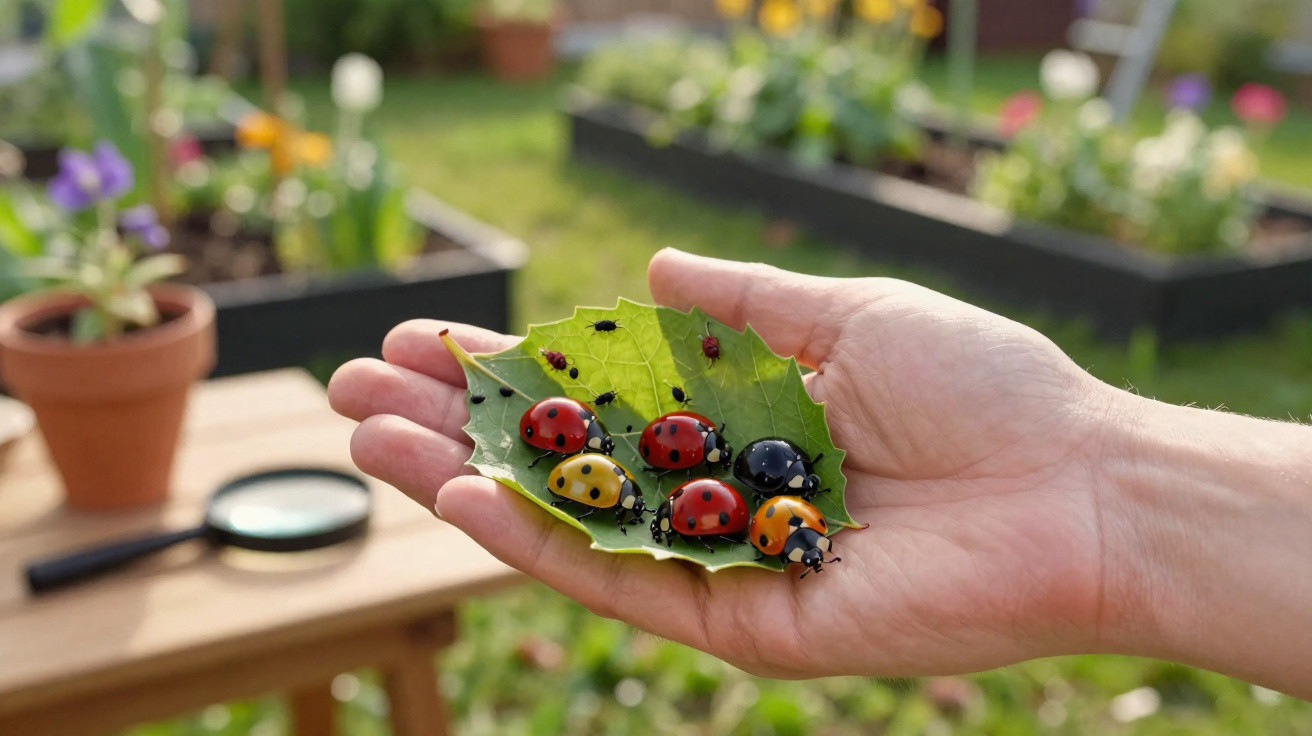
Ladybirds are widely regarded as the most likeable of insects. Children adore them, gardeners welcome them, and many families see them as symbols of good fortune. Yet few people realise that beneath their red wing cases and black spots lie strategies, toxins, migrations and behaviours more suited to an action film than a children’s book.
Deceptive colours: ladybirds are not always red
For many people, a ladybird means a bright-red beetle with black spots. In gardens, however, the picture is far more colourful. Species may be yellow, orange, brown, black, white-spotted or even pinkish.
Researchers know of more than 5,000 ladybird species worldwide, each with its own pattern. A familiar example is the two-spot ladybird, usually red with two spots. By contrast, the harlequin ladybird, introduced from Asia, can take almost any form: entirely black with a few pale markings or orange with numerous spots.
Their striking colours are not decorative – they signal: “I taste awful, so eat something else instead.”
This form of warning colouration protects them from birds and other predators. The more contrasting the beetle appears, the faster its enemies learn that this is a snack they will regret in the most literal sense.
Toxic defence: when a ladybird “bleeds”
Anyone who has held a ladybird may have noticed a yellowish liquid suddenly appearing at its leg joints. It resembles blood, but it is actually a deliberate defensive response.
The liquid contains toxic alkaloids. It has a strong smell, tastes bitter and can put predators off for a long time. Birds learn from this experience very quickly, so the spotted beetle is much less likely to end up on their menu afterwards.
How potent this “poison” is
For people, the defensive fluid is normally harmless, although it may cause mild skin irritation. For small predators such as spiders, ground beetles and mice, however, it can be highly effective. Laboratory tests show that many predators avoid ladybirds permanently after encountering it once.
Voracious beneficial insects: ladybirds clear away aphids
Behind their charming appearance lies a formidable appetite. A single adult female ladybird can consume up to 50 aphids in one day. The larva, which grows even faster, often eats more still.
Their diet includes:
- aphids of all kinds
- spider mites
- mealybugs and scale insects
- occasionally, the eggs of other insects
This is a fortunate situation for agriculture. Growers deliberately release ladybirds in greenhouses and fields to reduce pests and limit pesticide use. Those who avoid chemicals in their own garden will often attract the beetles naturally.
Why gardeners value them
A heavily infested rose bush can be noticeably relieved within a few days when a ladybird family gets to work. Particularly in organic cultivation, these spotted predators are important allies because they help restore a natural balance.
Tiny migrants: some ladybirds travel hundreds of kilometres
Despite their small size, some species are impressive migrants. The Asian harlequin ladybird in particular sets off on mass flights in autumn. Falling temperatures or a lack of food trigger these journeys.
Researchers have observed migrations of several hundred kilometres in North America, from the plains up into mountainous areas. There, the beetles spend the winter in sheltered rock crevices – or in people’s homes.
Why hundreds suddenly gather in your home
It is a familiar autumn scene: a sunny day, followed by dozens of ladybirds clinging to the outside of a house or gathering around window frames. They generally follow specific landmarks and seek out warm, brightly lit façades. In lofts or behind roller-shutter boxes, they then form large winter colonies.
Communication through scent: invisible signals
Ladybirds are quiet, but they are not silent. They “talk” using scent chemicals known as pheromones. These enable them, for example, to mark a good food source or attract a mate.
This is particularly interesting for research because these scent compounds can be artificially produced in laboratories. Agricultural businesses are already testing traps and systems designed to draw ladybirds into targeted areas, where they can reduce aphid numbers.
Surprisingly long-lived for an insect
Many insects survive for only a few weeks. By comparison, ladybirds often live for a year or longer. In favourable conditions, individual beetles can even survive three winters.
What determines their lifespan
Several factors are involved:
| Factor | Effect on lifespan |
|---|---|
| Food supply | Plenty of prey = strong reserves for winter |
| Winter shelter | Dry, frost-protected sites improve survival chances |
| Predators | Birds, spiders and ants reduce populations |
| Pesticide use | Reduces both prey and ladybirds themselves |
During winter, ladybirds enter a type of cold-induced dormancy. At this stage, they use very little energy and wait for consistently warmer days before becoming active again.
Good-luck symbols with a long tradition
Their reputation as bringers of luck has good reason. Farmers in the Middle Ages were already pleased to see large numbers of ladybirds flying over their fields, as harvests were generally better when aphids had been kept in check.
Numerous customs grew from this. In many regions, people still believe that a ladybird landing on a hand should not be brushed away but allowed to fly off by itself – as this is said to bring a favourable omen.
A darker side: when ladybirds eat one another
As peaceful as they may seem, ladybirds show no sentimentality in difficult times. Larvae in particular will readily eat eggs or siblings when little other food is available.
This cannibalism occurs mainly during shortages, such as a severe lack of aphids or extreme overcrowding. In this way, the strongest individuals survive and can later produce offspring themselves. It may seem harsh, but it has a stabilising effect on the population as a whole.
Colour changes with age
Anyone watching a freshly emerged female ladybird will often first see a pale, yellowish insect with almost no spots. Only after several hours or days do the wing cases and pigments harden.
Over time, the beetle darkens and its spots become more distinct. Temperature, humidity and diet all affect how intense its final colour becomes. In cooler regions, darker forms are more common, as they retain the sun’s warmth more effectively.
Ladybirds in the laboratory: small beetles, major insights
Because they reproduce quickly, have clearly recognisable colour variations and are easy to keep, ladybirds are highly suitable for research projects. Biologists use them to investigate, for example:
- how predators and prey affect one another
- how colours and patterns are genetically inherited
- the effects of climate change on insects
- how invasive species affect native beetles
A prominent example is the harlequin ladybird, which is spreading extensively across Europe and displacing native species. This species provides a clear way of tracking how sensitively ecosystems respond to newly introduced species.
Practical tips: how to help ladybirds in your own garden
Anyone wishing to support these spotted helpers can make a real difference with a few simple steps:
- avoid chemical sprays, or restrict their use severely
- create flowering strips, herb beds and wildflower areas
- leave piles of leaves and structural corners undisturbed over winter
- do not clear window ledges and balcony planters too meticulously
In return, ladybirds often control aphid infestations on their own. Those with children can encourage them to look for the insects on roses, beans or nettles. Both larvae and adult beetles are often found there.
What many people confuse: pest or beneficial insect?
An interesting question is when a beneficial species becomes a problem itself. When an invasive ladybird species multiplies extensively and displaces native species, the picture changes. The “little helpers” then come under scrutiny because they force native beetles out of their habitats.
For amateur gardeners, it is worth taking a closer look: not every brightly spotted beetle is automatically harmless, but in most cases gardens and balconies benefit greatly from their presence. Anyone who watches a ladybird larva seize one aphid after another quickly understands why this likeable beetle is an unsung star of biological pest control.



Comments
No comments yet. Be the first to comment!
Leave a Comment