
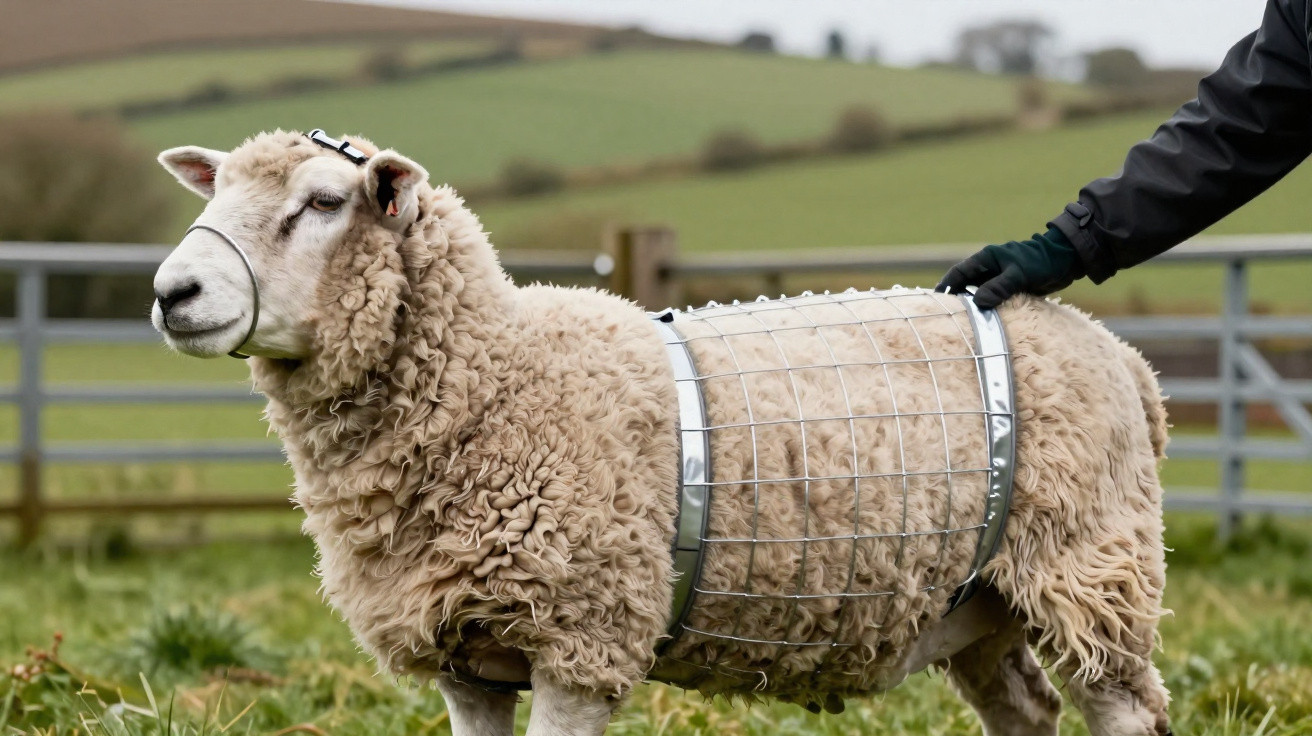
A sheep attacked by a large predator has little chance to escape, especially on open pasture. That is the everyday problem behind an Austrian concept for sheep armour: a flexible protective covering intended to make a bite harder to land while still allowing an animal to graze and move normally.
It is an eye-catching idea, but it should not be mistaken for a proven solution. Any item fitted to livestock must be judged first on welfare, handling and safety - and it cannot replace secure boundaries, regular checks and a grazing plan suited to the risks on the holding.
What this sheep armour concept is trying to achieve
The design described as sheep armour uses a flexible metal-mesh covering rather than a rigid shell. Its purpose is to protect vulnerable parts of the body and make it more difficult for a predator to grip the fleece or reach the skin with its teeth.
Some versions of the concept include raised metal elements protected by rubber or similar coverings. In principle, this could create an awkward surface for an attacking animal while avoiding exposed sharp points.
That distinction is important. A protective covering must not introduce a fresh hazard for the sheep, other animals or the person handling it. Any exposed wire, broken fastening or worn protective cap could turn an intended deterrent into an injury risk.
A device is only protective if it does not cause rubbing, overheating, snagging or restricted movement in everyday use.
The idea may be useful as a starting point for discussion in areas where wolves are present near grazing livestock. It is not, however, evidence that wearable armour has been independently shown to prevent attacks or to be suitable for long-term flock use.
Why it is more complicated than fitting a sheep rug
Ordinary sheep coats are generally used to keep fleece clean or provide limited weather protection. A predator-resistant covering faces a much tougher set of demands.
A sheep may need to run, climb, lie down, scratch, feed at a trough, move through gateways and press close to other animals. In wet, hilly or rough ground, anything worn on the body also has to withstand mud, rain, brambles and fencing.
For this sort of equipment to work safely, it would need to balance several requirements:
- Protection: it must cover areas at risk without slipping out of place.
- Freedom of movement: sheep need to graze, rise, lie down and turn their heads naturally.
- Low snag risk: mesh, straps and buckles must not catch on fencing, feeders or vegetation.
- Comfort: edges and contact points must not rub skin or compress fleece.
- Temperature control: a covering must not trap excessive heat, particularly in mild, still weather or during handling.
- Quick removal: it should be possible to take it off promptly if it twists, tears or causes distress.
Rainwater and mud can make a fitted item heavier. Damp fleece and trapped debris can also increase friction, even when a garment initially appears comfortable.
Welfare questions need answering before wider use
A calm demonstration or a short trial cannot establish that a wearable protective device is safe over days or weeks. Sheep may tolerate something briefly but develop problems after repeated movement, wet weather or close contact with the rest of the flock.
Proper assessment would need to look at more than whether an animal can walk while wearing the covering. Relevant checks would include:
- skin condition and signs of rubbing;
- fleece damage and trapped dirt;
- gait, posture and ability to lie down and stand up;
- feeding, grazing and drinking behaviour;
- heat stress during warm or humid conditions;
- entanglement risks around field equipment and vegetation;
- interactions with lambs and other sheep;
- suitability during pregnancy, lambing and transport.
The shoulders, withers, chest and flanks are common places for a poorly fitted item to cause friction. Problems may be harder to spot under thick fleece, which is why close inspection matters.
A patent, if one is sought, can protect an aspect of a design. It does not confirm that a product is effective, independently tested or appropriate for commercial farm use.
The UK context: deal with the risk on your own holding
There are no established wild wolf populations in the UK, so wolf-specific sheep armour is not a routine requirement for British flock owners. The broader principle still applies: livestock protection should be matched to the actual threat rather than the most dramatic one.
For UK sheep farmers, common concerns can include dogs worrying livestock, insecure fencing, stock escaping on to roads, theft, disturbance, and occasional predation of very young lambs. Wet conditions, difficult access and isolated grazing can also make routine monitoring harder.
Practical prevention often starts with unglamorous basics:
- inspect fences, gates and boundary weak points before turnout;
- maintain electric fencing properly where it is suitable and safe to use;
- move vulnerable stock to fields closer to buildings or regular footfall when practical;
- keep records of incidents, including photographs, dates and locations;
- report suspected livestock worrying by dogs promptly to the police;
- remind walkers to follow the Countryside Code and keep dogs under effective control;
- seek advice from a vet, agricultural adviser or sheep organisation when a problem is recurring.
In countries where large predators are established, measures such as well-maintained electric night pens, active shepherding and trained livestock guardian dogs may be used together. The most effective approach depends on terrain, flock size, local rules and the type of threat.
If you are considering wearable protection
Do not make a sheep covering from chain, fencing wire, workshop offcuts or improvised straps. Something that looks robust in a shed can become dangerous once an animal starts running, scratching or pushing through a hedge.
1. Identify the real problem
Record where and when incidents happen, which animals are affected and what signs are present. A recurring breach at one gate needs a different response from dogs entering a field from a public footpath.
2. Get informed advice
Speak to your vet and, where appropriate, an experienced sheep adviser before trying an unfamiliar garment, harness or deterrent. They can help you consider body condition, fleece length, skin health and handling arrangements.
3. Use only purpose-made equipment
Follow the maker’s fitting instructions exactly. Check that the product is intended for sheep of the relevant size and that all fastenings, padding and protective covers are undamaged.
4. Introduce it under close supervision
Watch how the sheep walks, grazes, lies down, feeds and mixes with the flock. Do not leave a newly fitted item in place for long periods simply because it looked acceptable at first.
5. Inspect at least twice a day
Check straps, edges, fleece contact points and signs of dampness, heat or trapped debris. Remove the equipment immediately if it slips, twists, rubs, catches or changes the animal’s behaviour.
The simplest measure that addresses the genuine risk is usually the best place to start.
Common mistakes to avoid
Assuming heavier means safer. Extra weight can affect movement and make heat management more difficult, particularly on hills or in warm weather.
Fitting equipment over wet or dirty fleece. Moisture, mud and burrs increase rubbing and may conceal developing skin damage.
Leaving a new device on without regular checks. Problems often emerge after rain, prolonged movement or close contact at feeders.
Using damaged components. Exposed wire, split rubber caps, broken clips and worn padding can injure sheep, dogs and handlers.
Treating a wearable as a substitute for fencing. An insecure boundary, damaged gate or poor electric-fence setup should be dealt with first.
Ignoring flock behaviour. Other sheep may nudge, mount, crowd or pull at unfamiliar equipment. A device that seems fine on one animal in isolation may not be safe in a group.
Safety notes for fitting and handling
Fit any structured covering in a calm, secure handling area, with enough competent people available for the job. Wear suitable gloves where metal parts are involved, and avoid handling difficult livestock alone or on unstable ground.
Before leaving an animal wearing equipment, check that it cannot catch on hurdles, troughs, feeders, electric fencing, trailer partitions or low branches. Do not use unfamiliar fitted equipment during transport unless its instructions specifically say it is suitable for that purpose.
Remove the item and seek veterinary advice if a sheep develops a wound, lameness, reduced appetite, unusual panting, isolation from the flock or any other sign of distress. Do not assume discomfort will settle on its own.
A creative concept, not a shortcut
The Austrian sheep-armour idea is a creative response to the challenge of protecting grazing animals where large predators are a real concern. Flexible mesh and protected raised elements aim to make an attack more difficult without encasing the animal in a rigid shell.
For now, it is best viewed as an early-stage concept that would need thorough welfare and field assessment. For British flock owners, the immediate lesson is more practical: assess the risk, strengthen fences and routines, monitor stock closely, and introduce unfamiliar equipment slowly and carefully. Good livestock protection is usually built from several sensible measures rather than one dramatic invention.






Comments
No comments yet. Be the first to comment!
Leave a Comment