
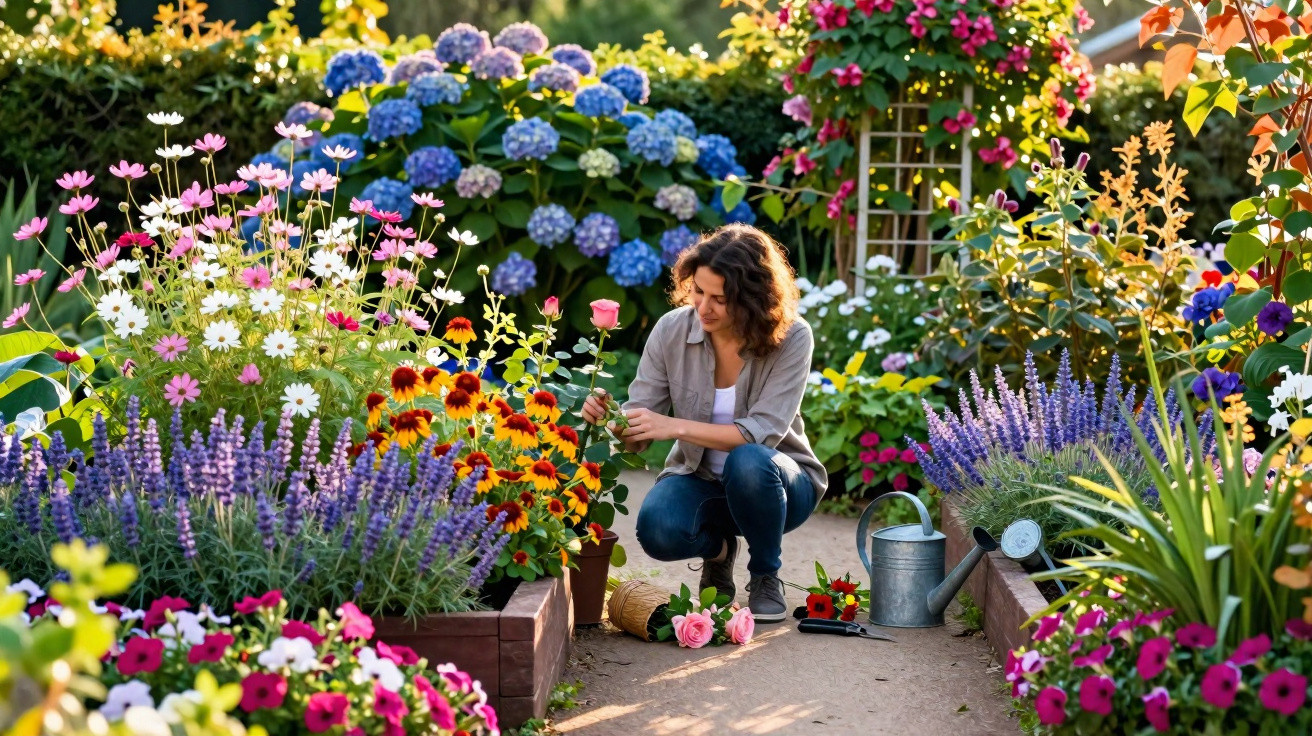
Plant once, marvel for months: choose the right varieties and your garden can flower almost continuously, from spring until the first frosts.
Many amateur gardeners face the same frustration: everything bursts into bloom in May, then the magic has faded by July. Carefully chosen long-flowering plants can smooth out these highs and lows. Combine a few hardy varieties and your beds, balconies and patios will stay vibrant for months, without needing a complete makeover every weekend.
Why long-flowering plants are so appealing
Plants with extended flowering periods reduce the workload while continually introducing fresh splashes of colour. Rather than buying trays full of annuals every season, opt for a blend of colourful annuals and dependable perennials that return year after year.
Long-flowering plants cut down on maintenance while extending the period in which your garden looks truly spectacular.
Annuals quickly create abundance and provide a fireworks-like display in pots and window boxes. Perennials, meanwhile, provide structure, gain strength each year and form the framework of the garden. Together, they create a lively scene that changes subtly throughout the season without ever looking bare.
The 5 annual stars for months of flowers
Annual plants get going as soon as temperatures are suitable. Give them the basics-sufficient nutrients, regular watering and a little pruning-and they will flower almost without interruption.
Mandevilla: a tropical climbing star
Mandevilla produces large, trumpet-shaped flowers in white, pink or vivid red. As a climber, it is ideal for pergolas, trellises or a simple obelisk in a container. It flowers from late spring well into autumn, provided the nights do not become too cold.
Choose a bright, warm position and free-draining compost. Regular feeding and preventing the compost from drying out completely will reward you with a lasting veil of colour.
Calibrachoa (Million Bells): a flower-filled ball for window boxes
Calibrachoa resembles miniature petunias and is an excellent choice for hanging baskets and balcony window boxes. It forms long, trailing shoots covered with countless small bell-shaped flowers.
One major benefit is that many varieties are virtually self-cleaning: spent flowers simply drop away. This saves time and keeps plants looking fresh for months, as long as they receive enough water and nutrients.
Petunia: the reliable balcony favourite
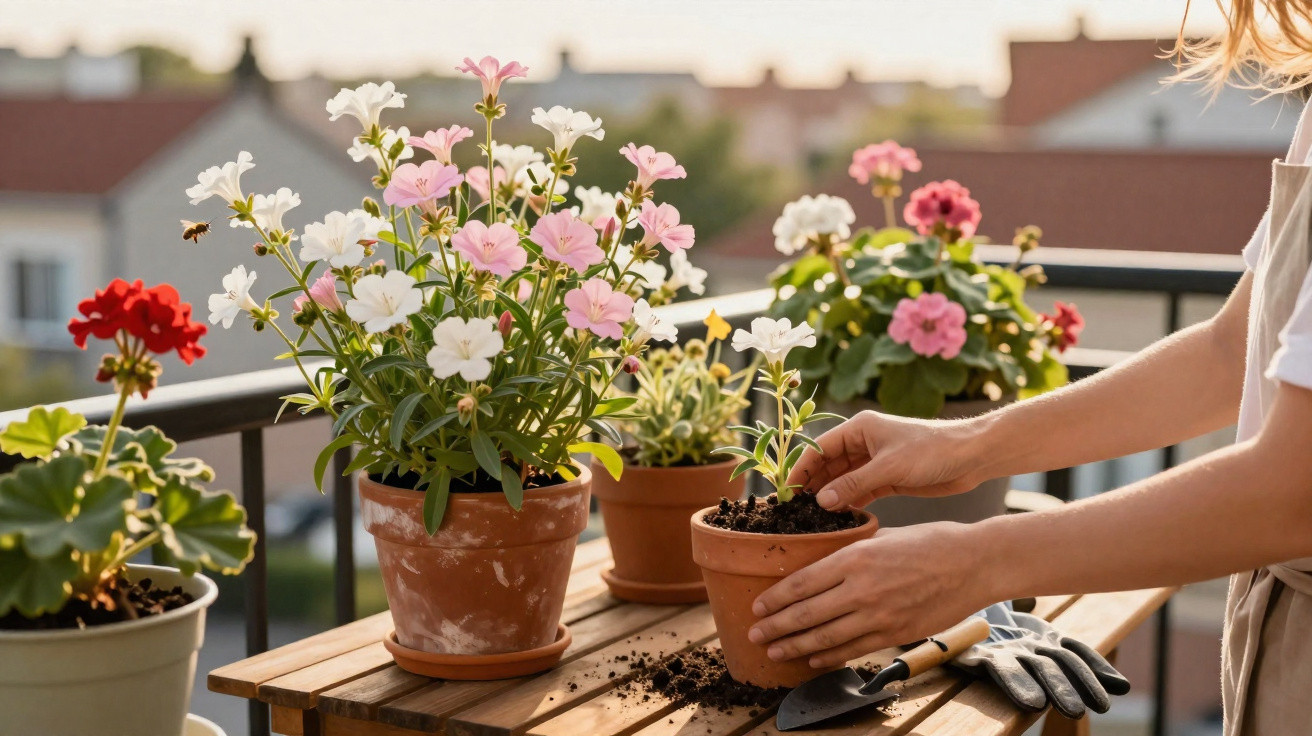
Petunias are a familiar feature of balconies. Trailing varieties in particular form dense curtains of blooms that last from early to late summer.
They thrive in full sun and rich compost. Removing faded blooms now and then, along with regular liquid feeding, helps prevent breaks in flowering. For windy locations, choose more compact varieties, as these are less delicate.
Cosmos: an airy cloud of flowers for beds
With their fine foliage and delicate, bowl-shaped blooms, cosmos brings a light touch to any bed. They grow quickly, reach 60 to 120 centimetres depending on the variety, and continue flowering into autumn.
They work well among robust perennials, where their airy stems fill gaps. A sunny site and moderately fertile soil are usually all they need.
Busy Lizzies for shady corners
Impatiens, commonly known as Busy Lizzies, are perfect for partially shaded and shaded places where other flowering plants struggle. Their bright blooms bring colour for months to dim garden corners, entrances and north-facing balconies.
They need consistently moist compost and are sensitive to intense midday sun. They generally perform particularly well in window boxes beneath a roof overhang.
Tip: Applying a balanced liquid fertiliser every 14 days keeps most annuals flowering continuously-and the results are visible within a few days.
The 6 perennials that set the rhythm each year
Perennials return after winter, often stronger than they were the year before. A selection of proven long-flowering varieties can create a reliable framework that keeps beds attractive for months.
Hydrangeas: flower balls with lasting autumn interest
Hydrangeas develop large flower heads whose colour often changes over the course of the season. They shape the garden not only in summer but also in autumn, when their blooms dry and remain decorative in the bed.
Depending on the species, they are happy in partial shade or sun. Consistently moist, humus-rich soil is essential; otherwise, they soon begin to droop.
Verbena: a long-lasting butterfly magnet
Tall verbenas add a contemporary touch with their upright, branching stems and small flower clusters. They attract numerous insects and cope fairly well with heat.
In a bed, their flower heads usually dance above lower-growing plants without obscuring them, making them ideal for mixed borders. Cutting them back after their first main flush can significantly prolong the flowering period.
Fragrant catmint (Nepeta)
Nepeta forms dense cushions of blue-purple flowers and is superb for bed edges or paths. Its foliage releases a pleasant scent as you walk past.
These plants tolerate drought and also cope with poor soil. A decisive cut-back after the first flowering often produces a second flush.
Gaillardia: sunshine colours for poor soil
Gaillardia, also called blanket flower, brings bold red and yellow tones to beds. It flowers from early summer into autumn and copes remarkably well with dry, nutrient-poor soil.
Regularly removing spent flowers keeps the plants producing continuously. Paired with grasses, they create warm late-summer scenes.
Gaura: butterfly flowers in constant motion
Gaura bears delicate, star-shaped flowers that resemble small butterflies. Its long, flexible stems sway in the breeze, adding movement to the bed.
It is undemanding, enjoys sun and needs free-draining soil. It looks especially at home in naturalistic planting schemes because of its relaxed rather than formal appearance.
Repeat-flowering roses: a classic guaranteed to return
Modern repeat-flowering roses continually produce fresh buds for months, from the first warm days until frost. Selecting varieties with strong disease resistance greatly reduces the need for sprays and the overall maintenance effort.
Annual pruning, thorough soil improvement and targeted feeds in spring and after the first flowering ensure a long season.
Simple ways to extend flowering even further
A few regular tasks can considerably lengthen the flowering period of many plants.
- Cut off faded flowers regularly to stop seed formation.
- Trim back perennials after their first wave of blooms.
- Water less frequently but thoroughly to encourage deep roots.
- Mulch the soil to retain moisture and reduce heat stress.
- Apply nitrogen fertiliser sparingly so plants do not produce foliage alone.
Removing wilted flowers consistently is especially important, as it directs a plant's energy into fresh buds rather than seed production. In many gardens, this simple task delivers more than expensive specialist fertilisers.
Example planting: a flowering focal point in two square metres
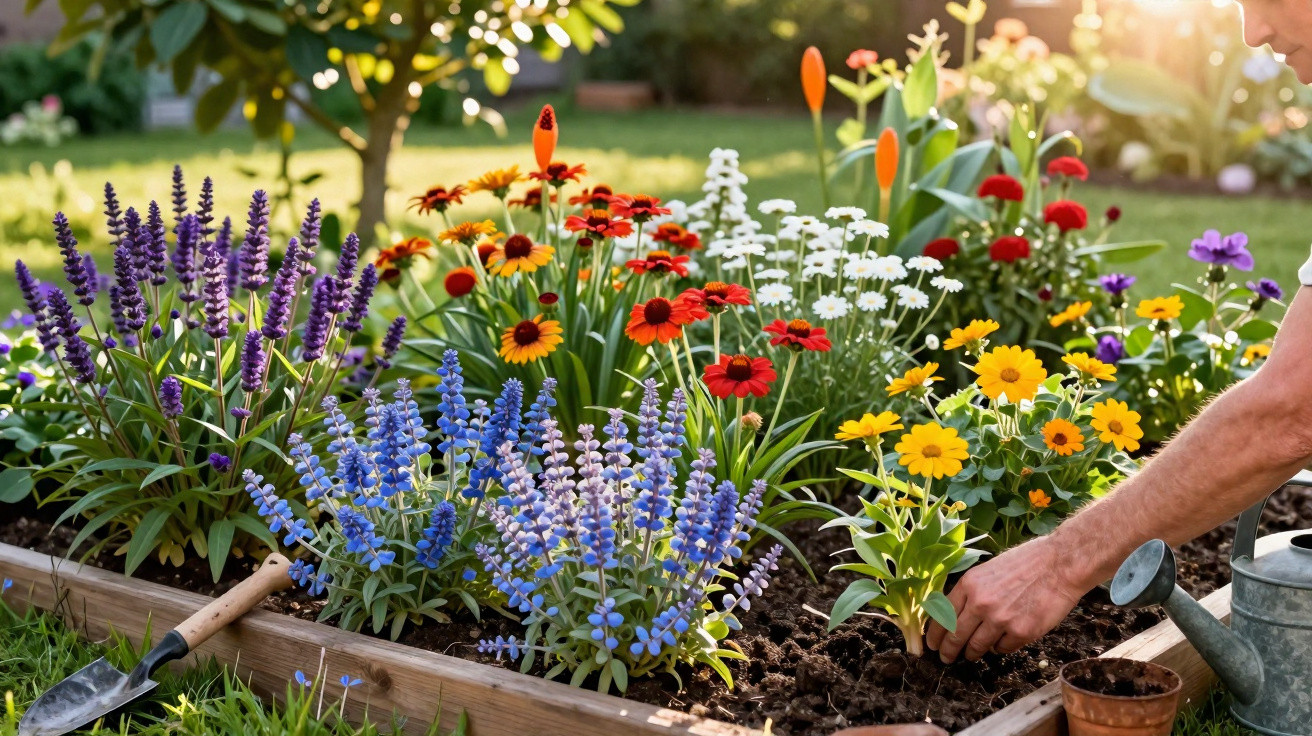
If you do not want to spend long planning, start with a straightforward combination that remains appealing from spring to autumn. For a bed of roughly two square metres, the following mix works well:
- 1 repeat-flowering rose as the centrepiece
- 3 gaura around the rose to add movement
- 5 Nepeta along the front edge for a soft border
- 6 calibrachoa in the front row or in adjoining window boxes for trailing colour
- 2 cosmos plants for extra height in open spots
This creates a clear arrangement: the rose acts as the focal point, surrounded by delicate, moving companions and framed by a blue ribbon of flowers. The annuals quickly fill spaces and provide abundance, while the perennials become more established each year.
How to avoid mistakes with long-flowering plants
Many difficulties arise not from “wrong” plants but from small issues in their care. Planting too densely encourages fungal diseases, particularly in roses and petunias. It is better to leave air between plants, even if the display appears slightly sparse in its first year.
Site selection is another key consideration. Long-flowering plants generally need plenty of light. Place sun-loving varieties in shady areas and you will often get leaves rather than flowers. Conversely, Busy Lizzies and hydrangeas suffer in harsh midday sun.
Practical guidance for beginners
If you are new to long-flowering plants, it is best to begin with resilient choices such as Nepeta, gaillardia and modern bed roses. They forgive minor mistakes and quickly demonstrate the impact that well-considered planting can achieve.
A garden diary can also be useful: record flowering times, feeding dates and maintenance tasks. This makes it possible to make targeted improvements the following year, for example by adding early- or late-flowering plants if there were gaps during the season.
Combining these plants with herbs such as sage or thyme is also worthwhile. They add structure and fragrance, attract pollinators and blend visually with many of the flowering plants listed above. With only a few changes, you can create a lively, low-maintenance garden that brings pleasure for many months.
Comments
No comments yet. Be the first to comment!
Leave a Comment