
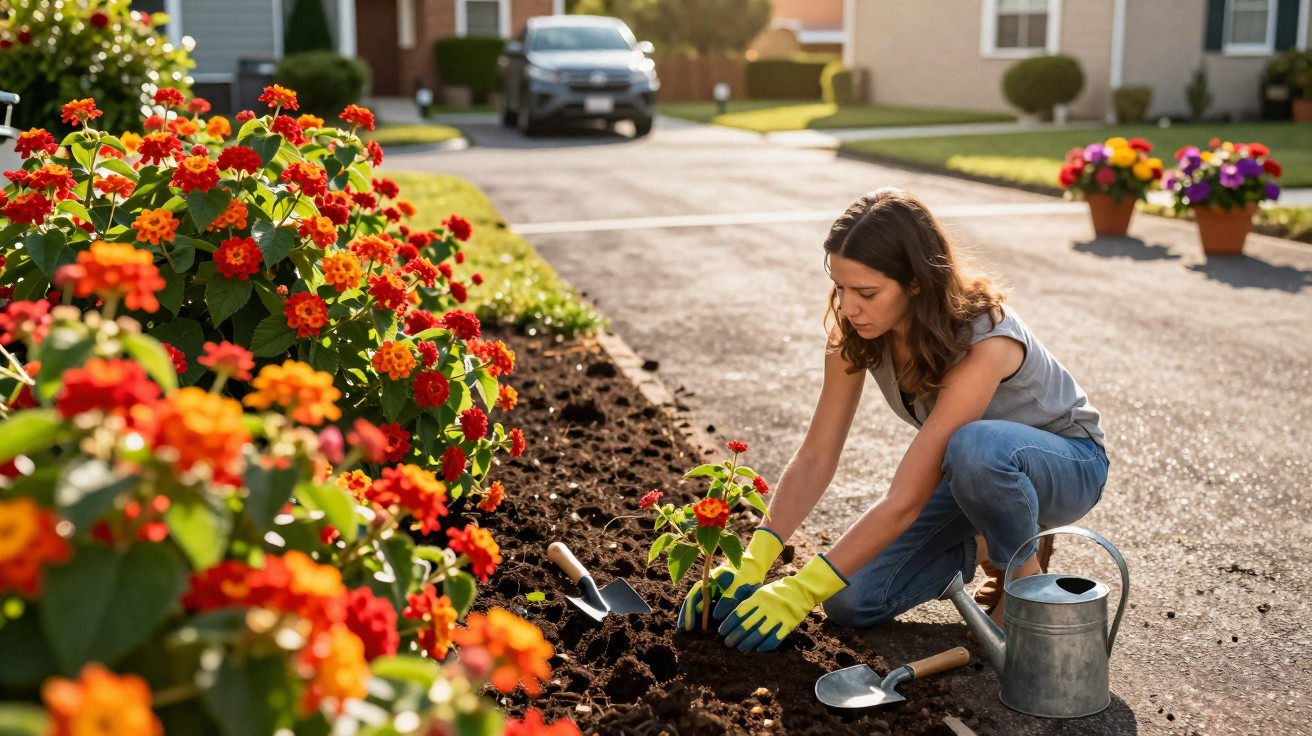
A small shrub with vivid red flowers offers the answer – and it actually thrives on heat and asphalt.
Most plants struggle at the edge of a driveway: scorching paving, exhaust fumes, car tyres and, in winter, potentially road salt. Yet this is precisely where a tough compact shrub excels. Its blazing flower clusters turn a drab border into a ribbon of colour while attracting bees and butterflies.
The fiery-red shrub that loves asphalt and heat
The star of the kerbside is Lantana camara ‘Hot Blooded’. Behind this technical name is a compact shrub from the verbena family, originating in warm climates and seeming almost to absorb sunlight. Its foliage is dark green, slightly rough-textured and aromatic. The real spectacle, however, comes from its flowers.
From May through to October, the plant continuously produces small flower heads that change colour. They begin golden yellow, shift to orange and finish in a deep, glowing red. All three shades can often be seen on the same shrub at once. Planted along a driveway, they create an uninterrupted, flickering strip of colour – like a living light bar beside the garage.
The shrub forms a dense, rounded cushion that sits like a red glowing pillow at the driveway edge – despite heat, drought and road salt.
At around 60 centimetres high and similarly wide, ‘Hot Blooded’ remains conveniently compact. It does not intrude too far into sightlines when reversing, obstruct car doors or spread uncontrollably. One crucial feature is that this cultivar is sterile, so it produces no viable seed. In other words, it will not self-seed through cracks and beds, as some garden plants beside driveways are prone to doing.
Why this Lantana variety is ideal for a driveway
The edge of a driveway is among the most demanding locations in a garden. Several stresses converge there: compacted soil, standing water after heavy rain, intense radiated heat in summer, car tyres, and sometimes grit or salt in winter. Many traditional border perennials quickly fail in such conditions.
Lantana ‘Hot Blooded’ has several qualities that make a real difference in this challenging spot:
- High heat tolerance: It withstands substantially higher temperatures than typical bedding plants.
- Drought resistance: Once established, it can manage for weeks without watering.
- Tolerates splashes of road salt: It copes with light salt exposure far more calmly than many perennials.
- Very long flowering period: It provides colour from late spring into autumn.
- Excellent insect attraction: It supplies abundant nectar for bees, butterflies and other pollinators.
- No spread by seed: The border remains neat and manageable.
There is another advantage for rural edge-of-town settings: deer generally avoid Lantana. Where other ornamental plants are stripped overnight, this shrub usually remains untouched. The driveway area therefore continues to look well kept.
The right position along the driveway
For ‘Hot Blooded’ to perform at its best, it needs one thing above all else: sunshine. At least six hours of direct sun each day are essential. A semi-shaded position greatly reduces its floral display and results in weak growth.
Its other site requirements also suit the typical conditions beside a driveway:
- Light, free-draining soil
- No persistent waterlogging after thunderstorms
- A planting layer that is as loose and uncompacted as possible
- Ideally, a gently sloping strip that allows water to drain away
Soil beside paving or asphalt is often compacted and sticky. Without preparation, there is a risk that the shrub will rot during its first winter. It is therefore worth putting in a little extra work at planting time.
How to plant a vibrant Lantana border
For a continuous but not overcrowded band of colour along the driveway, allow roughly 60 to 90 centimetres between individual plants. This gives the mounds room to meet without turning into an impenetrable thicket.
The following method works well:
- Dig a planting hole two to three times wider than the rootball.
- Loosen the soil at the base using a garden fork or spade.
- Improve heavy soil with grit, coarse sand or expanded clay.
- Position the plant so that the top of the rootball sits level with the surrounding soil surface.
- Water it in thoroughly to eliminate air pockets.
- Cover the soil with gravel or a coarse mineral mulch – it visually suits a driveway and improves drainage.
A mineral mulch such as gravel or grit not only complements the driveway surface, but also protects the roots and conserves water.
Seasonal care: little effort, strong impact
The first growing year is the most important stage. During this time, the shrub develops its root system. Particularly in its first hot summer, it needs regular watering whenever rain does not fall. Once established, however, ‘Hot Blooded’ proves remarkably undemanding.
A typical routine through an ordinary gardening year is as follows:
| Season | Care task |
|---|---|
| Spring | Prune, apply an initial feed, and check for frost damage |
| Summer | Water during prolonged dry spells and occasionally remove faded flowers |
| Autumn | Trim lightly, prepare winter protection and, where necessary, bring containers indoors |
| Winter | Depending on the region, prune back firmly and add a mulch layer, or overwinter frost-free in a pot |
In mild areas, such as sheltered urban locations, the rootstock may survive in the ground provided temperatures do not fall significantly below –8 degrees. Once the foliage dies back at 0 degrees, the plant may look bare, but it will shoot again in spring.
Pruning and overwintering Lantana ‘Hot Blooded’
In regions with relatively moderate winters, it is usually enough to cut plants back hard towards the end of winter. This prevents the shrub from becoming overly woody, keeps it compact and encourages fresh, free-flowering shoots.
In colder areas, there are two practical approaches:
- In a bed with protection: Cut the shoots back close to ground level and cover the root area with a thick layer of leaves, bark mulch or straw.
- In a pot by the driveway: Place the plants along the path throughout summer, then move them to a bright, unheated room in late autumn.
Anyone wanting to be especially cautious can use both approaches: plant some in the ground and keep others in pots. If an unusually harsh winter arrives, at least the container plants will remain.
Safety: a toxic beauty that requires gloves
As appealing as this red-flowering shrub may be, it is not entirely harmless. All parts of the plant are considered toxic to both people and pets. Children should therefore not be able to reach the colourful flowers and berries, while dogs and cats should ideally not play directly around the shrub.
When pruning and replanting, always wear gloves where possible – the plant sap can cause skin irritation.
Households with young children should position Lantana where nobody can easily reach into it, such as between a gravel area and the driveway edge. This preserves the effect along the driveway without the need to keep warning someone away.
Combinations and practical gardening tips
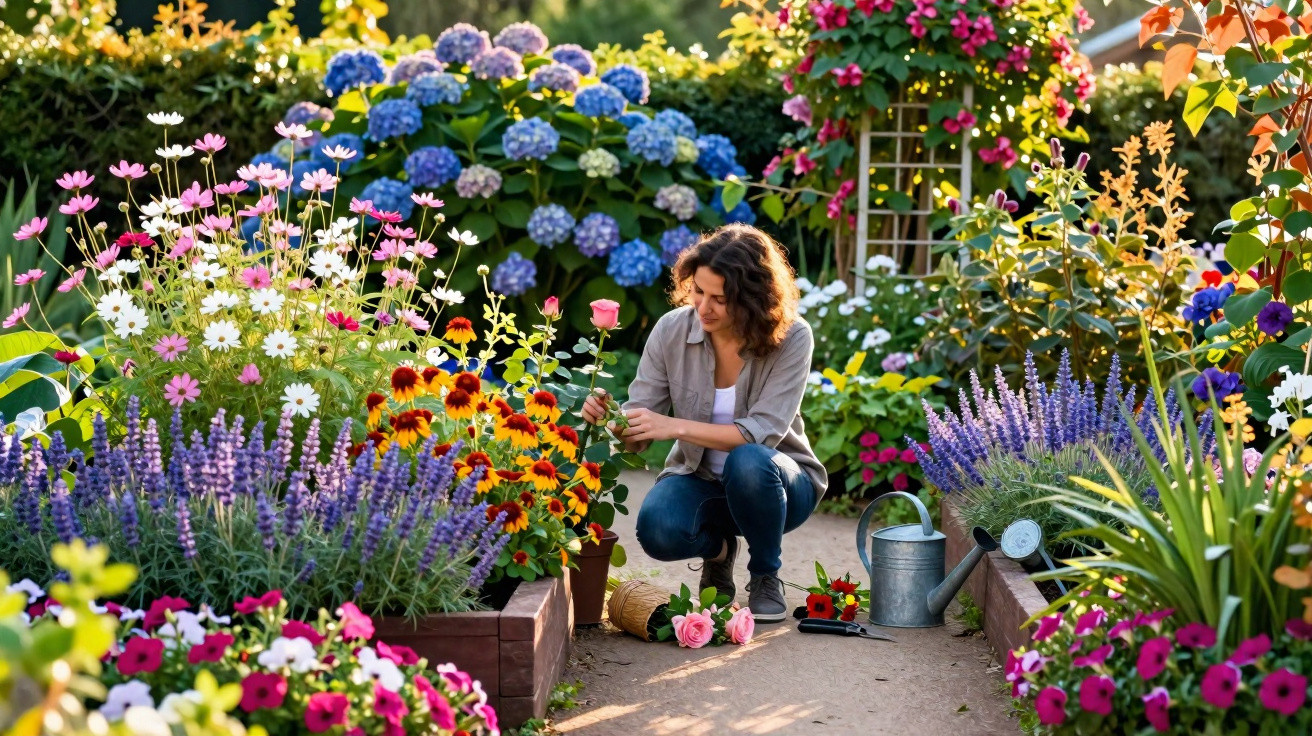
The vivid red flowers can hold their own alongside bold planting partners. In contemporary front gardens, ‘Hot Blooded’ pairs well with silvery foliage such as lamb’s ear or lavender, as well as grasses that soften the rigid border visually. In gravel gardens around a driveway, this creates a Mediterranean-style scene that needs almost no watering.
To strengthen its appeal to insects, plant low, flowering cushions such as catmint or small sage varieties between the Lantana plants. This ensures that nectar sources are available somewhere from spring until autumn, which is especially valuable in built-up residential areas.
For hobby gardeners with little time, this shrub also has a psychological benefit: the driveway still looks cared for even when the rest of the garden appears somewhat neglected. A radiant border attracts plenty of attention – and diverts it from the odd patch of weeds at the back.
Anyone already planning to redesign the driveway site can begin with a short trial section. If the result is positive, the planting can gradually be extended to create a complete border. With a manageable amount of effort, this produces a red, heat-resistant frame that catches the eye every day on arriving home.
Comments
No comments yet. Be the first to comment!
Leave a Comment