
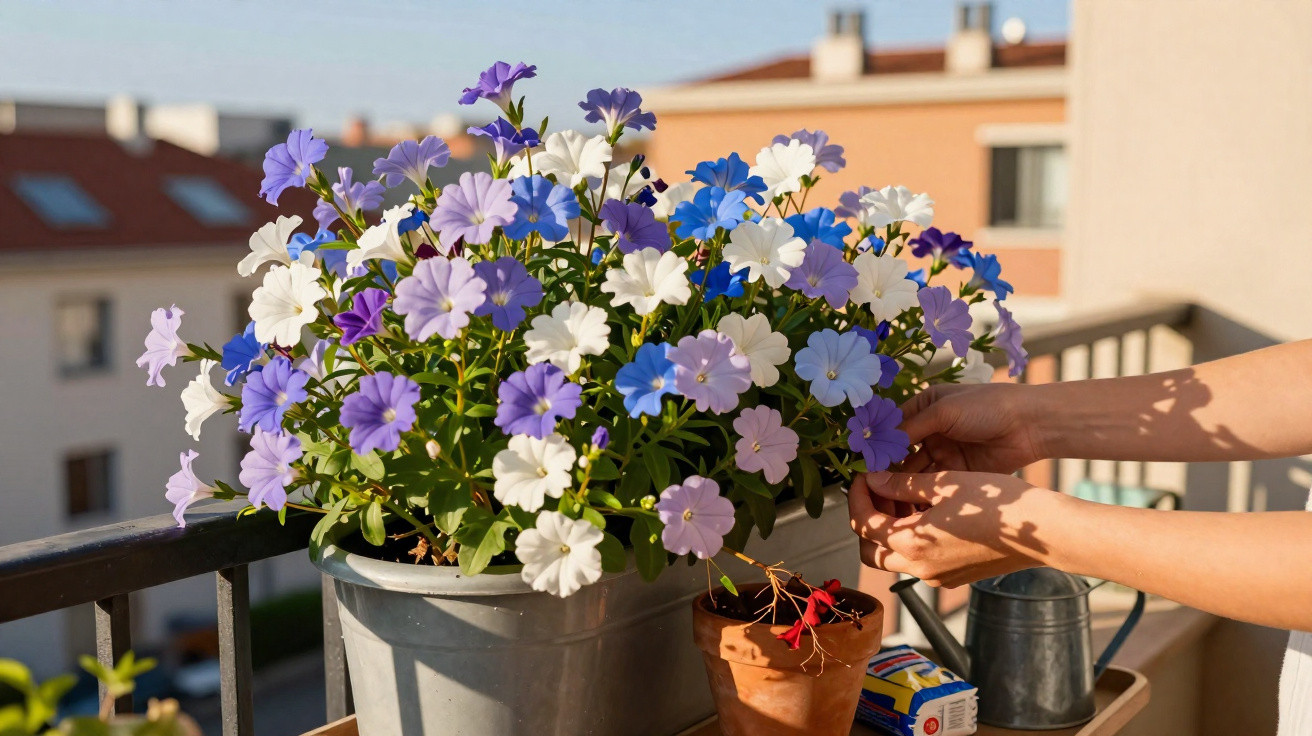
For decades, geraniums have been regarded as the undisputed number one choice for balconies and window boxes. Now, however, a continuously flowering plant from Australia is moving into the spotlight: the fan flower, botanically known as Scaevola aemula. Its blooms cascade over the edge like a floral waterfall, it copes with heat, needs little attention and is ideally suited to increasingly hot, dry summers.
The fan flower: why this new balcony favourite stands out
Native to Australia, the fan flower has become increasingly common in UK garden centres in recent years. It can often look inconspicuous among petunias and traditional summer bedding plants, yet gardeners who try it once generally continue growing it.
“The fan flower blooms almost continuously for up to half a year and tolerates care mistakes that would have left geraniums wilting long ago.”
In milder areas, flowering can begin as early as May and, with suitable care, continue until October. Five to six months of near-unbroken colour is impressive for a balcony plant and puts it on a level with the finest summer classics.
Its trailing habit is particularly distinctive. The shoots quickly develop into cascades measuring 30 to 50 centimetres long. In hanging baskets, on balcony railings or along window ledges, this creates a dense, slightly untamed curtain of flowers that looks noticeably more contemporary than many strictly upright varieties.
Perfect for south-facing balconies and hot summers
As heatwaves become more frequent across central Europe, many conventional balcony plants are reaching their limits. Scorched foliage, dried-up buds and daily watering are common problems - but this is precisely where the fan flower comes into its own.
It performs well in:
- temperatures well above 30°C
- short periods without watering
- full sun, including at midday
- dry urban winds on higher floors
Choosing drought-tolerant plants can noticeably reduce the water needed for window boxes. Urban greening trials have shown that selecting suitable plants can cut water use by around 30 per cent. This is where the fan flower shows its strengths: it keeps going when other plants have already wilted and does not need constant attention.
Another advantage is that its foliage stays remarkably fresh green even in intense sunshine, rather than developing the typically tired appearance associated with stressed geraniums.
Self-cleaning flowers without constant deadheading
Many balcony gardeners know the routine: to keep geraniums and other traditional favourites flowering, faded blooms need to be picked off regularly. Without the time or inclination to do this, it is easy to end up with a grey-brown graveyard of spent flowers.
“The fan flower is considered ‘self-cleaning’ - faded blooms disappear almost unnoticed while fresh buds continually emerge.”
The plant continually produces new flower buds while old blooms simply dry out and either fall away discreetly or are hidden by the growing shoots. Heavy pruning and daily deadheading are unnecessary.
For a dense display that flowers throughout summer, it normally needs only:
- regular but moderate watering
- liquid fertiliser every 10 to 15 days
- a loose, well-drained growing medium
Modern cultivated fan flower varieties produce considerably more flowers than the original wild forms while remaining more compact. In window boxes, the result can quickly resemble professional planting with very little effort.
Planting fan flowers in spring for a floral waterfall
Anyone wanting a balcony full of fan flowers in summer 2026 should time their planting carefully. In mild areas, plants can go outdoors from April; elsewhere, it is better to wait until after the final night frosts. Fan flowers cannot tolerate frost at all: temperatures below 0°C quickly damage them, which is why they are usually grown as annual summer bedding plants in the UK.
Choosing the right pot and compost
Fan flowers need enough room for their roots to establish well.
- Allow for a pot depth of at least 20 centimetres.
- Add a drainage layer at the bottom, using expanded clay pellets or gravel, for example.
- Use good-quality, structurally stable compost for flowering plants.
- Leave 25 to 30 centimetres between individual plants.
Planting too closely may make a container look full more quickly at first, but it also increases the risk of waterlogging and root competition. With slightly wider spacing, the flowering cascade develops by itself within a few weeks.
Position, watering and feeding: the key rules
Fan flowers thrive in sunshine. A south- or west-facing balcony is ideal, provided the pot is not allowed to dry out completely. Daily watering is often required at the height of summer, although the plant copes with short dry spells better than many rivals.
Balcony owners should pay particular attention to the following:
| Aspect | Recommendation |
|---|---|
| Light | Full sun to bright partial shade; a south-facing balcony is ideal |
| Water | Keep evenly moist; avoid waterlogging; brief dry spells are acceptable |
| Fertiliser | Liquid fertiliser for flowering plants every 10–15 days |
| Temperature | Heat-loving, not frost-hardy and distinctly heat-tolerant |
For particularly windy balconies, use heavy pots or secure window boxes firmly. The shoots themselves cope surprisingly well with wind, as they are flexible and rarely snap.
Colours, combinations and planting ideas
Fan flowers are most often available in blue and violet shades, although white and delicate pink tones are now also available. Their semicircular petals genuinely resemble small fans, which is where their common name comes from.
They become especially effective in mixed plantings. Combinations that work particularly well include:
- trailing verbena varieties in pink or red
- yellow-flowered bidens for bold contrast
- calibrachoa, also called mini petunias, in pastel shades
- silvery foliage such as helichrysum to add structure
Such arrangements quickly create a dense, multicoloured cloud of flowers like those otherwise seen only in professionally planted hanging baskets. The fan flower often acts as the frame, spilling over the pot edge and visually tying the whole display together.
Who should replace geraniums with fan flowers?
The fan flower is particularly suited to balcony owners who want abundant blooms without reaching for the secateurs every day. Its resilient character benefits anyone who is away for weekends more often or has little time to look after their containers during everyday life.
It also fits naturally into densely built-up towns and cities, where balconies serve as miniature gardens: it flowers for a long time, has a comparatively lower water requirement and offers a modern, gently wild appearance. Anyone who is unsure does not need to abandon geraniums entirely - planting one window box with fan flowers as a trial quickly reveals whether this new trend is convincing.
Of interest to plant enthusiasts, fan flowers can theoretically be propagated from cuttings, although this requires some experience. Most home gardeners buy fresh young plants from the garden centre each year. When heavily affected by aphids or other pests, the plant generally proves tougher than many traditional summer bloomers, but it is still sensitive to prolonged waterlogging. Effective drainage therefore remains essential.
Anyone looking to adapt their balcony planting to climate change over the long term should make fan flowers a permanent part of the selection: heat-resistant, low-maintenance and visually striking - qualities that could genuinely challenge the geranium’s status in 2026.

Comments
No comments yet. Be the first to comment!
Leave a Comment