
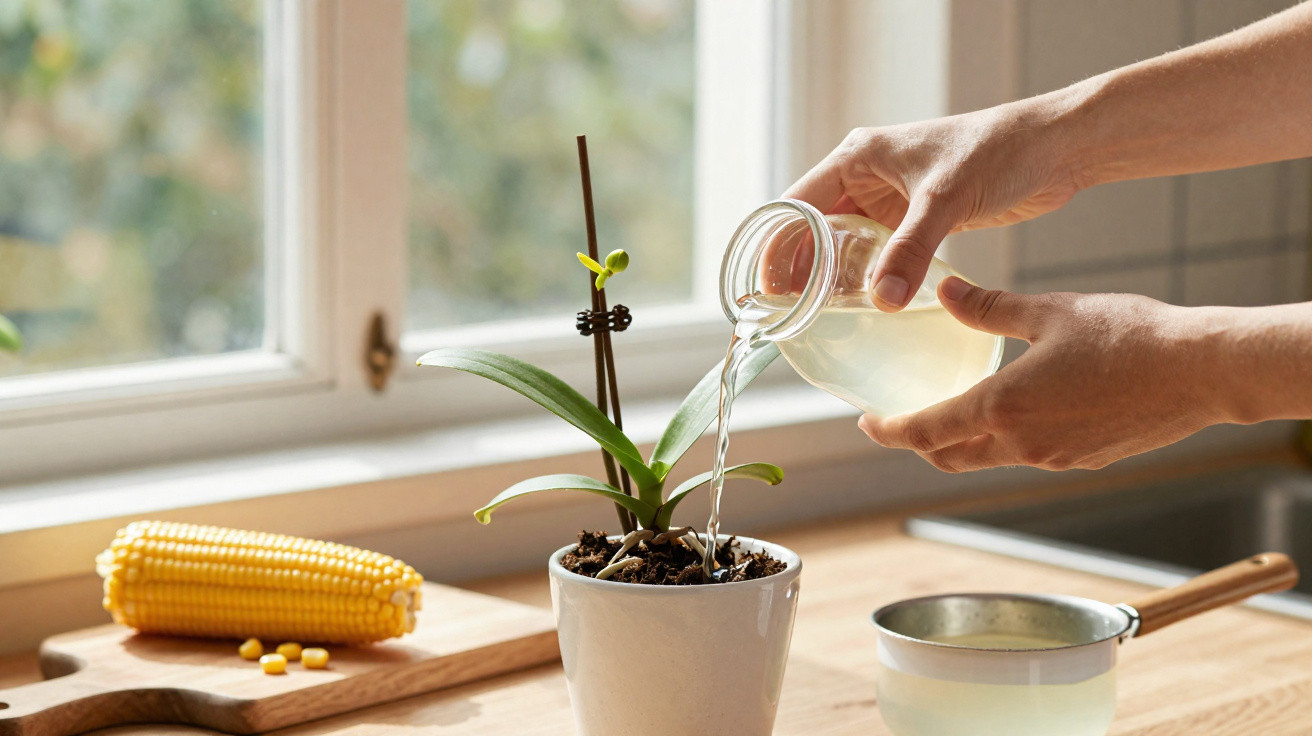
A humble kitchen leftover can, surprisingly, breathe new life into certain plants.
Rather than buying pricey specialist feeds or giving up and binning a struggling plant, more and more hobby gardeners are turning to something that often ends up in the saucepan anyway: cooked maize and its unsalted cooking water. Used correctly, this home-made feed can help strengthen weakened orchids and noticeably improve their chances of flowering again.
Before you reach for maize: is the orchid actually salvageable?
The most important step comes before any “miracle” trick: check whether the plant is still alive enough to recover. Orchids can look dead very quickly, even when they’re simply resting.
Your best clue is the root system. If the orchid is in a clear pot, you can often assess the roots just by looking through the sides. With opaque pots, gently lift the plant out to inspect it properly.
- Healthy roots: green or silvery-grey, firm, with no rotten smell.
- Concerning roots: brown, mushy, hollow, or smelling of rot.
If most roots look healthy, the orchid is usually just in a dormant phase. That’s when patience pays off - and it’s also where the maize approach can be useful.
If the roots are brown and slimy, the plant needs an emergency reset first: remove the old growing medium, trim away rotten roots with clean scissors, and repot into fresh, very coarse orchid compost. Phalaenopsis and similar types prefer a bright position without harsh midday sun, plus a day–night temperature difference of around 4–6 °C, which can encourage flower formation.
First, get the roots and the position right - only then does a gentle feed such as maize water have any real chance of making a difference.
Maize as fertiliser: a gentle boost, not a magic potion
In recent months, a simple idea has been doing the rounds in gardening forums: the water left from boiling unsalted maize - or finely blended maize mixed with water - is said to perk up tired orchids. There’s no magic behind it; the logic is fairly straightforward.
When maize is boiled, starch and some sugars leach from the kernels into the water. These substances can serve as food for small microorganisms living in the orchid compost. If that microbial activity increases, roots often function more effectively: they can take up water and nutrients more efficiently, and the plant may look more vigorous.
There’s very little laboratory evidence so far, but many hobby growers report visible changes, such as stronger roots, firmer leaves, and quicker emergence of new growing tips.
How to prepare the maize fertiliser properly
You don’t need much for a small batch - leftovers from lunch are often enough:
- Boil 100 grams of maize kernels in 1 litre of unsalted water until cooked.
- Leave it to cool.
- Blend the maize together with the cooking water until smooth.
- Strain through a very fine sieve or cloth so no bits remain to lodge in the compost.
- Let the liquid cool completely.
Application is intentionally conservative:
- Lightly moisten the orchid compost (damp, not soaking).
- Add 1–2 teaspoons of the maize solution onto the surface.
- Repeat only every 3–4 weeks.
Any leftover liquid can be kept in the fridge for a maximum of 24 hours. After that it spoils easily and may start to ferment - at which point it should be discarded.
In this case, less really is more: too much maize water clogs the compost and can harm the plant faster than it helps.
Why this method can work
Maize contains starch, sugar and small amounts of minerals. For the orchid itself, these substances aren’t especially useful in this form - but they can matter to the unseen life in the pot.
Orchid compost can host bacteria and fungi that break down organic matter. If they’re “fed” in moderation, you may get a livelier micro-ecosystem that makes nutrients more available. At the same time, well-supported roots are more likely to initiate fresh growth.
| Effect in the compost | Impact on the orchid |
|---|---|
| Increased microorganism activity | Improved nutrient uptake via the roots |
| Small energy nudge from sugars | Stronger root growth |
| Mild, organic action | Lower risk of overfeeding |
What remains crucial: the maize approach is not a substitute for the right position, the right compost, or correct watering. It’s better viewed as a gentle extra push once the fundamentals are in place.
How long until it flowers again?
Most orchids don’t respond with blooms straight away. Instead, they tend to show quiet signs first. Many hobby growers report initial positive changes after roughly three weeks:
- Roots turn a juicy green once they take up water.
- New root tips appear along the sides of older roots.
- Leaves feel firmer and look less limp.
Flower spikes usually take longer. Depending on the season, variety and overall condition, it can take several weeks to a few months. In cooler months many Phalaenopsis take time to get going, while in spring and early summer they often respond more quickly.
Maize water is support, not a guarantee: even with ideal care, the plant decides when it will bloom again.
When you should stop using maize immediately
As helpful as the trick can be, it has clear limits. Take these warning signs seriously:
- The compost becomes slimy or sticky: stop using maize water at once and keep the orchid drier.
- A sour, fermenting smell from the pot: rot risk - repotting is usually the safer option.
- Leaves turn yellow and soft despite not overwatering: check the roots and remove any rotten material.
One absolute no-go is salted cooking water. Salt damages roots and dries them out. It’s also risky to soak the entire pot with maize solution: waterlogging plus organic matter is a perfect recipe for rot-causing organisms.
How to help the effect along
For the orchid to make use of this small boost, the basics need to be right:
- Light: bright but not harsh midday sun - east- or west-facing windows are ideal.
- Watering: only water once the compost has almost completely dried out.
- Humidity: slightly raised, but avoid permanently wet leaf joints.
- Accept resting phases: some types flower only once a year, and even the best trick won’t change that.
If you already use a mineral liquid feed, don’t combine it randomly with maize water. Start with one approach and watch how the plant reacts. If the orchid looks stressed, reduce feeding and prioritise good light and healthy, clean roots.
When it’s especially worth trying maize
Home-made maize fertiliser is best suited to plants that still have green or silvery roots but are clearly flagging. Typical situations include:
- The orchid has dropped all flowers and looks “empty”.
- Leaves droop slightly and feel soft, without the roots being completely rotten.
- The plant has shown no growth for months even though its position and watering routine are correct.
Especially with supermarket orchids that crash after an abundant first flowering, a gentle organic nudge can be more sensible than a strong chemical fertiliser. This is where the maize trick works best - as a mild recovery programme.
If you like using kitchen leftovers in the garden, keep in mind that not every scrap is suitable for orchids. Coffee, tea, banana skins or protein-heavy broths can quickly turn the compost sour. Cooked, unsalted maize is comparatively well tolerated - as long as the dose stays low and the compost remains loose and well aerated.


Comments
No comments yet. Be the first to comment!
Leave a Comment