
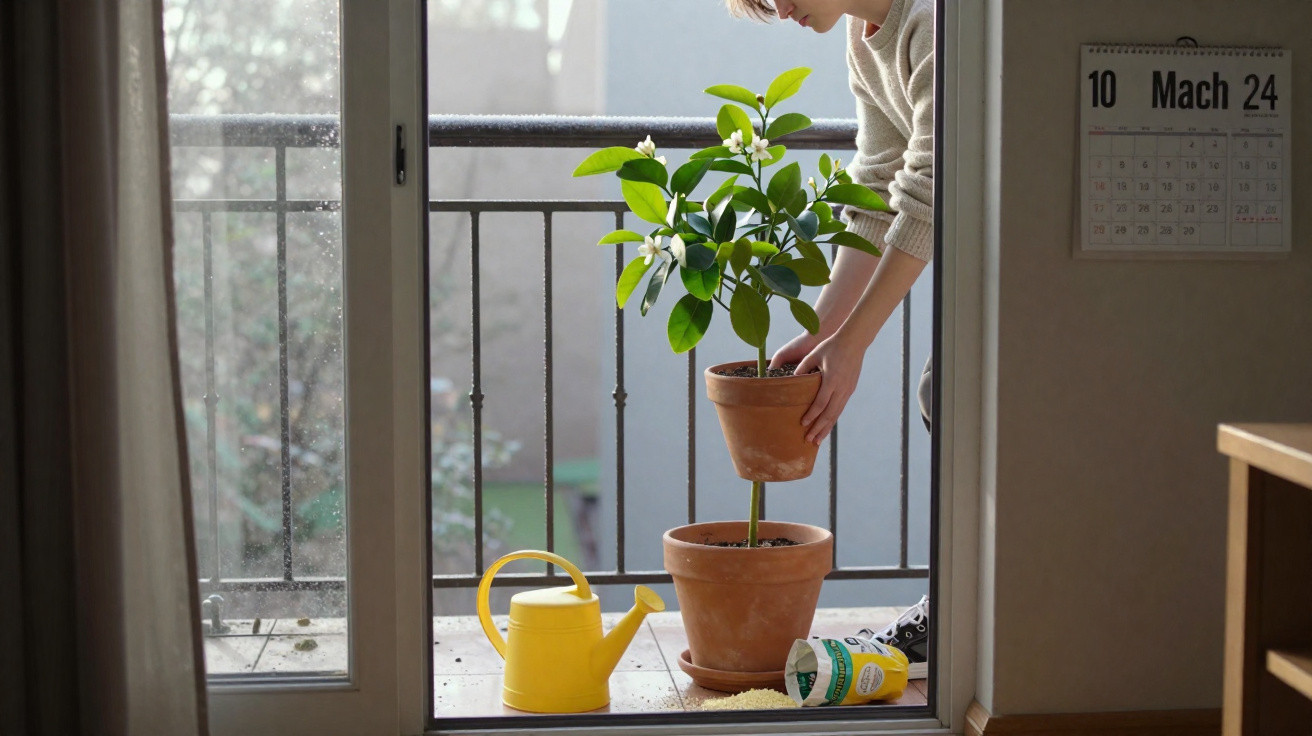
A potted lemon tree can look full of vigour: buds start to swell and, out on the balcony, it suddenly feels like spring has arrived. Right at this point, two classic mistakes are made - and they can freeze the blossoms, damage the roots and, in the worst case, wipe out the entire crop. If you read the warning signs correctly, both problems are easy to avoid.
False spring in March: why the potted lemon tree is so at risk right now
March is the month that tempts gardeners into a trap. During the day, the thermometer can show 15 to 18°C, the sun warms your face and hands, and winter seems finished. At night, it is a different story: in many areas, temperatures still drop well into single figures, and short frosty spells are entirely normal.
For Citrus limon - the classic lemon tree grown in a container - these swings are risky. Its overwintering spot is often kept at around 5 to 10°C. If strong sunshine suddenly arrives, sap flow starts again and fresh shoots and flower buds push forward. The plant effectively “assumes” summer is beginning.
"The contradiction between warm days and cold nights stresses the lemon tree at exactly the stage when the harvest for March and April is decided."
If you act too hastily now, you put the tree into a situation where it can neither protect itself properly nor grow with confidence - and that can show within just a few nights.
The one disastrous decision: putting it outside too early
The most common mistake is simple: after the first sunny weekend, the pot is moved out permanently to the balcony or patio - and then left outside overnight as well. At first the tree seems fine, the air feels fresh, and the risk is underestimated.
The woody framework of an established lemon tree can tolerate short dips to about -2 to -3°C. The vulnerable parts are elsewhere:
- fresh buds can react even just above freezing
- blossoms cope with only a few degrees above 0°C
- tiny young fruitlets are extremely sensitive to frost
Even one night with a slight risk of ground frost can be enough for flowers to turn black and drop. Balconies in built-up areas often give a false sense of security because walls and glass façades feel protective. The air may seem milder, but radiative cooling can still chill the plant’s surface sharply.
A typical picture after such a March night: the flower buds feel soft at first, then within a few days they turn brown and dry. Those buds would otherwise have produced the year’s first lemons.
Too much water, pot still cold: the second major mistake
At the same time, another misconception often appears: you switch straight back to a “summer routine” and water generously because the sun is stronger. The issue is in the pot. The compost is still cold, the roots are effectively in winter mode and absorb very little water.
What early, frequent watering in March can lead to:
- compost staying constantly wet and cold
- root tips dying back through lack of oxygen
- fungal problems such as root rot finding ideal conditions
- leaves yellowing and dropping, leaving the tree looking “sulky”
"The most important rule in late winter: push your finger 5 centimetres into the compost - only water if it is genuinely dry down there."
In an overwintering spot, a thorough watering every two weeks is usually enough. Water must never be left sitting in the saucer long-term. An early “downpour from the watering can” into cold compost causes more harm than good.
What is really happening inside the plant
In March, the lemon tree is forced into a biological balancing act. On bright afternoons at 16 to 18°C, the plant ramps up photosynthesis and new shoots fill with sap. If the temperature then drops at night to 2 to 3°C, metabolism is abruptly throttled back.
The internal consequence: in the delicate cells of fresh buds, water expands as it gets colder, cell walls rupture and tissue is damaged. From the outside, the blossom may look normal at first, but after one or two days it darkens and falls. The formation of fruitlets - the shift from flower to a tiny lemon - is interrupted.
The root zone can be just as critical. If the pot sits directly on a cold stone floor, the entire root ball cools down. Cold, stagnant water drives oxygen out of the pore spaces in the compost. That is the perfect stage for rot-causing fungi.
A simple but effective trick is to raise the container onto wooden battens or a couple of bricks. Just 2 to 3°C extra at root level can make a remarkable difference.
When the lemon tree really can go outside
The right moment depends heavily on your region, but a few clear rules still apply:
- Nights should remain stable at at least 5°C.
- That threshold should be met for at least ten days in a row.
- The forecast trend must not show another cold front bringing ground frost.
In many parts of Germany, that traditionally points to the period after the “Ice Saints” in mid-May. In very mild areas, lemon trees can sometimes move outside permanently from early or mid-April, provided night temperatures stay consistently above zero.
A gradual approach works best:
- Week 1: outside in a sheltered spot by day, back to the overwintering place at night
- Week 2: outside into the late evening too, only bring it in if frost is forecast
- once nights are reliably above zero: leave it out full-time
"The softer the transition, the lower the stress for leaves, flowers and roots - and the safer the harvest."
Watering and feeding plan for strong flowers and fruit
As you move the plant out of winter, container care also shifts. A straightforward schedule:
- March: water sparingly, only when the compost is dry; avoid waterlogging
- April: increase slowly, especially on warm days; do not let the pot dry out completely
- once nights are steadily warm: a summer rhythm; in very warm weather, check every one to two days
Feed matters for citrus. A dedicated citrus fertiliser provides the right balance of nitrogen, potassium and trace elements such as iron. The ideal feeding window runs from March to September. Add one dose to the watering can every two weeks once the tree is clearly growing again and carrying plenty of leaves.
Between March and May, a light prune is also worthwhile. Remove:
- dead or blackened branches
- inward-growing shoots that make the crown too dense
- very long, thin water shoots without flower buds
Spotting typical damage and correcting course early
If you keep a close eye on your lemon tree, you can catch stress signals early. Examples include:
| Symptom | Likely cause | Action |
|---|---|---|
| Leaves drop shortly after a cold night | sudden temperature drop, cold shock | move the tree to a more sheltered position, acclimatise it to outdoor conditions more slowly |
| Flowers turn brown and dry | light frost or strong temperature fluctuations | bring it in at night during uncertain weather, wait for warmer nights |
| Yellow leaves with constantly damp compost | root trouble, too wet | reduce watering, eliminate waterlogging, repot if necessary |
| Pale leaves with green veins | nutrient deficiency, often iron | use citrus fertiliser, check the compost pH |
How beginners often underestimate the danger of late frosts
Especially if you are new to lemon trees, it is easy to judge the season by how warm it feels to you: if you can sit on the balcony in a T-shirt, surely frost has gone. Weather data tells a different story. On clear nights, the air near the ground can cool far more than a thermometer fixed to a wall suggests.
The riskiest nights are those with a cloudless sky after a warm day. Stored warmth escapes quickly and the surface of the pot cools fast. A small sensor, or checking the overnight temperature curve from a local weather station, gives a much better guide than how mild it feels when you open a window in the evening.
More protection tricks for the lemon harvest
If you want extra security, simple aids can help. A plant caddy makes it easy to roll the tree to a house wall in the evening. Fleece covers create a small buffer against unexpectedly cold nights. Your choice of position matters too: a spot with morning sun rather than evening sun significantly reduces temperature stress.
This caution pays off especially with younger trees that are aiming for their first or second crop. The canopy is not yet dense enough to soften extremes, and the root ball in a pot can dry out faster - or cool down more - than you expect. If you plan defensively here, you are often rewarded with aromatic fruit from late summer onwards.
Many principles described here also apply to other sensitive container plants such as kumquats, mandarins or olives. In spring, they tend to respond less to daytime warmth than to the critically cold hours just before sunrise. If you follow a clear weather-and-watering routine for your lemon tree, you also establish a solid baseline for an entire collection of Mediterranean container plants.





Comments
No comments yet. Be the first to comment!
Leave a Comment