
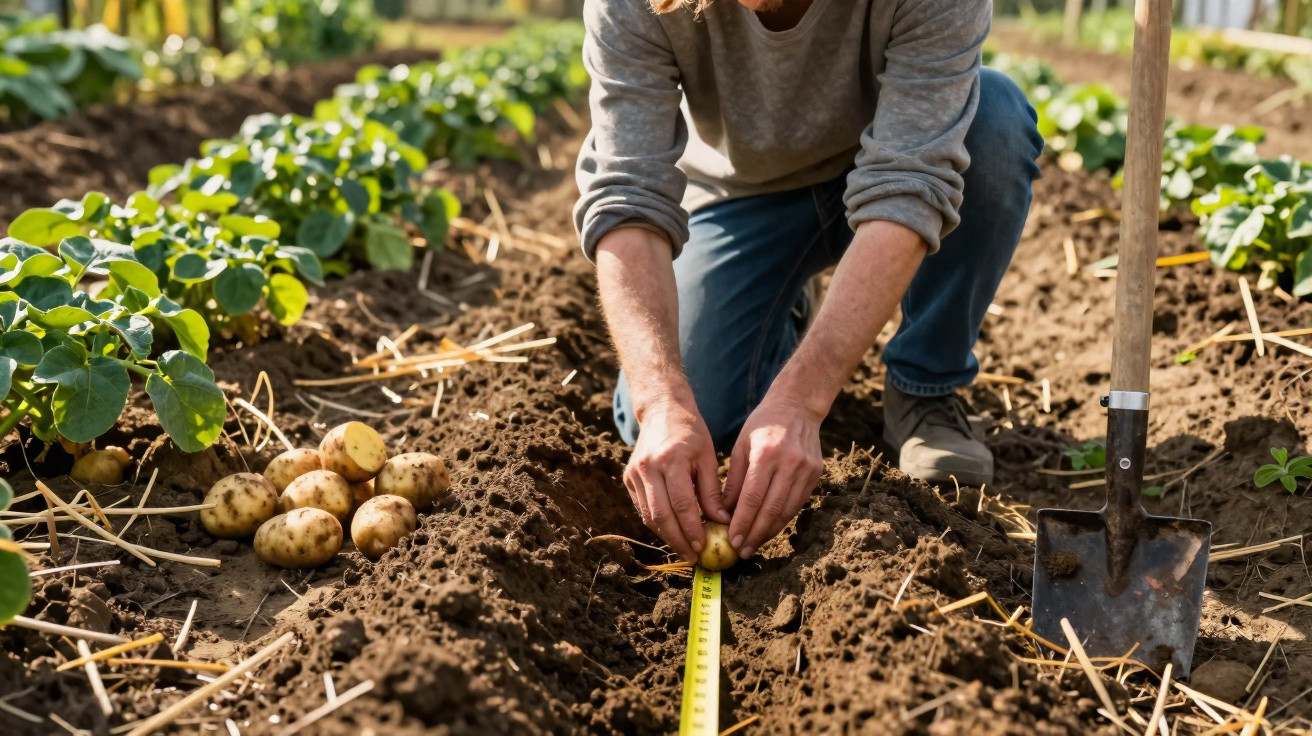
In a vegetable garden, it’s rarely the trendy variety or the priciest specialist granules that decide whether you end up with brimming crates. More often, it comes down to one straightforward point: how deep do the seed potatoes actually go into the soil? Get it wrong by a few centimetres and you invite weak shoots, green tubers, or rot. Get it right and you’re rewarded with thick rows and hefty potatoes.
The ideal planting depth: the hidden lever for higher yields
A potato is essentially a compact store of energy that has to generate new roots, stems and tubers. To do that well, it needs a protective layer of soil above it - not too much, not too little.
"As a rule of thumb: potatoes go under 10 to 15 centimetres of soil - and what happens down there determines how quickly and healthily the plants get going."
At this depth, the tubers are shielded from light, are less likely to freeze through, and still sit warm enough for the shoots to push upwards promptly. Just as important is well-aerated ground: loosen the soil to about 15 to 20 centimetres deep, place the tubers into the furrow, and position the “eyes” upwards.
What if you miss the mark by a long way?
- Too deep: the shoots have to force their way through a thick layer of soil, which costs energy and time. The plants stay weaker for longer, and that holds back yield.
- Too shallow: the tubers sit closer to frost and sun. They can dry out, turn green, or be damaged early on.
So the supposedly dull question of depth ends up deciding pace, plant health and, ultimately, how much lands in the harvest crate.
Soil type: why clay needs something different from sand
Does the same depth work for every garden? Not entirely. Your soil’s structure makes a clear difference.
Heavy, clay-rich soils
Anyone dealing with lumpy, heavy garden soil will know the familiar issues: water lingers, the surface silts up quickly, and in spring everything dries only slowly. In these conditions, potatoes are at risk of rotting if they sit too deep and too wet.
What to focus on:
- Before planting, loosen the soil thoroughly and break up large clods.
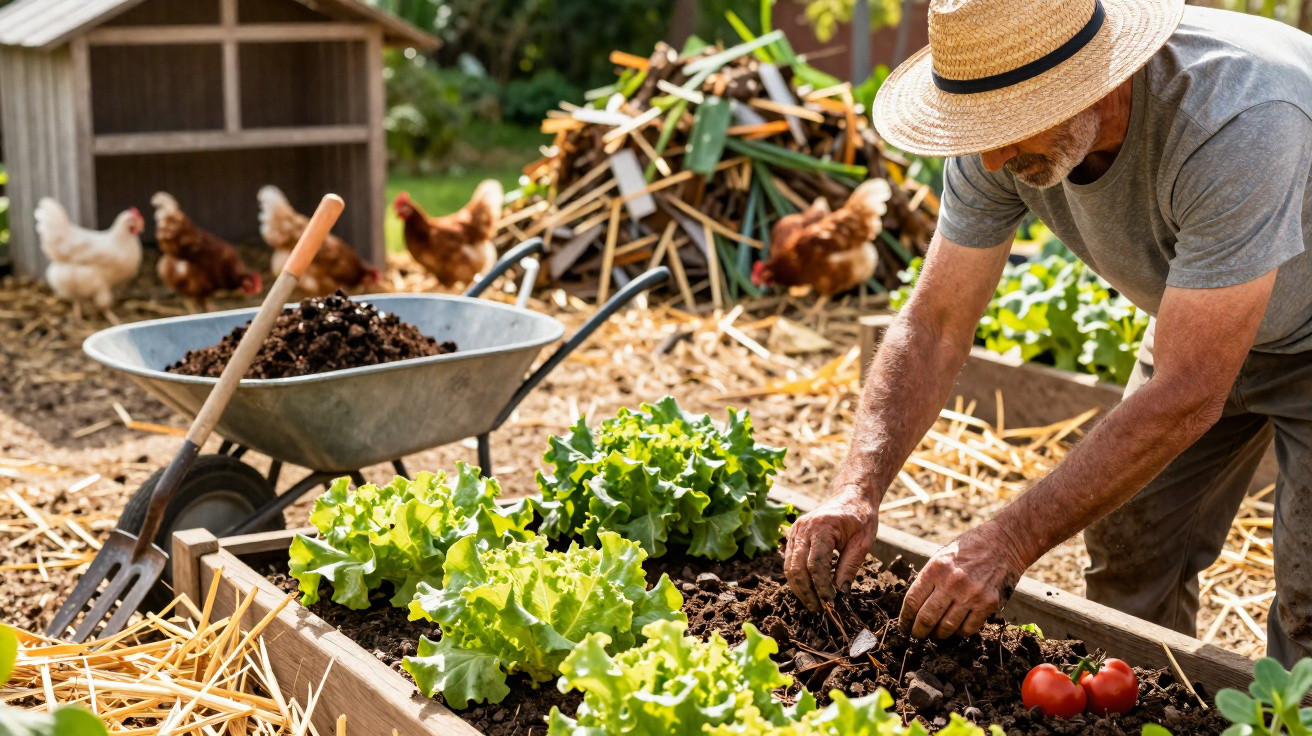
- If needed, work in sand or mature compost so water drains more effectively.
- As a rule, stay closer to the middle of the 10–15 centimetre range.
Potatoes buried too deep in heavy soil end up sitting as if in a wet bath - and they really don’t like that.
Light, sandy soils
Sandy ground is the opposite: water runs through fast and nutrients are washed out quickly. The soil warms up rapidly, but it also dries out just as fast.
Here, gardeners can go a little deeper - closer to the upper end of 15 centimetres. It also helps to mix in compost or well-rotted manure beforehand so the soil holds onto water and nutrients more reliably.
"In dry, sandy soil, a slightly greater planting depth provides extra moisture and more stable temperatures for the tubers."
Climate, frost and mulch: adjusting the depth to the weather
Beyond soil, local climate matters a great deal. In particular, if your area can still see late frosts into May, it pays to plan more cautiously.
Dealing with late frost
In exposed or colder locations, set the tubers nearer 15 centimetres and plant with a clear earthing-up plan in mind. As soon as the shoots appear by a few centimetres, pull soil up around the plants. This keeps the sensitive parts of the potato a little deeper - and therefore better protected.
That combination of a medium-to-deeper planting depth plus timely earthing up acts like a protective coat against frost and rapid temperature swings.
Drought and heatwaves
In dry regions - or where hot spells are frequent - a second helper becomes important: a mulch layer. After the plants have emerged, covering the soil with straw, grass clippings or shredded leaves keeps moisture in the ground for much longer.
"Mulch doesn’t replace the correct planting depth, but it makes it much more forgiving - the soil stays cooler and more evenly moist."
That means you don’t need to plant the tubers “excessively” deep just to reach a bit of remaining moisture lower down. Pairing the right depth with surface protection creates more stable conditions around the plant.
Spacing, rows and earthing up: the full package for brimming crates
Even the best planting depth won’t help much if plants later crowd each other out or tubers end up exposed to light. Three practical details tend to decide success or failure.
The right spacing
Potatoes need room to set plenty of tubers. In practice, these spacings have proved reliable:
| Setting | Recommendation |
|---|---|
| Spacing within the row | 30–40 cm between plants |
| Spacing between rows | 60–75 cm |
This gives each plant enough light, air and nutrients. And with this row width, it’s also easy to hoe and earth up comfortably.
Earthing up - the overlooked turbo boost
Once the potato plants reach about 15 to 20 centimetres tall, earthing up begins: use a hoe to pull soil up from both sides towards the stems until a small ridge forms. Repeat this every one to two weeks while fresh growth keeps appearing.
This delivers several benefits at once:
- New tubers stay safely in the dark and don’t turn green.
- The root zone gains more loose soil - extra space for even more tubers.
- Plants stand more firmly, so wind and rain cause less damage.
"Brimming crates are rarely luck - they come from the interplay of planting depth, sufficient spacing and consistent earthing up."
Practical tips from everyday gardening
Many home gardeners like a simple, tangible way to judge depth while planting. If you don’t want to carry a ruler into the bed, you can use rough guides: the width of a typical spade blade is broadly similar to the eventual row width, and half a hand length (from fingertip to the base of the palm) often comes close to a planting depth of 10 to 12 centimetres - depending on your hand size.
It can also be useful to experiment deliberately for one season: plant one row a bit shallower, one row right in the middle of the recommended range, and one row slightly deeper - then compare results at the end. That’s how each garden finds its own “sweet spot”.
Typical mistakes and how to avoid them
A lot of problems trace back to a few common pitfalls:
- Unworked, compacted soil: shoots struggle to break through and water pools. Always loosen thoroughly before planting.
- Impatience after rain: planting into wet soil means the ground later compacts heavily. Better to wait until the soil is only lightly damp.
- No follow-up care: planting once and never earthing up again - that’s how tubers quickly end up in the light and turn green.
Keep these points in mind and you can get much more from the same area - without any high-tech kit or specialist fertiliser.
Why depth can even affect flavour
Well-sited tubers grow more evenly, avoid both heat stress and waterlogging, and develop in a stable environment. You notice that later on the plate: evenly grown potatoes cook more predictably, fall apart less unpredictably, and store for longer without pressure marks or rot.
So the right planting depth isn’t only about the size of the harvest - it’s also about quality. Spend a few extra minutes planting properly and you’ll save yourself plenty of hassle later when harvesting, sorting and cooking.
Comments
No comments yet. Be the first to comment!
Leave a Comment